E-Paper



India to be global seat for arbitration: Justice Surya Kant
Justice Surya Kant detailed the legislative strides India has taken to make arbitration more efficient and user-friendly.

 Prefer HTon Google


New Delhi India is uniquely positioned to emerge as the next global seat for arbitration, Supreme Court judge justice Surya Kant has said, citing rising costs and procedural delays in traditional arbitration centres such as London and Singapore.
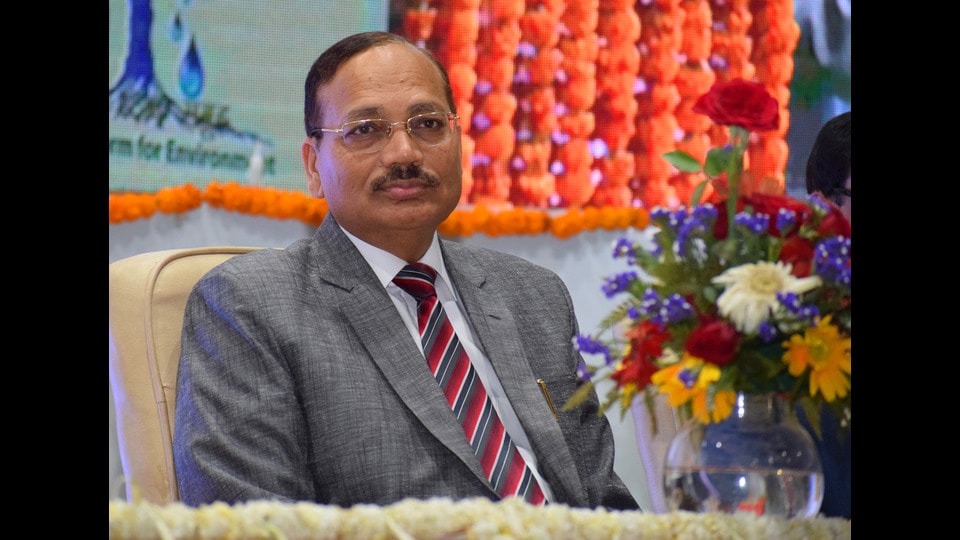
Speaking in Sweden earlier this week, justice Kant noted that the global arbitration landscape is “in search of new anchors”, and that India, through key legal reforms, judicial support and institutional evolution, stands out as a credible and cost-efficient contender.
“Often, when discussing the architecture of international arbitration, I have noticed that institutions situated in established hubs, such as London and Singapore, have become almost synonymous with the practice itself,” said justice Kant. Even as he acknowledged their foundational contributions and procedural sophistication, justice Kant noted that these institutions are now under strain.
“These traditional arbitral centres have increasingly come under pressure from the accelerated growth of the global economy and the corresponding rise in the use of arbitration to resolve cross-border disputes,” he said, adding that the outcome is a surge in costs and delays.
“The median duration of proceedings before the London Court of International Arbitration (LCIA) is approximately 20 months, with the average cost to parties exceeding USD 100,000… tribunal fees constituted the majority of these expenses.”
In contrast, India presents a strong case for itself, not out of sentiment but through “substantive developments”, the judge said. “India is uniquely positioned to emerge as a serious contender among the next generation of preferred arbitral seats,” he emphasised.
Justice Kant detailed the legislative strides India has taken to make arbitration more efficient and user-friendly. Over time, Indian arbitration law has moved towards global best practices, aided by landmark amendments to the Arbitration and Conciliation Act, 1996.
Equally important, he said, is the evolving role of Indian courts. “The Indian Judiciary… moved away from a paradigm of judicial control towards one of judicial support for arbitration,” he said, citing the courts’ increasing intolerance for “unnecessary and frivolous litigation” and vague arbitration clauses.
India is also witnessing a rise in arbitral institutions, justice Kant said. Citing a report by a high-level committee on arbitration, the judge said there are over 35 arbitral institutions currently operating within the jurisdiction, including those affiliated with public sector undertakings, merchant associations, and chambers of commerce.
Beyond legal and institutional reforms, India is undergoing a cultural transformation. “Arbitration is no longer viewed as a peripheral or alternative mechanism,” said justice Kant. “It has increasingly become the preferred mode of dispute resolution.” This mindset shift, he said, reflects a broader appreciation for neutrality, flexibility and efficiency.
He noted that India’s growing stake in global arbitral forums such as the Singapore International Arbitration Centre (SIAC), where Indian parties rank among the top users. “In 2024 alone, approximately 15% of the arbitrators appointed by SIAC were of Indian origin,” he said. Most Indian parties are also represented by India-qualified counsel, indicating the rise of local arbitration talent on global platforms.
According to the judge, the image of arbitration being a “retired judges’ club” in India is being replaced with a more professionalised and inclusive model. Justice Kant lauded the increasing availability of specialised legal education and training, calling it a sign that “India is no longer merely a user of arbitration; it is increasingly becoming a thought leader and an intellectual contributor within the global arbitration community.”
Justice Kant highlighted several structural advantages that strengthen India’s bid to become a leading arbitration hub. These include cost-effective dispute resolution enabled by a progressive fee regime, a deep bench of English-speaking, common law-trained legal professionals, and a strategic time zone that bridges Europe and Asia. India’s robust investment climate, particularly in arbitration-intensive sectors like energy and infrastructure, further enhances its appeal, he said.
At the same time, the judge cautioned that despite India’s progress, critical challenges must be addressed for it to truly emerge as a global arbitration hub. Chief among these are the timely enforcement of arbitral awards, which is vital to preserving the system’s credibility. He also pointed to the fragmented institutional landscape and the need for capacity-building, including expanding the arbitrator pool and improving legal education. Long-term investments in training, academic engagement, and public-private partnerships are essential, he said.
In his concluding remarks, Justice Kant offered a powerful assertion: “India is no longer merely attempting to catch up with established arbitral centres -- it is actively re-imagining what arbitration and mediation can and should look like in a dynamic, multipolar legal order.”
He added: “If we can sustain this momentum with thoughtful engagement and continued innovation, then not only will India serve as a capable venue for arbitration, it will help shape its future. The future of arbitration is not just international -- it is also Indian.”