
 E-Paper



Delhi, Kolkata, other cities see protests after lynching of Hindu man in Bangladesh; calls for justice grow louder
Demonstrations were seen in New Delhi, Kolkata, Mumbai, Hyderabad, calling for justice and protection of minorities in the neighbouring country.

 Prefer HTon Google


Protests continued in several Indian cities on Tuesday after the lynching of a Hindu man in Bangladesh, an incident that has triggered widespread outrage and added fresh strain to already tense India–Bangladesh relations.
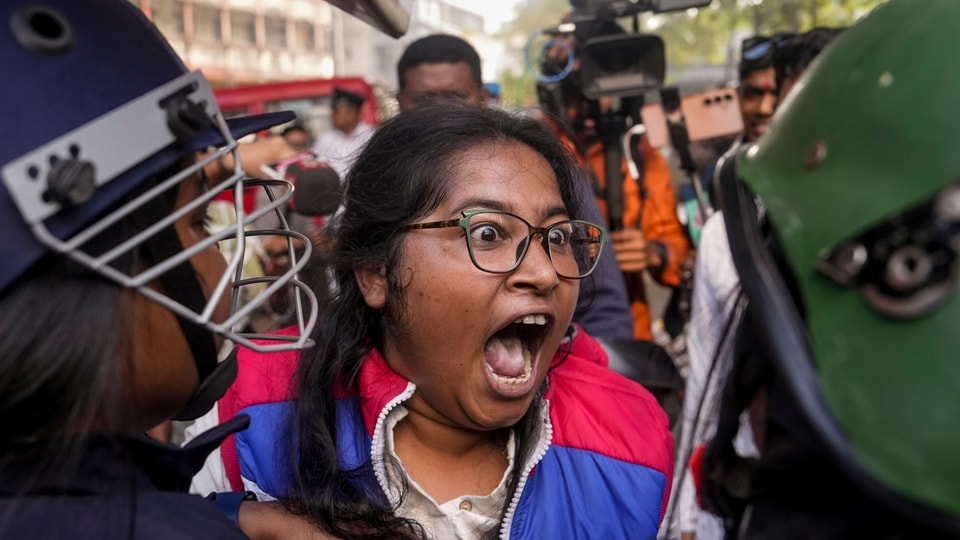
Demonstrations were reported in New Delhi, Kolkata, Mumbai, Hyderabad, parts of Madhya Pradesh and Agartala, with Hindu organisations staging protests near Bangladeshi diplomatic missions and calling for justice and protection of minorities in the neighbouring country.
The protests were sparked by the killing of Dipu Chandra Das, a 25-year-old Hindu garment factory worker, who was beaten to death by a mob in Bangladesh’s Mymensingh district over alleged blasphemy on December 18. His body was later tied to a tree and set on fire, according to officials.
Diplomatic protests exchanged
As street protests intensified, India and Bangladesh summoned each other's envoys to lodge formal protests over recent developments affecting bilateral ties.
India's High Commissioner to Bangladesh, Pranay Verma, was summoned to Dhaka by Bangladesh’s foreign secretary Asad Alam Siam, who conveyed “grave concern” over demonstrations outside the Bangladesh High Commission in New Delhi and vandalism at a visa centre in Siliguri.
Later in the day, Bangladesh’s High Commissioner in India, Riaz Hamidullah, was called to the external affairs ministry in New Delhi, where Indian officials stressed the need for a proper investigation into the killing of Bangladeshi radical student leader Sharif Osman Hadi and cautioned against unsubstantiated allegations blaming India for his death.
Indian officials said such allegations had fuelled anti-India protests in Bangladesh, including an attempt by a mob to storm the Indian assistant high commission in Chittagong last week.
Protests in Indian cities
In New Delhi, protests led by the Vishwa Hindu Parishad (VHP) and Bajrang Dal saw hundreds of demonstrators holding saffron flags gathering near the heavily fortified Bangladesh High Commission. Police deployed around 1,500 personnel and multiple layers of barricades, stopping protesters about 800 metres from the mission.

Protesters burnt effigies of Bangladesh’s interim government chief adviser Muhammad Yunus and raised slogans demanding accountability for the killing.
In Kolkata, members of Bangiyo Hindu Jagran and other organisations protested near the Bangladesh Deputy High Commission. Police resorted to a lathi charge after tensions escalated due to the large turnout. Similar demonstrations were held in Mumbai, where VHP members were detained, and in Hyderabad, where protesters warned of intensified agitation.
Politicians across India condemned the killing. Assam chief minister Himanta Biswa Sarma linked the outrage to broader concerns over illegal immigration, while BJP leader Suvendu Adhikari termed the lynching a “shameful act” and accused the interim government in Bangladesh of failing to protect minorities.
Bihar BJP president Dilip Jaiswal alleged a larger conspiracy behind the unrest, while Congress leader Supriya Shrinate urged the Indian government to take a firm diplomatic stand to ensure the safety of minorities in Bangladesh.
Bangladesh response
Amid the backlash, Yunus expressed “profound sorrow” over Das’s killing and extended condolences to his family. Bangladesh’s de facto education minister CR Abrar visited the victim’s family and described the incident as a “heinous criminal act with no justification”.
Bangladesh’s interim government said 12 people have been arrested in connection with the lynching and that the case would be pursued “fully and without exception”.


