
 E-Paper



Indian Navy wants to extend the lease of US Sea Guardian drones
The acquisition of armed drones, hi-tech technology transfer and Indo-Pacific will be among topics of discussion during PM Narendra Modi's visit to the US

 Prefer HTon Google


With Quad nations joining hands on maritime domain awareness in the Indo-Pacific, India plans to speed up acquisition of armed drones from the US even as the Indian Navy is working towards extending the lease of two General Atomics manufactured Sea Guardian surveillance drones which expires in January 2024. The two Sea Guardian drones are based at Rajali Naval Base in Tamil Nadu.
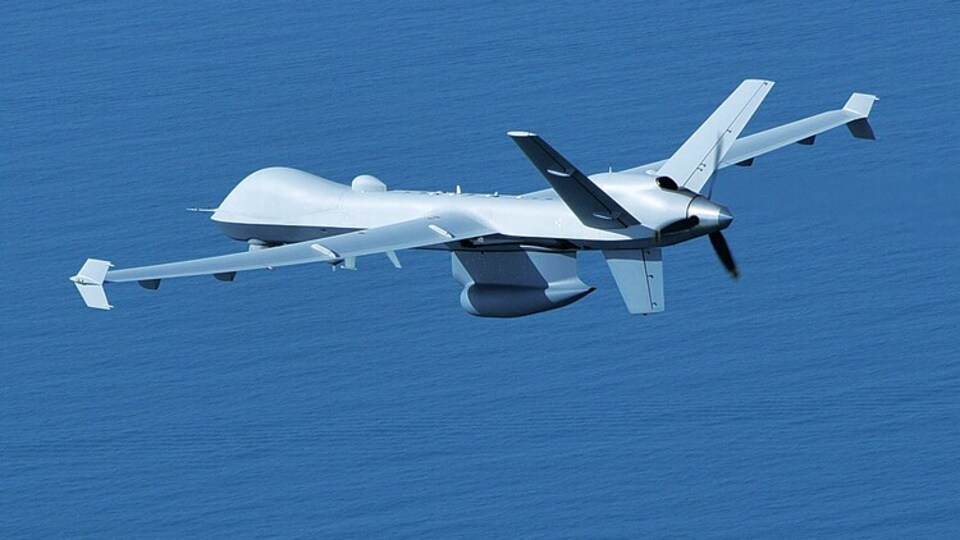
While the cost of armed Predator drones (MQ-9B) will be a determining factor in the acquisition programme, the Indian Navy is satisfied with the output of its surveillance version, the Sea Guardian, since two of them were leased in 2020 for maritime domain surveillance.
Given the endurance of the drones, the Sea Guardians provide real time domain awareness from the eastern board of Africa and Gulf of Aden to Sunda Straits in Indonesia and beyond. The leased drones were also used to survey the Chinese build-up all along the LAC after the May 2020 aggression by the PLA in East Ladakh.
The acquisition of armed drones, hi-tech technology transfer and Indo-Pacific will be among the topics of discussion when Prime Minister Narendra Modi goes for his State visit to the US next June 22. The state dinner will be preceded by International Yoga Day on June 21 and a diaspora function at Chicago later.
The preparations for the US visit, said to be a game changer, was discussed during PM Modi interaction with US President Joe Biden and in a bilateral meeting between External Affairs Minister S Jaishankar and US Secretary of State Anthony Blinken on the sidelines of the G-7 summit.
ALSO READ: ‘Opportunity to deepen partnerships’: US State dept on PM Modi's June visit
In the Quad summit joint statement released on May 22, the leaders of US, India, Japan, and Australia have decided to join hands on Indo-Pacific partnership for Maritime Domain Awareness (IPDMA) with regional fusion centers in the Indian Ocean, South-East Asia and the Pacific Islands for shared domain awareness in the Indo-Pacific.
While the stated goals were to respond to humanitarian and natural disasters as well as combat illegal and dark fishing, the unstated purpose is to monitor the expansion and surveillance activities of the Chinese Navy and its client states.
It is in this context that the US has accelerated its ship building activity in Quad countries to match the expansion of the Chinese Navy with the latter making deep forays into the Indian Ocean region since 2017.
Given that China has leveraged its ties with Cambodia, Myanmar, Iran, and countries on Africa’s eastern seaboard apart from client state Pakistan, the Chinese Navy will be sending long range patrols into the Indian Ocean as early as 2025. The armed drones are one of the key military platforms to counter the Chinese challenge.


