
 E-Paper



From HT Archives: When India gained, and regained, their Lord’s supremacy
India's first Test win at Lord's on June 10, 1986, is a great moment in Indian Test history, with Dilip Vengsarkar scoring a century and Kapil Dev grabbing four wickets to secure a 47-run victory. It was India's second-ever 2-0 series win against a strong rival overseas, and Vengsarkar became the first foreign batter to score three Test centuries at Lord's. India have won only nine times in 67 Tests in England, with three of them at Lord's.

 Prefer HTon Google


New DelhiMention the Lord’s ground to an Indian fan and it will bring up images from a balmy June day in 1983 — Balwinder Sandhu’s banana in-swinger, Kapil Dev’s languid cross-field run with sun in his eyes but not losing sight of a precious catch. It ended as India’s most glorious day in cricket, the underdogs stunning the mighty West Indies in the World Cup final.
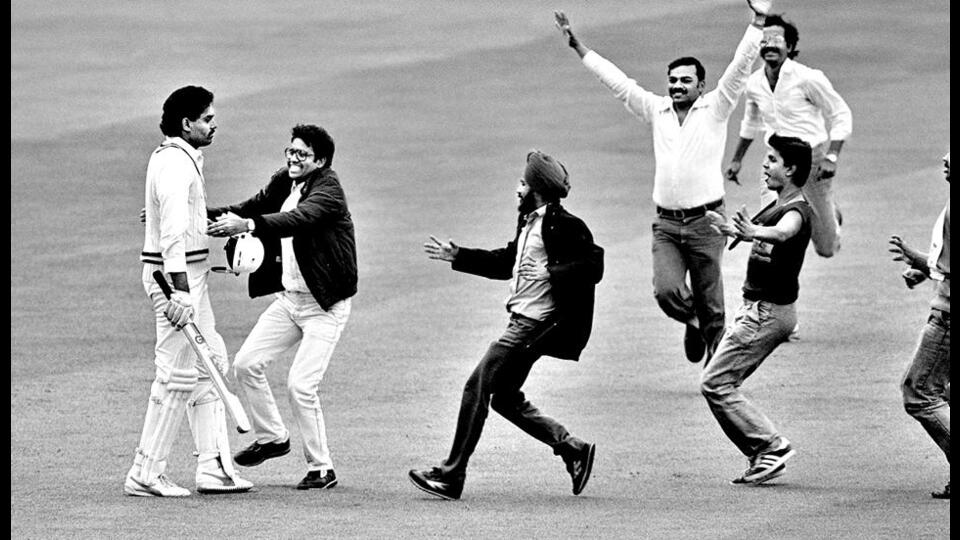
India savoured another Lord’s Day three years later that may not readily spring to mind now, though it is also very special — the first Test win at the hallowed ground on June 10, 1986.
He had already held aloft the World Cup trophy on the Lord’s balcony — the most precious cricket moment in Indian cricket — but Kapil Dev had a major agenda going into that first of three Tests.
For starters, India had not won a Test in England before or after their historic success at The Oval in 1971, winning their first game and series in that country. In the previous Lord’s Test in 1982, Kapil’s heroics — eight wickets and 130 runs — weren’t enough to prevent defeat. And he was yet to win a Test as captain, leading India the 21st time.
Kapil wasn’t alone in that quest for victory. India’s “Lord of the Lord’s”, Dilip Vengsarkar, had seen the sloping ground provide a soaring personal graph, having scored centuries in both his previous Tests at the venue. The draw in 1979 and loss in 1982 weren’t good enough returns.
Also, India were playing at Lord’s for the 11th time, since they began tours of England in 1932. For most of the batch of 1986 weaned on the Oval triumph, it was three series and 15 long years old.
All this provided context, explaining why the Lord’s victory of 1986 is a great moment in Indian Test history. Their going on to win the series 2-0 gave them a margin against a strong rival overseas that had been achieved only once before — 3-1 in 1968 New Zealand. Since then, India’s only 2-0 series wins away from the Subcontinent have come against a West Indies in decline, in 2016 and 2019.
India have won only nine times in 67 Tests in England. Three of them are at Lord’s.
In the match, Kapil won the toss and chose to bowl, hoping to take advantage of early English summer conditions. Openers Graham Gooch (114) and Tim Robinson (63) still gave a bright start, which required left-arm spinner Maninder Singh to break through, removing Robinson. Seamers Chetan Sharma (5/64) — he topped with the series with 16 scalps while Maninder took 12 — Roger Binny and Kapil took over to restrict the hosts to 294.
Vengsarkar made a patient 126 not out with Mohinder Amarnath scoring 69. There was no Botham or Willis, but Graham Dilley spearheading the attack was no pushover. But helped by debutant Kiran More’s 25 not out at No.10, India ensured a 47-run lead. Vengsarkar became the first foreign batter to score three Test centuries at Lord’s. He still holds that record, having scored 103 in the 1979 draw and 157 in the 1982 loss.
Kapil grabbed four wickets as England were dismissed for 180 in the second innings. Maninder, with a sensational spell of 3/9, wrapped up the innings. Chasing 134 for victory, India stumbled, losing four wickets before Kapil (23 not out off 10 balls) finished things off with a flurry of boundaries. He smashed 18 runs in one over by left-arm spinner Phil Edmonds, sealing the five-wicket win with a six. He was the Player of the Match.
India won the second Test at Headingley by 279 runs, Vengsarkar scoring 102 not out. Vengsarkar aggregated 360 in the series at an average of 90. In the golden phase of his career, he scored eight centuries in 16 Tests between 1986 and 1988.
The final Test at Edgbaston was drawn despite Chetan Sharma’s 10-wicket match haul. It was some turnaround for India. In 44 previous Tests, they had beaten England only three times, two of them at home.
The late Dicky Rutnagur, wrote in the Wisden Almanack about the 1986 series and Vengsarkar:
“...Centuries, one at Lord’s and another at Headingley, on one of the poorest Test pitches seen in England for some years, went so far towards India’s achieving their 2-0 win... Any suspicions that these hundreds were scored against a weak England team can be discounted. In each instance, Vengsarkar, having come in at the fall of the second wicket, was still short of his century when joined by the No.11 batsman. They were innings of the highest quality.
“He has made runs everywhere, but all his overseas Test hundreds have been scored in England, where his reach and his technique of playing the ball late stand him in such good stead, as he demonstrated so amply last summer.”


