
 E-Paper



India-UAE moving towards strategic defence cooperation
The UAE apart from being India’s close ally is also one of the top five energy suppliers to New Delhi.

 Prefer HTon Google


A day after BJP under Prime Minister Narendra Modi had swept to power in West Bengal, the Indian leader took an unusual step to condemn the ballistic missile, drone and cruise missile attack on Fujairah Port in UAE by Iran across the Persian Gulf. The PM not only stood in solidarity with the UAE but also called for freedom of navigation in the Straits of Hormuz. Since the Iran-US war started, UAE has engaged 549 ballistic missiles, 29 cruise missiles and 2260 drone attacks from Iran on its territory due to US airbases in the Emirate and its ties with Israel.
The attack on Fujairah port by Iran was calculated as this port apart from Khor Fakkan port are both outside the Straits of Hormuz and in the Gulf of Oman. With UAE walking out of Saudi Arabia dominated OPEC, the two ports will be able to satisfy global energy hunger which is being held to ransom by Iran using Strait of Hormuz as a choke point. UAE is one country in the West Asia that has been hit by more Iranian missiles than even Israel as Tehran cannot come to terms with its growing ties with Israel as well as the Emirate being the economic development icon of Middle-East.

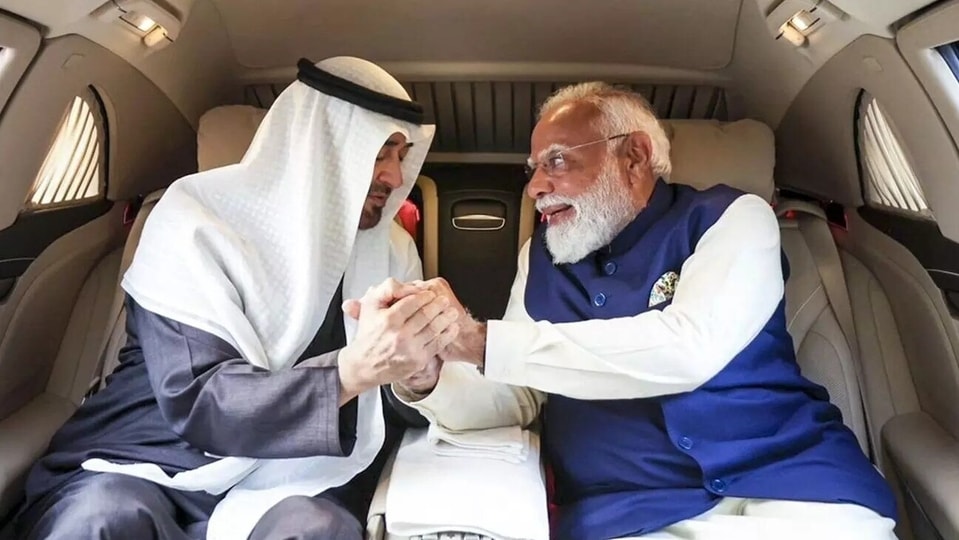
While Saudi Arabia and Qatar have signed a defence pact with Pakistan through a mutual defence agreement, PM Modi and his close personal friend Sheikh Mohammed bin Zayed, the UAE President, want to forge a strategic defence partnership after the two countries signed a Letter of Intent when MBZ came to India for three hours on January 19 with his entire Cabinet. The two sides have planned to establish a Strategic Defence Partnership Agreement in six months after signing of LoI and expand cooperation in areas such as defence industrial collaboration, defence innovation, special operations and interoperability, cyber space and counter-terrorism. Recently, UAE decided not to roll-over Pakistani debt to the tune of USD 3.45 billion as a result of which Islamabad had to borrow from Riyadh to pay Abu Dhabi.
With PM Modi scheduled to land in Abu Dhabi on May 18 while en-route to Netherlands, all eyes are on the two countries as they cement their bilateral relationship with Mundra-Fujairah-Aqaba being projected as the new trade axis. UAE last month has formalized a USD 2.3 billion agreement to construct a 360 km railroad to connect Jordan’s rock-phosphate and Potash mines to Aqaba port in the Red Sea. Both rock phosphate and potash are used for making fertilizer, which is in high demand for India.
The UAE apart from being India’s close ally is also one of the top five energy suppliers to New Delhi. In 2024-2025, India imported USD 13.6 billion (almost 10 percent of the country's total crude imports which is about 23 million tons), LNG and LPG worth USD 7.51 billion from the Emirates.
With both US and Iran jostling over Straits of Hormuz for dominance and leverage on global energy, India is expected to further deepen its relations with UAE so that both countries mutually benefit each other as New Delhi needs energy security and Abu Dhabi needs food security with both countries against radicalization and terrorism.


