E-Paper



HT interview: India must look beyond farming to boost rural income, says IFAD chief Alvaro Lario
Many rural communities do not depend only on farming, Lario said.

 Prefer HTon Google


India needs to look beyond farming to create decent jobs and raise rural household incomes, as many rural families depend on multiple sources of livelihood because farming alone does not pay enough, International Fund for Agricultural Development (IFAD) President Alvaro Lario has said.
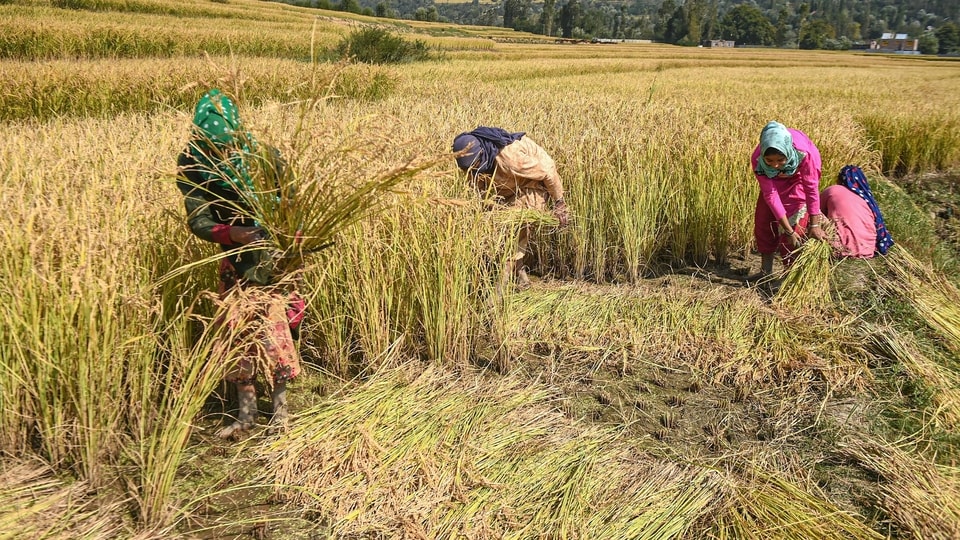
Lario, who is leading IFAD at a time its partnership with India enters its 50th year, told HT the organisation’s new eight-year strategy will focus on poorer states, 112 aspirational districts identified by Niti Ayog and regions facing climate shocks, in a bid to reach out to three million rural households or about 13 million people.
He also spoke about climate adaptation, the need to improve implementation of rural programmes, the role of private investment in raising farmers’ incomes and the risk of higher global food prices through the first quarter of 2027.
Edited excerpts:
India has had a major policy focus on doubling farmers’ income. But rural households often have several sources of income. Does India need to think beyond farm incomes and focus more broadly on rural prosperity?
Many rural communities do not depend only on farming. They have different jobs, some formally and some informally, and they have different sources of income. They do that because many times farming does not pay enough. That is the reality.
So, I think it would be more productive to create decent living wages and decent jobs that allow people to process products and have more of the value addition in those rural areas.
For example, I am going to an organic spice processing unit that is processing 10,000 metric tonnes of ginger, turmeric and chilli and is linked to 5,500 small-scale farmers. If you manage to process it, package it and sell it with more added value, you can create jobs there.
I think that then you have more formal jobs and more formal employment, which to me is the goal if we want people to really have a decent living in rural areas. Otherwise, they will have income from different places because they need to diversify, also because of the variability of farming.
Climate shocks are increasingly affecting farmers through drought, heat and water stress. What are the most urgent investments India needs to make to protect rural livelihoods?
Our overall approach is very much focused on climate adaptation rather than climate mitigation.
What we are seeing is that in many countries, more than half of what they borrow goes towards climate adaptation. That relates many times to scarcity or excess of water, or extreme heat waves. It is also about how you work with nature, including soil health and land degradation.
In the Himalayan states, anticipatory action and early warning systems are important, but so is water management, which is such a fundamental issue.
For example, in Maharashtra, we have had investments around women’s associations where we were also building 3,500 farm ponds for water management in 1,200 villages.
India has several agricultural programmes, but implementation has often been a challenge. What determines whether a rural policy actually works on the ground?
One of the things that is fundamental for us in implementation, and that many times relates to the success of an investment programme, not only in India but everywhere, is extension of services.
That means the connection between the central government and the region, and how the programme is actually implemented. At IFAD, we do not implement. We design, supervise and support states, farmers’ organisations and communities to implement.
Many of the successes of the programmes everywhere relate to the capacity of those programme-management units and their ability to really make things happen, as well as the connection with regional extension services.
Another factor we are currently seeing in our impact assessments is when the local private sector is embedded into these programmes. We see that the income of small-scale farmers increases four times.
So, connecting that public-private partnership, which we also call public-private-producer partnership, is fundamental. Making that connection work across the ecosystem makes success much more likely.
Conflicts in West Asia, higher fertiliser and fuel costs and climate shocks are putting pressure on food security. What risks do you see for farmers and consumers over the coming months?
For sure, it is the cost of inputs. Small-scale farmers’ margins are extremely tight if you talk about fertilisers and fuel. Many times you need fuel for pumping water, mechanisation and transportation costs.
Obviously, higher costs also translate into an increase in food prices. The poorer you are, the more it affects you because you devote more of your expenses to food.
So food, fertilizer and fuel are really affecting the margins and savings of many of them.
What we are seeing currently, and will be seeing even more, is that many of the food price indexes globally have been increasing in the third quarter and will continue between the fourth quarter and the first quarter of 2027.
So, beyond inflation because of fuel, we are also seeing food price inflation, which will remain and is going to affect a big share of the population.
And it has been a double whammy because of El Nino. If we go to Latin America or Central America, El Salvador and Honduras have lost their harvests of maize and beans. That is another shock that small-scale farmers are struggling with.
You said IFAD’s impact assessments show that the income of small-scale farmers can increase fourfold when the local private sector is embedded in rural programmes. What is the mechanism behind that?
One of the successes that we are currently seeing, and our impact assessments show, is that when the local private sector is embedded into these programmes, the income of small-scale farmers increases four times.
I think connecting that public-private partnership, which we also call a public-private-producer partnership, is fundamental. Making that connection work across the ecosystem makes success much more likely.
Public finance alone cannot deliver the transformation of food systems, raise rural incomes or create decent jobs. The private sector accounts for more than 90% of global food-systems activity and complements public-sector financing by providing technology, market access and logistics. These are the elements that allow small farms, pastoralists, fishers, rural entrepreneurs and other agri-food enterprises to grow and prosper.