
 E-Paper



‘Invisible hand’: Opposition questions ECI after report on commissioners’ SIR concerns
An Indian Express investigation showed Sukhbir Singh Sandhu and Vivek Joshi placed objections on record at least 14 times

 Prefer HTon Google


Opposition leaders on Wednesday questioned the Election Commission of India (ECI)’s functioning after an Indian Express (IE) investigation showed that two of the three election commissioners, Sukhbir Singh Sandhu and Vivek Joshi, raised concerns about issues with the electoral roll Special Intensive Revision (SIR).
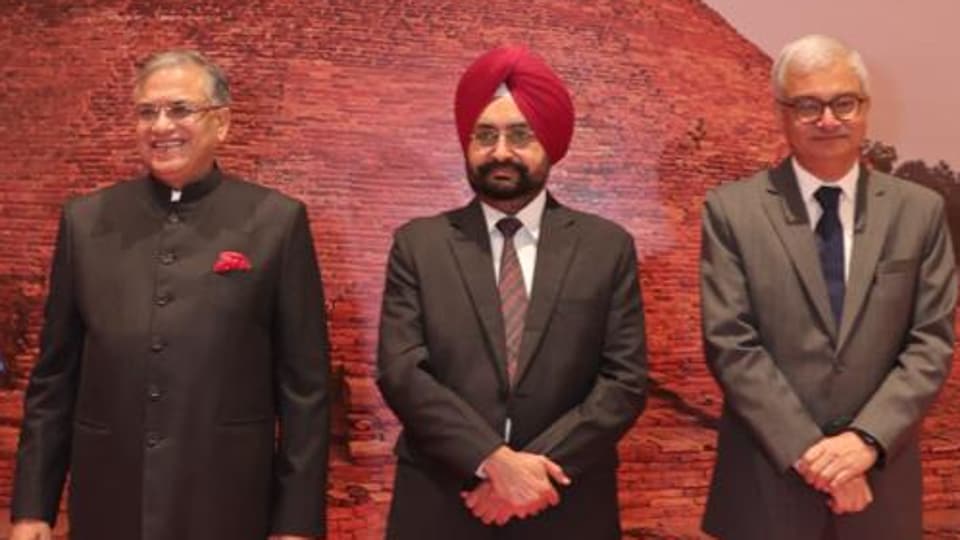
The investigation showed Sandhu and Joshi placed objections on record at least 14 times over 10 months, four of them in a single day, against decisions made in the ECI’s name without their knowledge. The IE reported disputes centred on a range of matters including a change to Form 6 requiring new voters to declare whether they, a parent, or a grandparent appeared on the “last SIR” roll, which the two commissioners called unauthorised and warned amounted to harassment of first-time voters.
The SIR, an electoral roll cleansing drive, started with Bihar in June last year, to remove bogus, duplicate, and ineligible voters, including deceased individuals and “illegal immigrants”. It sparked criticism from the Opposition, which alleged that the exercise is a strategic voter roll clean-up drive to benefit the ruling Bharatiya Janata Party (BJP).
Deep Dive

Congress leader Manish Tewari cited the IE investigation and wrote on X that if the ostensible facts reported are correct, then it seems to suggest that an ‘invisible hand’ is running the ECI. He added that if rules were not allegedly followed and decisions were taken that were not unanimous or by majority, then all the decisions are per se arbitrary and capricious, if not completely illegal.
Tewari said this is perhaps a fit case for serious consideration of an impeachment proceeding, but more importantly the fundamental question is as to how the credibility of the ECI will ever be resurrected.
In April, Rajya Sabha Chairman CP Radhakrishnan and Lok Sabha Speaker Om Birla rejected the Opposition’s notice seeking chief election commissioner (CEC) Gyanesh Kumar’s removal. The notice listed charges including “partisan and discriminatory” conduct, deliberate “obstruction of investigation of electoral fraud” and “mass disenfranchisement”
Shiv Sena (UBT) leader Sanjay Raut cited decisions made while keeping the majority of the three-member commission in the dark and said the ECI’s credibility is now under question from within the commission.
Aam Aadmi Party (AAP)’s Saurabh Bharadwaj linked the IE report to his party’s older allegations from the 2025 Delhi assembly election. He added that people have since been talking about mysterious deletion of genuine voters inclined to AAP and addition of fictional voters.
The other contentious issues included the centralisation of ERONet access, which the commissioners said threatened the integrity of the electoral roll. ERONET helps remove duplicate entries, including migrated electors.
The commissioners raised disputed authorisation behind appeals filed in West Bengal seeking deletion of voter names. They were reportedly unaware of who had authorised them, and a case in Goa where 97 verified voters could not be added to the electoral roll because the software did not allow the update to be recorded.
The IE reported that Sandhu and Joshi wrote separately to the Cabinet Secretary flagging these concerns, and that its questions to the ECI and to both commissioners went unanswered ahead of publication of the investigation.
The SIR in West Bengal was one of the most contentious in recent years. In April, the ECI announced the deletion of nearly nine million from the electoral roll. Out of these, around 2.7 million deletions fell under the “logical discrepancy” category. The difference in absolute votes the BJP and the Trinamool Congress (TMC) polled was similar to the total SIR deletions. The TMC has maintained that the deletions helped the BJP win West Bengal elections. The BJP, which swept to power in the state for the first time, winning 207 of 294 seats, has rejected this link.


