
 E-Paper





Follow the latest breaking news, major developments and agenda-setting stories from India and around the world with the newsdesk at Hindustan Times. Operating round the clock, the desk brings together experienced editors, reporters and correspondents to deliver fast, accurate and contextual reporting across subjects that influence public policy, governance, business, society and international affairs. The HT News Desk covers politics, elections, government policies, the economy, business and markets, science and technology, the environment, law and order, infrastructure, education, climate issues and geopolitics, while closely tracking developments across states, institutions and global capitals. The team also leads coverage of major breaking news events, policy announcements, court proceedings, natural disasters, public emergencies and significant international developments. Reports published by the newsdesk are based on information gathered from reporters on the ground, official statements, government agencies, court records, regulatory filings, recognised institutions and other authoritative sources. Stories undergo editorial scrutiny and verification processes to ensure accuracy, fairness and relevance, and are updated as events evolve and additional information becomes available. Whether covering a key political decision in New Delhi, an economic policy shift affecting millions, a landmark court ruling or a major global event, the HT News Desk aims to provide readers with reliable, fact-based journalism that delivers not only the latest developments but also the context and analysis needed to understand their wider implications.
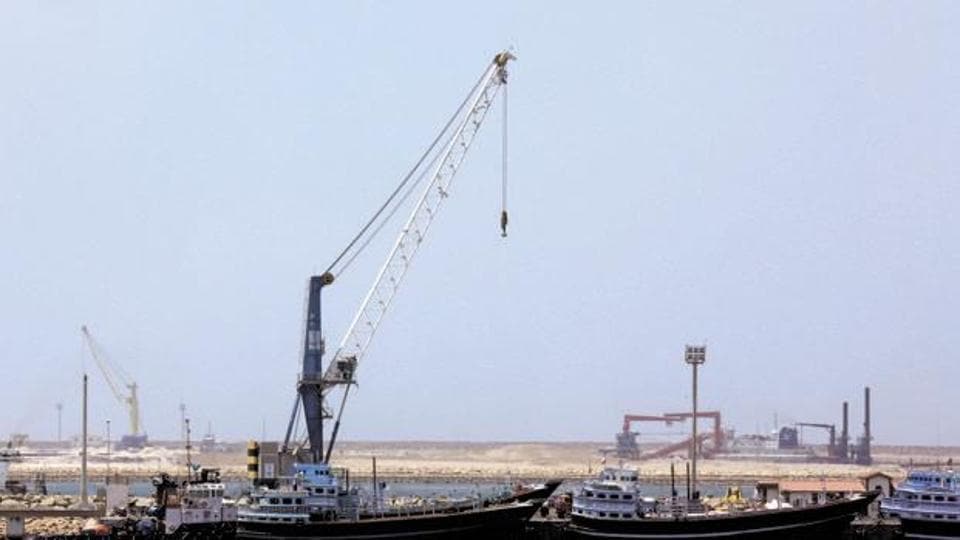
No investments, no special privileges, Iran tells India over Chabahar Port
The Chabahar port is being considered a gateway to golden opportunities for trade by India, Iran and Afghanistan with central Asian countries in the wake of Pakistan denying transit access to New Delhi.


Iran on Tuesday criticised India for not fulfilling its promise of making investments in expansion of the strategically located Chabahar port and said New Delhi will stand to lose “special privileges” if it cuts import of Iranian oil.
Iran’s Deputy Ambassador and Charge d’Affaires Massoud Rezvanian Rahaghi said Iran will end the privileges being provided to India if tries to source oil from countries like Saudi Arabia, Russia, Iraq, the US and others to offset cuts in Iranian oil.
“It is unfortunate that Indian investment promises for expansion of Chabahar port and its connectivity projects have not been accomplished so far. It is expected that India takes immediate necessary measures in this regard if its cooperation and engagement in Chabahar port is of strategic nat- ure,” he said. Rahaghi was speaking at a seminar on ‘emerging ch- allenges and opportunities in the global diplomacy and its impact on bilateral ties with India’.
The Chabahar port is being considered a gateway to golden opportunities for trade by India, Iran and Afghanistan with central Asian countries in the wake of Pakistan denying transit access to New Delhi.
In May 2016, India, Iran and Afghanistan had inked a pact which entailed establishment of Transit and Transport Corridor among the three countries using Chabahar Port as one of the regional hubs for sea transportation in Iran, besides multi-modal transport of goods and passengers across the three nations.
Referring to US sanctions on oil import from Iran, Rahaghi said his country has been a reliable energy partner for India and that Iran always follows a “rationale pricing” of oil which ensures the interest of both consumers and suppliers.
“...If India were to replace Iran with countries like Saudi Arabia, Russia, Iraq, the US and others for the 10 per cent of its oil dem- and then it may have to revert to dollar-denominated imports whi- ch mean higher CAD (Current Account Deficit) and deprivation of all other privileges Iran has offered to India,” Rahaghi said.
The senior Iranian diplomat said it was important to work to- gether to immunise the relationship between the two countries through adoption of necessary instruments and mechanisms.
“We should strive to make these relationship more sustainable and durable. This requires a strong political determination,” he said, adding both sides should set up banking relations, open new transaction routes and help each other’s markets and business communities. Iran is India’s third-largest oil supplier after Iraq and Saudi Arabia. Iran supplied 18.4 million tonnes of crude oil between April 2017 and January 2018.
The US has told India and other countries to cut oil imports from Iran to “zero” by November 4 or face sanctions.


