
 E-Paper



Arun Jaitley compares Indira Gandhi to Hitler in blog post on Emergency; Congress calls comparison “odious”
Union Minister Arun Jaitley, in a blog post coinciding with the 43rd anniversary of imposition of the Emergency, accuses late Congress prime minister of using methods followed by the Nazi dictator.

 Prefer HTon Google


In a biting indictment of the Emergency that was imposed on June 25, 43 years ago, senior Bharatiya Janata Party leader Arun Jaitley compared it with Adolf Hitler’s dictatorial regime in Germany. He also accused former Prime Minister Indira Gandhi, who took the decision to impose Emergency, of transforming India into a “dynastic democracy”.
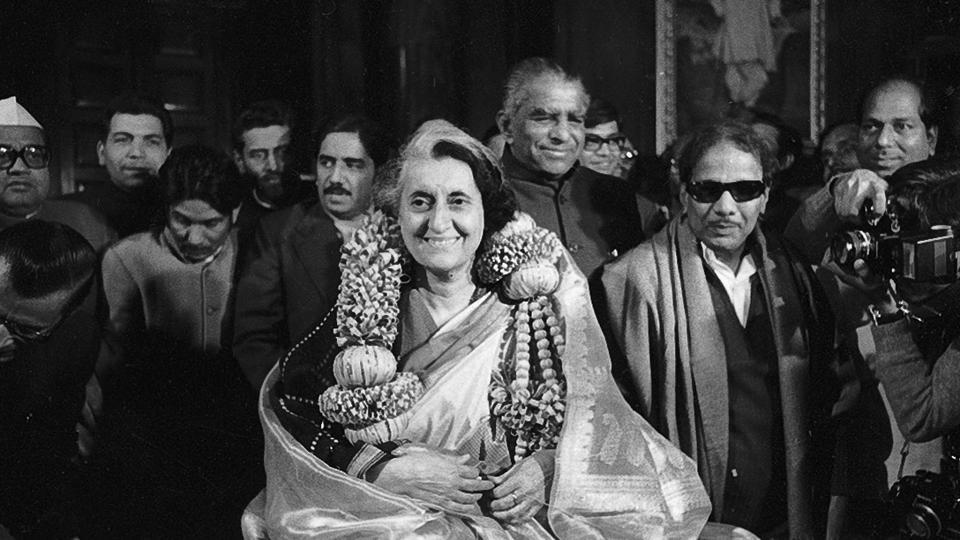
In the second part of his three-part blog on the Emergency, Jaitley drew parallels between Emergency --it saw opposition leaders jailed, press freedom curbed, and forced sterilization carried out—with the occurrences of what “happened in Nazi Germany in 1933”. “Both Hitler and Mrs. Gandhi never abrogated the Constitution. They used a republican Constitution to transform democracy into dictatorship,” he said.
The Congress criticised his views, calling the comparison “odious”.
The Union Minister said, Mrs. Gandhi’s imposition of Emergency under Article 352, suspension of fundamental rights under Article 359 and her claim that “disorder was planned by the opposition in the country”, echoed Hitler’s “Reichstag” episode as exposed by the Nuremberg trials after 13 years.
The BJP leader who was among those jailed during Emergency wrote that just as Hitler arrested most of the opposition Members of Parliament and brought detailed Constitution amendments vesting all power in one person, Gandhi also arrested most opposition Members of Parliament and, procured, through their absence, a two-thirdd majority of the house, and used this to pass several Constitution amendments.
“There were a few things that Hitler did not do which Mrs. Gandhi did. She prohibited the publication of Parliamentary proceedings in the media… Unlike Hitler, Mrs. Gandhi went ahead to transform India into a ‘dynastic Democracy’,” the BJP leader wrote.
The “most objectionable change”, he said was to extend the life of Parliament by two years.
This is not the first time that political leaders have sought to draw comparisons between their opponents with Hitler. In 2014, Congress President Rahul Gandhi while addressing farmers in Gujarat’s Balasinor had attacked Narendra Modi, the then PM candidate by comparing him with the Nazi leader for his policies.
Sanjay Kumar of the Centre for the Study of Developing Societies disagreed with the comparison. He said that had Gandhi succeeded in turning India into a dynastic democracy, then the “BJP would not have been in power”.
“There have been many parties and several leaders in power in the past such as VP Singh, IK Gujaral and Deve Gowda. We have seen when people want to vote out someone they do so notwithstanding the person’s political lineage. There are many examples of dynastic parties at the state levels also losing power,” he said.
.


