
 E-Paper



Judges no longer need political permission for private visits abroad
The court quashed the office memorandum (OM) of July 13, 2021, issued by the ministry of external affairs, that required Supreme Court and high court judges to seek political permission for private visits abroad.


The Delhi high court has struck down the provisions which required judges of the Supreme Court and the high courts to take political permission for private visits abroad, saying it is uncalled for given the high offices involved.
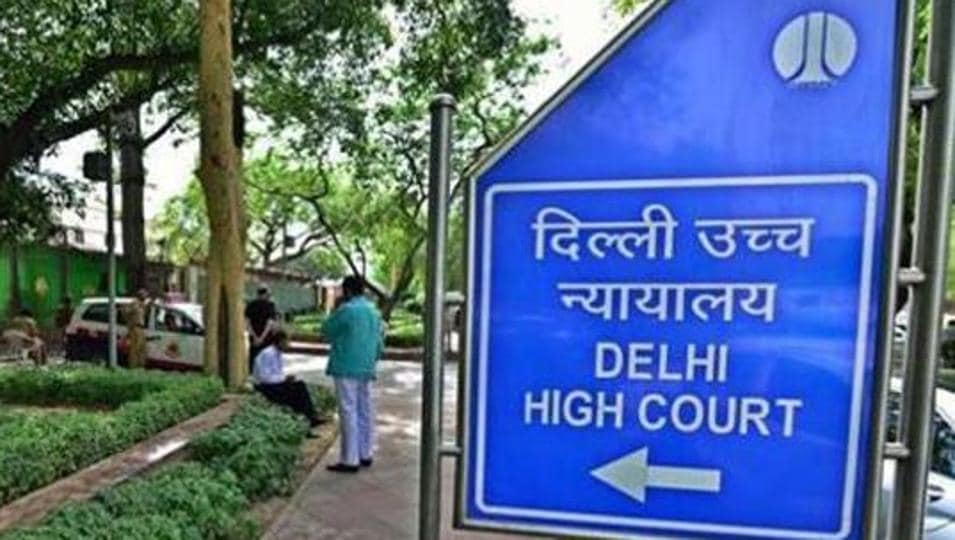
In an order passed on April 1, a bench of justices Rajiv Shakdher and Jasmeet Singh quashed the office memorandum (OM) of July 13, 2021, issued by the ministry of external affairs, that required Supreme Court and high court judges to seek political clearance for private visits abroad.
“…insofar as the instant OM dated July 13, 2021 (that) requires judges of the Supreme Court and the High Courts to seek political clearance for private foreign visits, it is uncalled for, given the high offices they are holding, especially given the fact that nothing has changed since the 2011 guidelines were issued,” the bench said in its order.
The court issued the order in an application by petitioner Aman Vachar, who contended that requiring judges of constitutional courts to seek political clearance with respect to their private visits to foreign countries, “infringes not only their right of privacy but also, in a sense, degrades and diminishes the high office that they hold”.
The application was filed in an earlier petition, where a division bench of the high court in 2012, struck down some “inappropriate” conditions laid down by the Union law ministry in a February 2011 circular on guidelines for foreign visits by judges.
The court, in its latest seven-page order of April 1, said that the contention of solicitor general (SG) Tushar Mehta that information concerning judges travelling abroad is required so that help may be extended to them when needed, overlooks the fact that information about judges’ travel plans can be ascertained by a request to the consular, passport and visa division of the ministry of external affairs.
“That said, in any case, if a citizen [which includes a judge] is caught in a crisis, Indian embassies/missions are duty-bound to extend assistance to the extent possible, as and when they receive information of such an occurrence,” the bench noted in its order.
In May 2012, while striking down similar requirements, the division bench of the high court directed the Centre to amend the guidelines since these were “untenable” and appeared to be the result of a “mindless exercise triggered by over enthusiastic behaviour”.
While dealing with the present case, the court took note of the guidelines issued on February 15, 2011, concerning foreign visits by judges of SC and HCs and also a high court judgment of May 25, 2012 issuing a slew of directions concerning the 2011 guidelines.
“However, insofar as paragraph 9(a) of the 2011 guidelines was concerned, the court had, at that juncture, not deemed it fit to pass any directions vis-a-vis the said paragraph, as it had dispensed with the requirement of the judges of the Supreme Court and the high courts to obtain political clearance for private foreign visits,” the court said in its April 1 order.


