
 E-Paper



Just Like That | On wealth, succession and the legacy of family discord
A sense of virakti or detachment grips one on what wealth and power can do to relationships. It is better, perhaps, to have less

 Prefer HTon Google


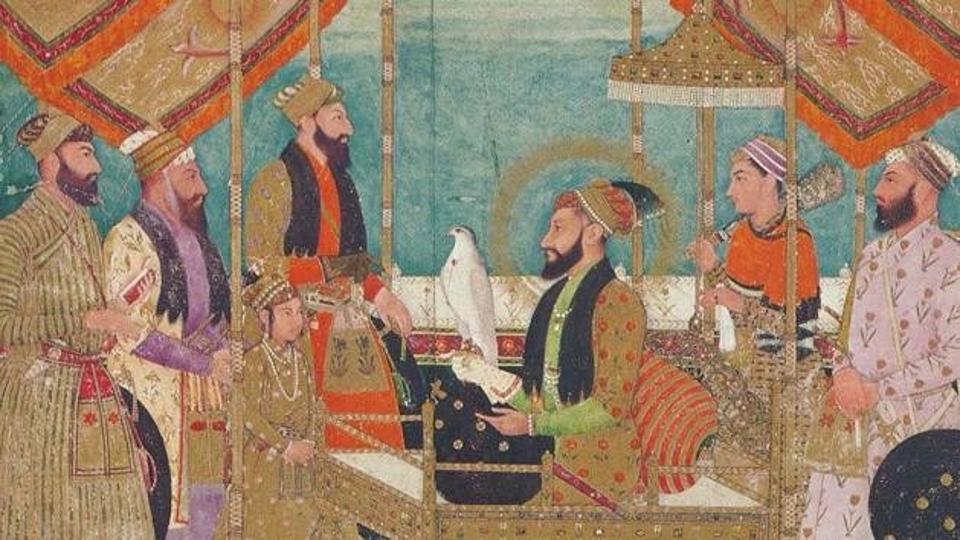
In a majority of cases, if you are very wealthy or very powerful, it is likely that you will leave behind a legacy of family discord, and our history is replete with such examples. For instance, in the Mughal dynasty, emperor Jahangir’s death led to a war of succession between his sons in which Shahjahan triumphed. When he died, this war was replicated on a far more brutal scale among his male heirs. Shahjahan, it is believed, wanted his eldest son, the erudite and amiable Dara Shikoh to succeed him, but it was the more bigoted and ruthless Aurangzeb who won. He imprisoned Shahjahan in Agra Fort, and publicly beheaded Dara.
Post 1947, succession tensions have rippled across India’s most prominent political parivar, the Gandhi family. Prime Minister (PM) Jawaharlal Nehru had only one child, Indira Gandhi, and—after the all too brief hiatus of Lal Bahadur Shastri as PM—she succeeded him. Of her two sons, the elder Rajiv wanted to stay out of politics; Sanjay, the younger one was considered to be Indira’s political heir. When he had an untimely death in a plane crash, his ambitious widow, Maneka, thought that she would take over his mantle, only to be literally thrown out of Indira Gandhi’s home. The gentle—and reluctant to join politics—Rajiv was then roped in, and on Indira’s tragic assassination became PM. Even today, the two branches of the Gandhi family are in opposite political camps, Maneka and her son Varun in the BJP, and Rahul at the helm in the Congress.
Wealth is another source of bitter conflict. In medieval times there was a saying that the beej or seed of all family feuds are three things: zar, zan, zameen: jewelry, women, and land. In the Ramayana, it was Kaikeyi who conspired to have Ram sent into exile, so that her son, Bharat, would inherit the throne after Dashrath. But, in my view, it is men and their greed which are far culpable, simply because men have always been the main players in a male dominated society.
The recent dispute over the late Sunjay Kapur’s fortune has become a vivid illustration of how wealth and power can rend families apart. Sunjay Kapur, who passed away on June 12, 2025, left behind a sprawling empire — industrial interests, corporate stakes, trusts — reportedly worth tens of thousands of crores of rupees. What his family now finds itself in is a legal and emotional confrontation over who inherits what, and on what terms. The children from his second marriage to Karisma Kapoor, Samaira and Kiaan, have filed a suit in the Delhi high court, claiming they have been unjustly excluded by a will—a will that they allege is suspicious, forged, and manipulated. At the same time, Priya Sachdev Kapur, his third wife, is defending the will, demanding that legal heirs and the terms be respected. Meanwhile, Sunjay’s mother and sisters are crying foul, claiming that they have been disenfranchised of what was due to them. Thus we have in this one case, multiple marriages, multiple generations, biological children and step-children, trusts and direct holdings, questions about legal heirs and will validity.
Some years ago, a case involving one of the country’s most prominent corporate families was in the news because the father, after bequeathing his house in good faith to his son, found himself turned out of the house by that very son! This only underlines the fact that people should write a will which is as fool-proof as possible, well in time, and never pass on assets to their children prematurely. It is important too that the will is registered, so that its legality is not easily questionable.
In human beings, avarice often trumps love, affection and goodwill. In the case of inheritance, few seek to acknowledge or understand what the known intention of a relative was. Too often children or relatives look upon aging parents more for what they will bequeath after they have gone. Although the façade may appear then of familial love, it becomes essentially a relationship that is a transaction in abeyance. The first thing a scion of a well-known corporate family did on his father’s demise was to order a Bentley! He was impatiently waiting for the old man to die, because only then could he inherit the money to live the luxurious life he wanted.
A sense of virakti or detachment grips one on what wealth and power can do to relationships. It is better, perhaps, to have less, and sing with Kabir:
Man lagyo mera yaar faquiri mein
Jo sukh paayo Ram bhajan mein
Woh sukh naahin amiri men
Aakhir yeh tan khaak milega
Kyun phire maghroori mein
Oh friend, my mind has taken to living free
The joy of chanting Ram’s name cannot be found in plenty
Your body will merge with dust one day
Why strut about so vainly?
(Pavan K Varma is an author, diplomat, and former member of Parliament (Rajya Sabha). The views expressed are personal)


