
 E-Paper



Just Like That: Yudhishtar’s reply to the Yaksha in Mahabharata remains timeless
It is true that humans deny the inevitability of death, believing—as long as they feel well—that it happens only to others

 Prefer HTon Google


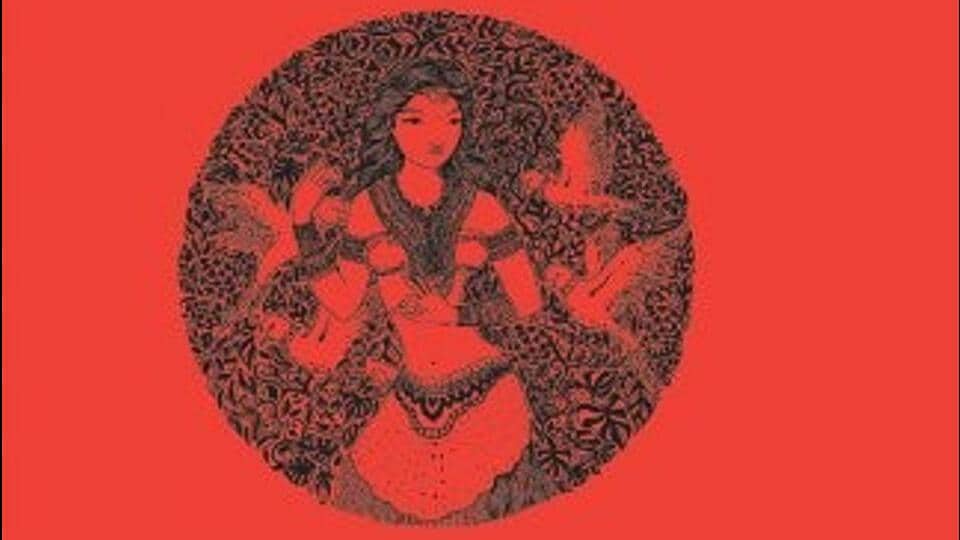
One of the most brilliant sections of the Mahabharata is the Yaksha Prashna, where the mythical Yaksha asks a series of profound questions to Yudhishthira on life. His answers are equally remarkable. Among the questions the Yaksha asks is: “What is the most wonderful thing within this world?” There could be many responses, but Yudhishthir’s reply—as I paraphrased it in my book, Yudhishtar and Draupadi—“Millions pass on, yet the living think they won’t die; what can be more wonderful than this strange life?”
It is true that human beings refuse to accept the inevitability of death, and believe—so long as they are well—that this happens only to others. This belief is perpetuated by modern science.
The advancement of life-support systems—ventilators, feeding tubes, ECMO machines—has created unprecedented dilemmas. These technologies can preserve the biological functions of a human body long after consciousness, autonomy, or even the prospect of recovery has vanished. Families are often torn between hope and anguish, doctors between duty and realism. A person may lie for months or years in a suspended twilight: alive in the clinical sense, yet absent in all the ways that make life recognisably human.
Yet, even as technology extends the arc of human longevity, a profound question confronts us: Is the length of life more important than its quality? And if not, what ethical boundaries must we draw to ensure that the sanctuary of human dignity is not surrendered at the altar of longevity alone?
This tension between mere duration and meaningful experience has engaged thinkers for centuries.
The ancient Indian tradition, with its deep reflections on life and mortality, has always emphasised jeevan (life) not as simple biological existence but as an integrated harmony of body, mind, and purpose.
The Taittiriya Upanishad speaks of the human being as composed of layers—physical, vital, mental, and spiritual—and suggests that a life bereft of joy, agency, and selfhood is but an empty shell.
Across civilisations, poets and writers have returned to this theme with a certain intuitive clarity. Leo Tolstoy, tormented in his final years by questions of mortality, came to see life’s meaning not in its length but in its ethical and spiritual content. Rabindranath Tagore, who understood the fragility of existence, wrote that he wished not to “live encased in a coffin of survival,” but to live fully, even if briefly. The poet Iqbal wrote: “Eternity lies in the breadth of life. I do not seek its length.”
In this context, the idea of a living will—an advance directive in which a person states that they should not be kept alive through extraordinary life-support measures if recovery is impossible—deserves serious consideration. It reflects a recognition that individuals have the right to shape the terms of their exit from the world, just as they aspire to shape their journey within it.
The question of euthanasia—particularly passive euthanasia, where life support is withdrawn after all prospects of recovery have faded—must be approached with sensitivity, clarity, and moral seriousness. The fear that it may be misused is not unfounded. Human institutions are imperfect; families are not always guided by noble motives; and medical judgments can err. But to reject euthanasia entirely because of these fears is to allow misuse to overshadow genuine need.
When a person is trapped in a body that can no longer feel, communicate, or reclaim consciousness, and when medical science confirms the irreversible nature of their condition, is it ethical—or compassionate—to sustain life artificially? Is it not a greater violence to the human spirit to prolong suffering that serves no purpose? Euthanasia, when strictly regulated, transparently administered, and ethically circumscribed, can be an act of compassion. It allows the curtain to fall gently when the play of life has reached its end.
In this, perhaps, the Indian philosophical tradition offers the most enduring guidance. It sees life as a journey and death as a transition, not a defeat. It teaches us that clinging to life at all costs is neither wise nor necessary; that what matters is to live in accordance with dharma, to die without regret, and to embrace both with courage. As the famous Hindi film song says: Ai malik tere bande hum, aise hon hamare karam, neki par chalein, aur badi se tale, taki hanste hue nikle dam — “Oh Lord, we are your servitors, may our actions take the path of rectitude, and abjure wrong, so that when life ebbs out we go out laughing.”
And yet, as Yudhisthir says, we are not prepared to accept death. In Islamic mythology, there is the legend of Khizr, who is supposed to have attained immortality. The poet Zauq (19th century) writes:
‘Ho umr-e-Khizr bhi tau ho maloom waqt-e-marg
Hum kya rahe yahan, abhi aaye abhi chale
Even if immortal, we would still say at the time of passing away
Oh, I was barely here, I hardly got any time to stay’
(Pavan K Varma is an author, diplomat, and former member of Parliament (Rajya Sabha). The views expressed are personal)


