
 E-Paper



Law must encourage inclusion and respect dissent, says Justice Chandrachud
“Law is a very vital element in our society because our society can survive and be stable so long as law encourages inclusion and pluralism,” said Justice Chandrachud, while speaking at the convocation ceremony of the National Law University, Odisha.


Law must encourage inclusion and pluralism, and respect dissent for the society to survive and be stable, said Justice Dhananjaya Y Chandrachud on Saturday.
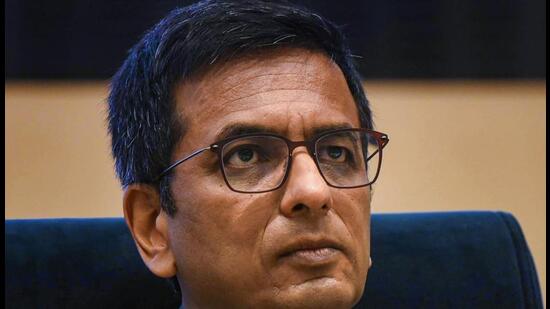
The senior Supreme Court judge also said that technology is not just for the elite, but for all those for whom the delivery of justice is intended.
“Law is a very vital element in our society because our society can survive and be stable so long as law encourages inclusion and pluralism,” said Justice Chandrachud, while speaking at the convocation ceremony of the National Law University, Odisha.
Addressing young lawyers and law students during the event, which was presided over by Chief Justice of India (CJI) Uday Umesh Lalit, justice Chandrachud spoke about how law “teaches us to reason and respect persons who do not agree with us”.
“When we respect the fact that each of us has differing views, we respect those views. Law as a discipline brings us reason. We reason with each other, we don’t physically wrestle with each other and we don’t offload firearms when we are in conflict with each other,” said the senior judge who is next in line to become CJI in November.
This does not mean tolerance, he clarified. “To tolerate someone means you don’t like them,” he said. “On the contrary, you must respect people for their views, even those views which do not accord with your own views.”
Imploring students to broaden their horizons and to associate with people who may not necessarily think, dress, eat, or believe as others do, justice Chandrachud said the greatest danger of this age is that it makes us dislike others who do not agree with us.
“We live today in information bubbles where we read what we like to read and do not consider viewpoints with which we do not agree with,” said the judge, who has scripted some landmark rulings on human liberty and personal rights, including the right to privacy verdict, decriminalising gay sex and allowing women short service commission officers in Army and Navy to be considered on equal footing as men in grant of permanent commission.
“This is the product of the age of information in which we live. This is a great danger of our age, the danger of our wanting to associate with like-minded people,” he added.
Delivering another speech at the inauguration of “Paperless District Courts” in Odisha, justice Chandrachud, who is spearheading the e-committee of the Supreme Court, spoke on the importance of technology and the “paperless court” initiative at the top court.
“Technology is not just for the elite. It is for all those whom the delivery of justice is intended,” he said. “It is imperative to recognise the existence of the digital divide and take steps to bridge this gap. We must ensure that the digitisation of the court process does not disadvantage the common citizens in any way.”
Justice Chandrachud recently made headlines by announcing that the Constitution bench headed by him to hear the power tussle between Delhi government and Centre, over who will have the say on services of officers serving in the National Capital, will be a “green bench” where all paperwork and case records will be digitised.
This initiative is cost-effective for litigants, saves precious time for lawyers, redeems valuable space in courts and offices generally taken up for the storage of physical files, ensures better and easy accessibility and is environmentally sustainable, he said.
The senior judge commended the Orissa high court for implementing digitisation of records, preparing a futuristic records room, vulnerable witness deposition centres, and said the inauguration of paperless district courts in the state was a fitting tribute to the high court celebrating its 75th anniversary.


