Supreme Court upholds removal of commercial activity from elephant corridor
The dispute traces its origin to a 2011 Madras HC order upholding the Tamil Nadu government’s notification declaring the Segur Plateau Elephant Corridor.
The Supreme Court on Monday upheld a Madras high court order directing the removal of all commercial activity from a designated elephant corridor in Tamil Nadu’s Western Ghats, while permitting affected persons to seek an alternative source of livelihood from the state government.
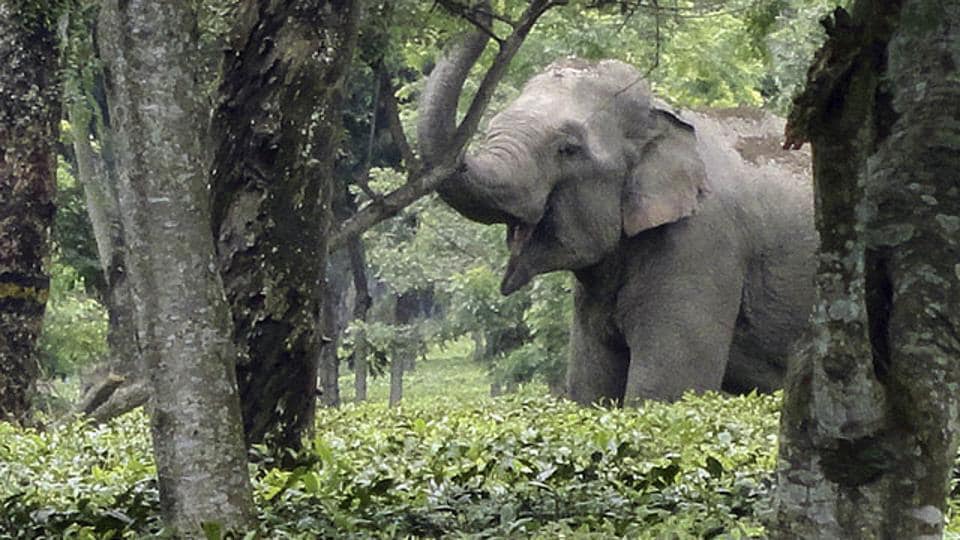
A wild male elephant inside a tea estate. (HT File)
Hearing petitions challenging the September 2025 order of the Madras HC, a bench headed by Chief Justice of India Surya Kant said, “We will not allow elephant corridors to be encroached.” The corridor is considered crucial for the movement of elephants between the Segur Plateau and the Mudumalai Tiger Reserve.
Dismissing appeals filed by resort owners and other commercial establishments operating in the area, the bench, also comprising justices Joymalya Bagchi and V Mohan, said, “We see no ground to interfere with the high court order. The measures suggested by the high court for protecting the elephant corridor do not merit any interference.”
At the same time, the court left it open to the Tamil Nadu government to consider acquiring alternative land or taking appropriate steps to address requests for an alternate source of livelihood for those affected by the eviction.
Additional advocate general Haripriiya Padmanabhan, appearing for the Tamil Nadu government, informed the court that the area had already been cleared of all commercial occupation in compliance with the high court’s order. She, however, submitted that acquiring alternative land posed challenges because of high costs and the presence of tribal communities and forest dwellers in the surrounding areas. According to the state, acquiring alternative land as contemplated by the high court would impose an additional financial burden of around ₹1,300 crore.
The Supreme Court allowed the state to approach the high court if it encountered any difficulty in acquiring land.
Appearing for the petitioners, senior advocates Salman Khurshid, Shoeb Alam and PB Suresh submitted that those affected included workers and people running small businesses in the area for several decades. Alam urged the court to defer the matter by two weeks until the acquisition process was completed.
Opposing the request, Padmanabhan argued that granting such relief would trigger another round of litigation before the high court. Rejecting the plea, the bench told Alam, “We will not grant you permission even for a single day.”
The court, however, observed, “Such a request (for alternate source of livelihood) may be considered sympathetically by the state. However, we make it clear that no commercial activity whatsoever shall be allowed to be run at the subject site.”
The dispute traces its origin to a 2011 Madras HC order upholding the Tamil Nadu government’s notification declaring the Segur Plateau Elephant Corridor. The notification directed private landowners within the notified area to vacate the land and hand over vacant possession to the state.
The Hospitality Association of Mudumalai challenged the notification before the Supreme Court, which upheld the state’s decision. The apex court also constituted a three-member committee headed by a retired high court judge to examine objections raised by landowners and other aggrieved persons. The committee found the structures to be illegal, following which local authorities issued demolition orders. The association challenged those orders before the high court, which dismissed its plea, leading to the present proceedings before the Supreme Court.
Get the latest India News, breaking headlines, and real-time updates from across the nation. Stay informed on politics, government policies, crime, weather, and CEC Gyanesh Kumar row Live.
Home/India News/Supreme Court Upholds Removal Of Commercial Activity From Elephant Corridor

 E-Paper