
 E-Paper



Kerala judge who made ‘sexually provocative dress’ observation transferred
The Kerala high court cancelled the anticipatory bail granted by Kozhikode sessions court judge to writer Civic Chandran in a sexual assault case


The Kerala high court on Wednesday cancelled the anticipatory bail granted to writer Civic Chandran (74) in a sexual assault case and said that the sessions court judge’s observations on “sexually- provocative dress” cannot be justified.
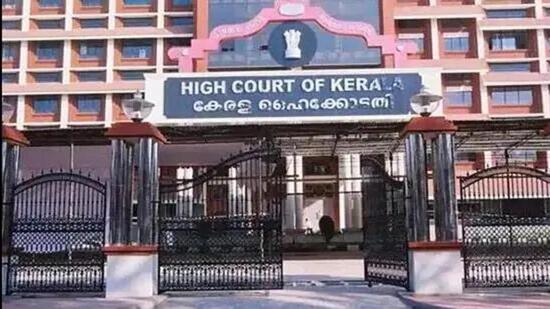
But the single bench of Justice Kauser Edappagath directed the police not to arrest the accused immediately considering his age and the court will examine all the records pertaining to the case.
The Kerala government moved the court last week after Kozhikode sessions judge S Krishnakumar’s observations while granting bail to Chandran in two cases triggered widespread outrage. In a related development judge Krishnakumar has been transferred to the labour court in Kollam in south Kerala by the high court registrar general.
The order passed by the sessions judge on August 12 said that sexual harassment complaints will not stand if the woman (complainant) was wearing sexually-provocative dress at the time of offence. The government challenged it saying the observations by the court “lack sensitivity and sobriety.” Reacting to the decision of the high court, the complainant said “it is a big relief.”
Two sexual assault cases were filed against Civic Chandran this year. A young woman writer alleged in April that the accused made sexual advances towards her in a writers’ conference held at Nandi beach in February 2020. The police registered cases against him under Sections 354 (A) (sexual harassment), 341 (wrongful restraint) and 354 (outraging the modesty of a woman) of the Indian Penal Code (IPC).
The accused moved the court for anticipatory bail and the sessions court granted bail to him on August 12 saying Section 354 (A) will not stand in the case when the woman was wearing sexually-provocative dress. While cancelling his bail, the high court observed that irrelevant materials were relied upon by the lower court while granting bail to the accused and the observations cannot be justified. The court agreed to the contention of the government and cancelled his bail.
Meanwhile in the second case filed by a young Dalit writer, the high court issued notices to Civic Chandran. In the plea she contended that while granting bail to the accused “the lower court had made some illegal references and observations.”
Granting bail to the accused in the case filed by the Dalit writer, the sessions court observed that “offences under the SC/ST Prevention of Atrocities Act will not stand against the accused as it is highly unbelievable that he will touch the body of the victim fully knowing that she is a member of the Scheduled Caste.” For this, the judge cited a reason: “In educational certificates of the accused he mentioned that he has no caste or religion.”
The court also pulled up the survivor saying that “it seems to be an attempt to tarnish the status of the accused.” “He is fighting against the caste system and involved in several agitations. The copy of the SSLC book shows that he refused to mention his caste. The accused is a reformist and is engaged in fighting against caste system,” it said adding sections of the SC/ST Act will not prima facie stand against the accused.
The National Commission for Women (NCW) and many activists and writers deplored the controversial observations of the judge and sought the intervention of the high court.
Along with Krishhankumar three other judges were also transferred. Kollam labour court judge C S Mohit was shifted to Ernakulam labour court, Ernakulam additional judge to Manjeri district court and Manjeri district and sessions judge S Muraleekrishna to Kozhikode, according to the high court register general’s office.


