
 E-Paper



Kerala tops Niti’s health index for 4th year in a row
The report – ‘Healthy States, Progressive India’– considers 15-24 indicators, which are grouped in the three domains of health outcomes, governance and key processes.

 Prefer HTon Google


Kerala is the best among India’s states in providing healthcare, while Uttar Pradesh is at the bottom of the table among big states, the Niti Aayog’s fourth State Health Index showed on Monday.
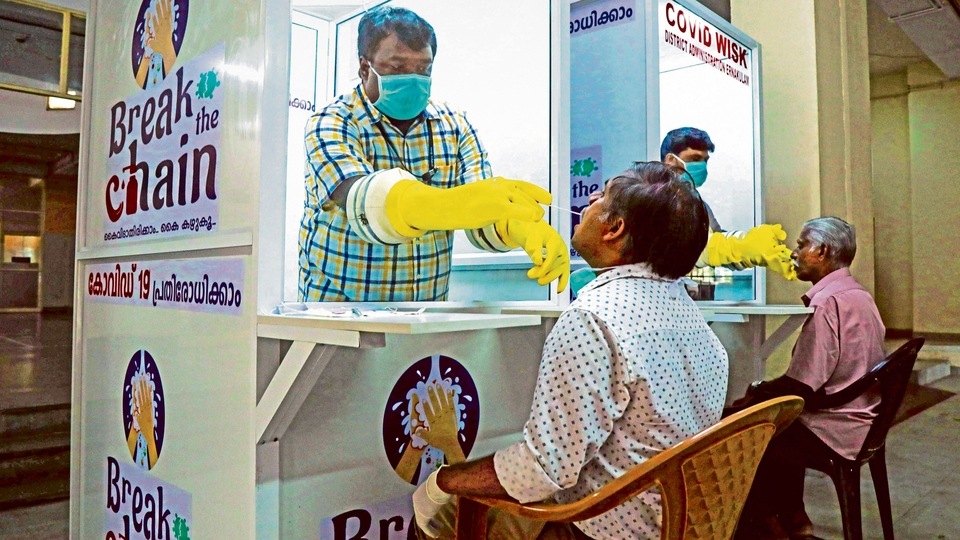
The country’s most populous state, however, was adjudged the best in improving its performance, followed by Assam and Telangana. Kerala, which topped the overall health performance index for the fourth consecutive time, stood 12th on that count.

The report – ‘Healthy States, Progressive India’– considers 15-24 indicators including neonatal mortality rate (NMR), sex ratio at birth, maternal mortality rate, under 5 mortality rate (U5MR) and governance, among others, which are grouped in the three domains of health outcomes, governance and key processes.
The states are divided based on their size (19 big and eight small states) and Union territories.
The federal think tank has prepared the report with technical assistance from the World Bank, and in consultation with the health ministry. It compared performance for financial year 2019-20 in comparison to 2018-19.
Among the eight smaller states, Mizoram topped the list, while Nagaland was at the bottom of the table in overall performance. In the overall health performance of Union territories, Dadra and Nagar Haveli, and Daman and Diu topped the list, while Delhi ranked fifth.
“States are beginning to take cognizance of indices such as the State Health Index and use them in their policymaking and resource allocation,” said Rajiv Kumar, vice-chairman, Niti Aayog.
The incremental performance of states is crucial as it indicates efforts made by them to address challenges, officials said. While there is no change in the overall performance of states such as Uttar Pradesh, Jharkhand, Madhya Pradesh, Maharashtra and Bihar since last year, they have shown some improvement, the official said, requesting anonymity.
Similarly, among the Union territories, the national capital emerged as the top performer in terms of improved performance, registering an incremental change of 9.7 percentage points from last year’s index.
“Our objective through this index is to not just look at the states’ historical performance, but also their incremental performance. The index encourages healthy competition and cross-learning among states and UTs,” said Amitabh Kant, chief executive officer of Niti Aayog.
This report is important as the health ministry has linked the index to incentives to states and Union territories under the National Health Mission, a Niti Aayog official said.
“States which have shown improvement in incremental performance will get higher incentives under the NHM. Some states such as Haryana, Karnataka, Himachal Pradesh, etc., indicate an overall better health system, but have shown a negative incremental performance,” the official said, declining to be named.
“There is an urgent need to accelerate efforts to narrow the performance gap between the states/UTs as 50% of the larger states, 50% of smaller states and 43% of the UTs did not even reach the halfway mark in terms of the Composite Overall Index Score (100),” the report said.
Telangana, Maharashtra, Kerala, Tamil Nadu, Andhra Pradesh, Mizoram and Tripura are the only states to have shown improvement both in overall and incremental performances.
The report pointed out that Rajasthan was the weakest performer both in terms of Overall Performance and Incremental Performance.
The performance of states on key health indicators such as U5MR and NMR reflect the need for improvement. For instance, NMR, which should be 12 or less per 1,000 births, is between five and 13 in only five states, namely , Himachal Pradesh, Kerala, Maharashtra, Punjab and Tamil Nadu.
“All states registered a reduction in NMR or its level remained the same during 2014 to 2018, except Chhattisgarh, where the number of neonatal deaths per 1,000 live births increased from 28 to 29. This is an important trend as NMR reflects the availability and quality of prenatal, intrapartum and neonatal services,” the report read.
All the larger states recorded a reduction in U5MR between 2014 and 2018, a critical indicator for a child’s survival, the report said. “Kerala continued to be the best performing state with the lowest U5MR of 13 per 1,000 live births in 2014 and 10 per 1,000 live births in 2018,” it said.
Assam and Madhya Pradesh are the worst performers with U5MR of 66 and 56 per 1,000 live births, respectively, according to the report.
A Niti Aayog official said, “Uttar Pradesh has shown a marked improvement in the performance in majority of the indicators. There has been improvement in its performance with respect to the intermediate health outcome indicators such as full immunisation coverage, total case notification of TB, TB treatment success rate etc.”


