
 E-Paper



Chamoli accident: ‘Electrocution a regular issue at disaster site,’ say locals
Chamoli residents said the first inkling of something going wrong was on Tuesday, when the lone security guard at the STP stopped picking up his mobile phone.

 Prefer HTon Google


A lack of communication between government agencies despite red flags, the restoration of electricity without identifying the root cause of a fault, and lack of accountability seem to have caused the death of 16 people and injuries to 11 others, all of whom were electrocuted at Namami Gange Sewerage Treatment Plant at Gopeshwar in Chamoli on Wednesday morning.
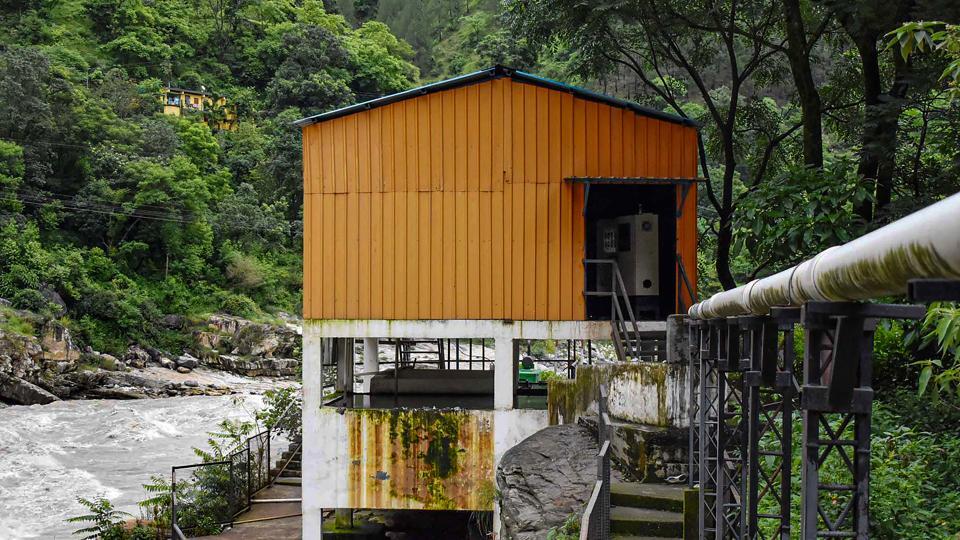
The sewerage treatment plant (STP) with a capacity of 0.5 megalitres per day was set up under the Namami Gange project in 2019 and handed over to the Uttarakhand Jal Sansthan in 2021, with electricity provided to it by the Uttarakhand Power Corporation Limited.
Also Read | Workers at Delhi hospital electrocution site not given safety gloves: FIR
Local residents in Chamoli, a small town in Uttarakhand, around 240 km away from Dehradun, said the first inkling of something going wrong was on Tuesday night, when the lone security guard at the STP, Ganesh Lal, stopped picking up his mobile phone.
Kranti Bhatt, a resident of Chamoli, said when Lal continued to be incommunicado till Wednesday morning, his colleagues along with his father and brother (both eventually among the deceased) went to the STP site around 8.30 am. “They found him dead, and it looked like he had been electrocuted. They informed the police around 9 am, and the police team reached there by 9.30 am. A crowd had gathered, and while inquest proceedings were on, electricity passed through the entire structure, including the iron railing most were clutching that rings the complex. Everyone got electrocuted,” Bhatt said.
Also Read | Two die of electrocution in Lucknow
Those familiar with the area said it seemed “clear” that Lal had been electrocuted, also because it was not the first time this problem had emerged, even if there were no fatalities before.
“It is not the first time such an incident has taken place. There were labourers that had felt shocks here during the Corona period. A few months ago, a nomadic community that had erected tents near the STP had also complained of electric shocks,” Kuldeep Varma, BJP Chamoli general secretary said. “We asked the officials concerned to address the issue, but they had taken no action.”
Between 9.30 and 11.35 am, when the panchnama was being prepared by the police with villagers milling around, there was no electricity in the STP, Varma said. “But suddenly it was restored. The machines used in the treatment plant blew, and live electricity spread, which led to the incident,” he added.
Senior officials of the UPCL said they were given no intimation by either the police, or the Jal Sansthan, the government body that looks after the STP, that there had been a possible electrocution death discovered in the morning.
A UPCL statement said, “According to preliminary reports, there is a 20 KV transformer for the Namami Gange project near the Chamoli bridge. During routine patrolling, our linesman found that a jumper of a 11 KV feeder (part of the electrical circuit) on a pole near the STP had been disturbed. Of the three phases, two phases were operational. To fix the issue, the electricity was shut down at 11.15 am, and restored at 11.35 am. After the line was restored, we received information that there has been an incident at the STP because of electrocution.”
Amit Saxena, executive engineer of the Uttarakhand Power Corporation Limited, said that around the same time, as the police and other people had gathered at the STP for legal formalities of the deceased, a Jal Santhan operator also turned on the main switch at the site. “The incident happened because there was an internal leakage of electricity current at the STP,” he added.
Government officials said they were looking at reasons why electricity was coursing through the structure, which likely caused both the deaths of Lal and the 15 others after him. “It is likely there was a problem in the internal wiring, but we are investigating,” a government official said.
A senior UPCL official, who declined to be named, however, admitted there was a basic error in restoring electricity, without understanding why one phase had blown in the first place. “We generally identify the fault which has caused the jumper or the feeder in the circuit to be disturbed. If the linesman had checked the transformer or the meter, he would have discovered the leakage of the current, and not switched it on,” the official said.
Praveen Kumar Saini, superintendent engineer of the Jal Sansthan, said while the organisation was going to hold an internal enquiry, he believed the UPCL had some culpability. “We will ask the UPCL why they didn’t snap the line despite the first electrocution incident,” Saini said.
Director general of police (DGP) Ashok Kumar said they have thus far not registered a case in the matter. “We have not received a complaint in this regard from anyone. A magisterial inquiry has been ordered. If anyone approaches the police with a complaint, we will look at it,” Kumar said.


