E-Paper



Supreme Court acquits school officials in Maharashtra tribal girl’s death in 2020 pillar collapse
The Bench said the school administrators could not be held criminally responsible merely for failing to ensure the pillar was properly constructed.

 Prefer HTon Google


The Supreme Court has acquitted the president and hostel superintendent of a Maharashtra tribal residential school of culpable homicide charges over the death of a 12-year-old girl who was crushed when a poorly constructed pillar collapsed on her in 2020.
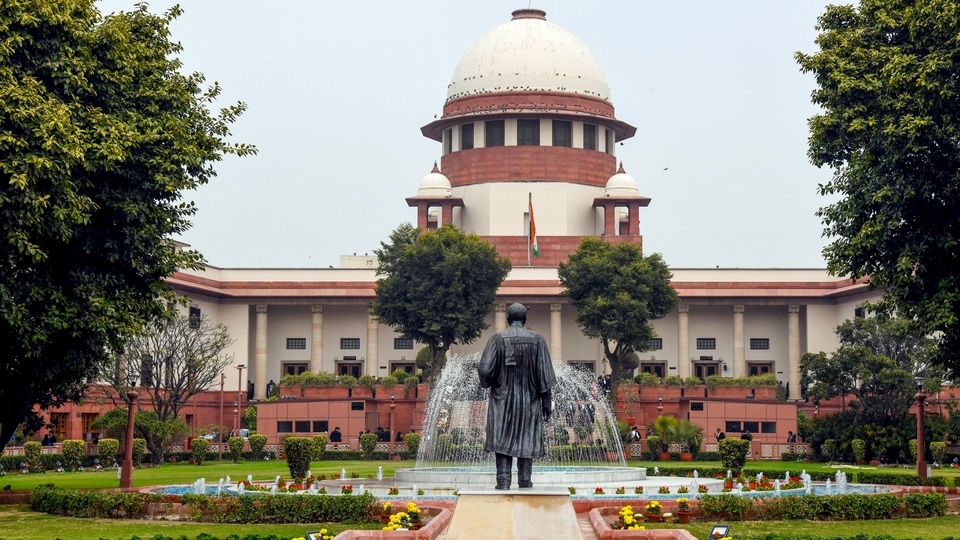
In a judgment released on Thursday, the court held that a mere breach of duty or failure to ensure proper construction was insufficient to establish criminal liability in the absence of requisite knowledge or proof of gross negligence.
A bench of justices JB Pardiwala and Manmohan said the school administrators could not be held criminally responsible merely for failing to ensure proper construction of the pillar, particularly when the actual construction work had been entrusted to a contractor.
“The mere failure to attain the standard of care prescribed by the law, thereby committing breach of such duty as observed by the high court would not be a criminal act,” noted the bench, setting aside the Bombay High Court’s February 2026 order refusing to quash the criminal proceedings against the two school officials.
The court emphasised that culpable homicide under Section 304 of the Indian Penal Code requires proof of intention or knowledge that the act was likely to cause death, and that the mere use of inferior construction material could not, by itself, establish that the school administrators knew that the construction was likely to cause a student’s death.
The case
The case arose from the February 15, 2020 incident at Prashnachinha Adivasi Ashram Shala in Mangrul Chawala in Maharashtra's Amravati district, where Bharti Belsare, a Class 7 student, died after a cement-and-brick pillar collapsed on her. Several other girls were also injured in the incident.
Her father, a labourer, lodged an FIR alleging that the school’s president, Matin Shankarrao Bhosale and the hostel superintendent had deliberately permitted substandard construction and failed to take adequate precautions, resulting in the pillar collapsing on the children. Following an investigation, police filed a chargesheet against the two under Section 304 (culpable homicide not amounting to murder) read with Section 34 (joint criminal liability) of the IPC.
The high court had declined to quash the proceedings, holding that forensic examination of the construction material revealed inadequate cement content and that the pillar lacked a proper solid base. It concluded that there was sufficient material to indicate a breach of duty by the school officials and that they had knowledge that substandard construction could cause harm or death.
What the Supreme Court said
The Supreme Court, however, drew a distinction between culpable homicide under Section 304 and causing death by negligence under Section 304A of the IPC, pointing out that the latter provision covers cases where death is caused by a rash or negligent act without intention or knowledge that the act is likely to cause death.
Explaining the distinction, the bench said Section 304A applies only where there is neither intention to cause death nor knowledge that the act would, in all probability, result in death. Where intention or knowledge is the motivating force behind the act, the more serious charge of culpable homicide would apply.
The court also made it clear that even a charge under Section 304A requires more than ordinary negligence.
“Mere negligence cannot be construed to mean rashness,” said the bench, adding that criminal negligence must involve “gross and culpable neglect” or a failure to take precautions that it was imperative for the accused to adopt.
It said the prosecution must establish that the accused’s act was the direct and proximate cause of death, and not merely one of several circumstances that contributed to the incident. Referring to the legal principle of “causa causans” -- the immediate and effective cause, the bench said criminal liability under Section 304A cannot be fastened merely because an act was a necessary condition for the eventual death.
Applying this test, the court held that the school administrators’ alleged failure to ensure proper construction could not be regarded as the immediate and effective cause of Bharti’s death.
“Many other factors might have resulted in the unfortunate incident,” said the bench, pointing out that the contractor and his team were actually undertaking the construction. Had the contractor taken adequate care to ensure the safety of the students, the incident might not have occurred, it added.
The bench further said the school officials stood on a different footing from other accused, if any, in the case, and that the person who could prima facie be held responsible for the girl’s death was the contractor, subject to evidence that may emerge during the trial.
Towards the end of the judgment, the court acknowledged the tragedy and the anguish of the victim’s parents but cautioned against allowing the outcome of an incident to influence the application of criminal law.
“Dictating this order was a very painful experience. The very thought of a twelve-year-old girl getting crushed beneath the pillar of her own school makes our heart bleed with pain and agony,” it said.