
 E-Paper



Law to label persons as terrorists up for review
The challenges to the changes were filed by an individual Sajal Awasthi and NGO Association for Protection of Civil Rights (APCR).

 Prefer HTon Google


The Supreme Court on Friday took up two petitions challenging the amendments to the country’s anti-terrorism law, which was made stronger earlier this summer to give government the power to label individuals as terrorists and seize their properties.
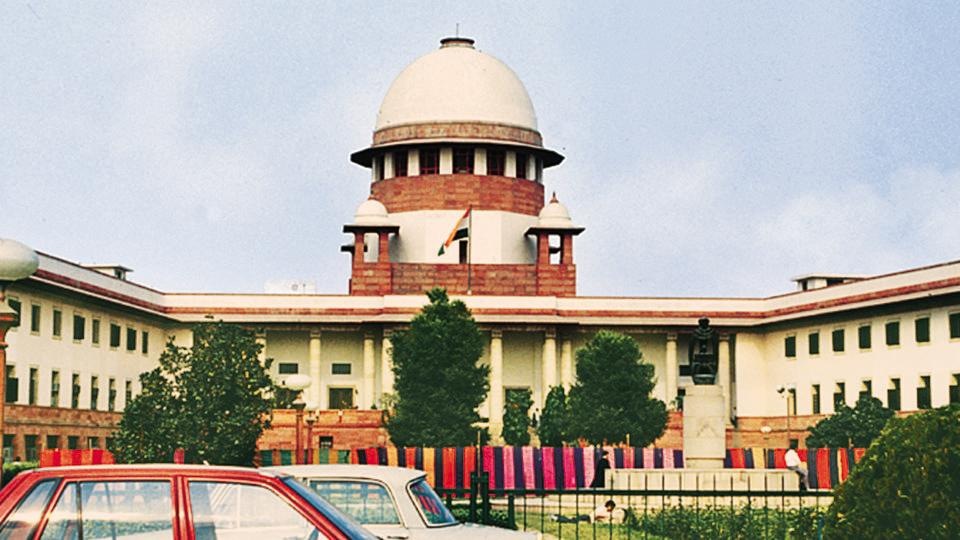
The petitioners said the changed provisions of the Unlawful Activities (Prevention) Act, which were enacted on August 9, are unconstitutional. A bench comprising Chief Justice Ranjan Gogoi and justice Ashok Bhushan asked the government to respond to the petitions.
Labelling an individual as a terrorist will lead to lifelong stigma, which infringes upon the right to reputation and dignity, and doing so without giving an opportunity to be heard violates the right to liberty, said the pleas, which specifically challenged sections 35 and 36 of the UAPA amendment. The law was cleared in the Budget session of Parliament.
The previous version of the law allowed only organisations to be categories as terrorist entities.
The challenges to the changes were filed by an individual Sajal Awasthi and NGO Association for Protection of Civil Rights (APCR).
“It is well-settled and established position of law that dignity and liberty of an individual is inalienable under the regime of our controlled constitution and that the State is under an obligation to preserve the same. Though there have been certain instances wherein the State has adopted a contrary approach to the above-stated fact and it is pertinent to note here that the Unlawful Activities (Prevention) Amendment Act, 2019 is an example of such an encroachment upon the Fundamental Rights,” read Awasthi’s petition.
APCR’s petition, filed through advocate Fauzia Shakil, submitted that giving “discretionary, unfettered and unbound powers” to the government to notify an individual as a terrorist is against the right to equality as laid down in the Constitution.
The two have also argued that the amendment seeks to curtail the right to dissent under the garb of curtailing terrorism.
On Wednesday, India declared Lashkar-e-Taiba (LeT) chief Hafiz Saeed, Jaish-e-Mohammed (JeM) chief Masood Azhar, LeT’s commander of operations in Kashmir Zaki-ur-Rehman Lakhvi, and underworld don Dawood Ibrahim — all based in Pakistan — as terrorists under the amended UAPA.
The move was welcomed by the United States, which saw it as a crucial step in efforts to coordinate counter-terror initiatives.


