
 E-Paper



Lok Sabha, Rajya Sabha told to prepare for a ‘normal session’
The last three Parliament sessions were cut short due to the coronavirus disease pandemic, with the winter session in both Houses being skipped altogether. HT reported on June 8 that the session is likely be held in July, the normal schedule of the monsoon session, quoting a top functionary.


New Delhi: The union government has asked Rajya Sabha chairman Venkaiah Naidu and Lok Sabha Speaker Om Birla to prepare for a “normal session” of Parliament that is likely to begin from third week of July, two officials familiar with the matter said.
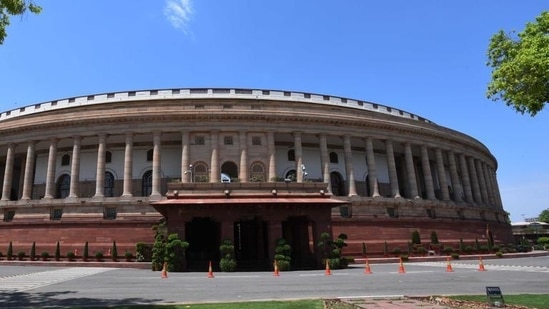
“The tentative schedule of the session is from July 19 to August 13. The Cabinet Committee on Parliamentary affairs, headed by defence minister Rajnath Singh will meet to decide the schedule,” said said one of the people cited above, who asked not to be named. The communication to the presiding officers was sent three days ago.
The last three Parliament sessions were cut short due to the coronavirus disease pandemic, with the winter session in both Houses being skipped altogether. HT reported on June 8 that the session is likely be held in July, the normal schedule of the monsoon session, quoting a top functionary.
The second official added that an ebbing second wave of the pandemic coupled with the full vaccination of more than 75% of the MPs (across both houses) means that a full session could be conducted as per the usual schedule.
Lok Sabha Speaker Om Birla recently told HT that the upcoming session will follow usual Covid safety protocols, but that vaccination will not be a pre-requisite for attendance. The last session saw mandatory and regular RT-PCR tests.
At least 40 bills and five ordinances are awaiting Parliament’s approval and a normal session that usually lasts for a month, can give the government enough room to push through its legislative agenda. The Opposition too, can demand discussion on issues that could not be accomodated in the past few session due to paucity of time. “Subjects such as the economic situation, vaccination policy, spiraling price rise and fuel price hike are some that we want to take up,” a senior Opposition leader said on condition of anonymity.
Five ordinances are currently in force. The Homoeopathy Central Council (Amendment) Ordinance, The Indian Medicine Central Council (Amendment) Ordinance, The Commission for Air Quality Management in National Capital Region and Adjoining Areas Ordinance, The Insolvency and Bankruptcy Code (Amendment) Ordinance and The Tribunals Reforms (Rationalisation and Conditions of Service) Ordinance need to be replaced with bills as the Indian Constitution gives a window of only six weeks from the beginning of a parliament session after ordinances are rolled out.
The second wave of the pandemic has now seen a steady drop for seven consecutive weeks in the country. The seven-day average of new infections touched a peak of 391,819 new cases a day on May 9, has dropped to 48,423 cases a day in the past week, a drop of over 88% from the peak.
The rate of vaccinations, meanwhile, has picked up pace with the introduction of a new vaccine policy starting June 21. Between June 21 and June 28, nearly six million doses of the vaccine were administered across the country every day on average – the highest ever. Till Tuesday evening, 56.3 million Indians had received both doses of the vaccine and another 211 million had received one dose. That means around 28.5% of the eligible population (those over the age of 18 years) has received at least one shot of the vaccine.


