E-Paper



MP: Forest dept can’t permit translocation of Baobab trees
The decision was taken after a report in HT highlighted the heritage and historical value of the trees

 Prefer HTon Google


The Madhya Pradesh government has decided that the forest department cannot give permission to translocate Dhar’s famed Baobab trees, some of which are centuries old, and that this can be done only by the State Biodiversity Board, state governnment officials said on Friday.
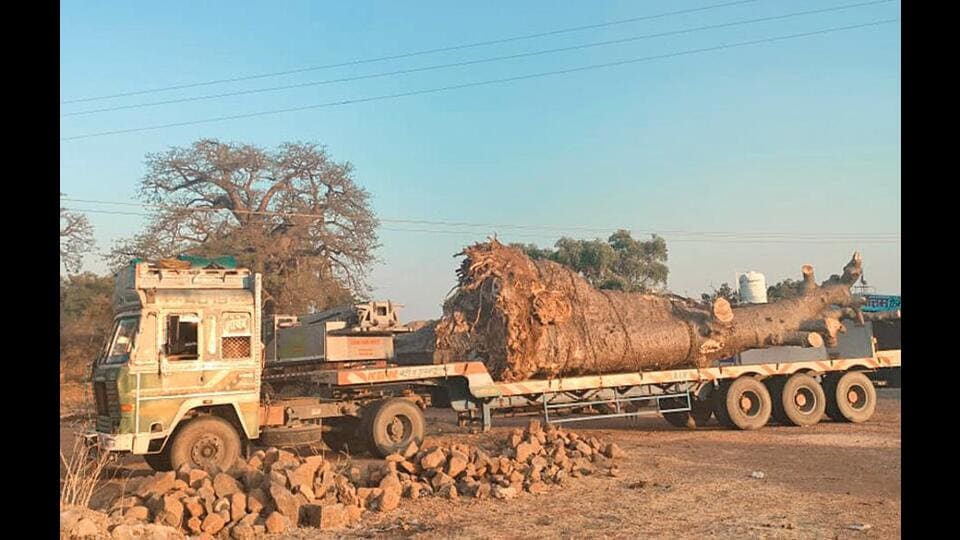
The decision was taken after a report in HT highlighted the heritage and historical value of the trees, native to Africa, but likely brought to this corner of Madhya Pradesh by African soldiers hired by the local Islamic kingdoms between the 10th and 17th century. The report also mentioned the protests by tribals against the translocation of Baobab trees by a Hyderabad businessman Ramdev Rao .
The office of Madhya Pradesh chief minister Shivraj Singh Chouhan has sought a detailed explanation from the tribal affairs and forest department and a report from Dhar district administration, said a CMO official.
Confirming this, principal secretary, tribal affairs Pallavi Jain Govil, said: “The CMO asked about our role in the translocation and we are sending a report. It is mainly an issue of forest and local administration.”
Dhar district collector Priyank Mishra said the government is making a new policy to save the Baobab trees, locally known as Khusrani Imli. He added that the district administration is preparing a report, including inputs from botanists, archaeologists, historians and other subject experts in an effort to save the trees. “The report will be sent to the state government to declare them part of local heritage. Till then I have put a ban on commercial use of the trees.”
The ban has been imposed by placing the trees under the Biodiversity Act, which means that permission to use them commercially will have to be taken from the state biodiversity board. “Now, the trees can’t be used commercially without permission of biodiversity board. I also directed all the local revenue officials on Thursday late evening not to issue any permission and no objection certificate for cutting and any other use of the trees,”Mishra added. Dhar has around 1000 Baobabs.
In a letter to local administration, the DC said that the tree, Adansonia digitata found in Dhar t is a rare biological resource and is the historical heritage of the district. “Management of such biological resources is bound to be done under the rules/instructions issued under Biodiversity Act 2002,” said the collector, reading out the letter.
Mishra said the two trees which were uprooted are being translocated back to the village Pannala where the sarpanch Bhuribai has been asked to care of them under the supervision of biologist.
“We have been fighting for this cause for the past one year, but we didn’t get any success. The administration was calling it private property but we stuck to our demand that such rare things can’t be sold out for money, and we won,” Bhuribai said.
A local tree activist, Dheeraj Chaudhary said, “One tree has been replanted and the process doing so of the other has been initiated. We are happy that our voices were heard, and we saved our cultural heritage.”