
 E-Paper



Makoka 315: Trigger-happy teens strike terror in NE Delhi
The gang’s name is a nod to the stringent Maharashtra Control of Organised Crime Act, also known as MCOCA, a law meant to crush criminal syndicates


He was just 13and living on the snaking streets of northeast Delhi when he picked up a gun and killed a gym trainer in cold blood in 2020. He wasn’t alone — two other minors accompanied him that day, united in their first taste of infamy. Four years on, the boy has amassed nine criminal cases. Four of them are murders.
And he’s unapologetic. Brash, even. He flaunts his crimes on Instagram for an audience of thousands. His feed brims with bravado, showcasing weapons, taunts and an unsettling confidence.
Now 17, the boy is a core member of the infamous “Makoka 315” gang – a chilling assembly of minors that has unleashed terror in northeast Delhi. They revel in violence — shootings, stabbings, and killings — and flaunt their exploits online.
The gang’s name is a nod to the stringent Maharashtra Control of Organised Crime Act, also known as MCOCA, a law meant to crush criminal syndicates. The “315” refers to the bore of the crude pistols they wield with unnerving ease, says a Delhi Police head constable tracking the gang and working to dismantle their functioning.
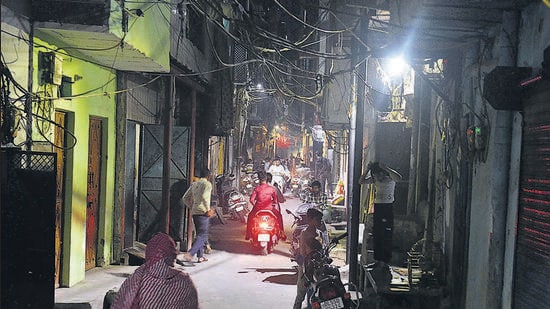
Their crimes have cast shadows over northeast Delhi: a shooting at Guru Teg Bahadur (GTB) Hospital, the November 9 murder of a 24-year-old in Kabir Nagar, a stabbing in Jafrabad, and countless firings in crowded neighbourhoods.
They frequently boast of their crimes on social media and post videos of themselves going to observation homes and appearing in courts.
HT spoke to a 16-year-old member of Makoka 315 on an open street.
Dressed in blue jeans and a red shirt with the words “Gangsta” emblazoned unsubtly across, the boy, who asked not to be named, screamed languidity. He boasted of the three murder cases against him with disinterest.
“Yes, we do it (crime). We go to jail and come back in a few months. What’s the worry?” he said, scrolling through his phone.
The minor declined to reveal where the gang gets its weapons. “I can’t share such details with you”.
On whether he lives with his parents, the boy said: “I show them my face occasionally... that’s enough... I don’t want the life they live.”
During the conversation, the boy, who is mostly hooked to Instagram where he has 3,000 followers, says that he operates social media handles for two of his friends in “Bachcha Jail” – their nomenclature for observation homes – ensuring that their infamy doesn’t wane.
“We make videos in advance and post them regularly. It’s important for our clout in the area and generally in our circuits” he said.
Refusing to speak further, the boy leaves abruptly on a black bike.
The formation of ‘Makoka 315’
In 2020, three minors, aged between 13 and 16, including the 13-year-old mentioned above, shot a gym trainer in Jafrabad over a petty insult. “The trainer slapped one of the boys and they saw this as an opportunity to establish their clout in the area. They went to his house and shot him,” the officer said.
Around the same time, two teenagers — aged 16 and 17, both social media-savvy residents of Seelampur and Vijay Park — murdered an ice cream seller in Yamuna Vihar. It was their way of “announcing their arrival in Delhi’s underworld”, said investigators.
Around the same time, two teenagers — aged 16 and 17, both social media-savvy residents of Seelampur and Vijay Park — murdered an ice cream seller in Yamuna Vihar. It was their way of “announcing their arrival in Delhi’s underworld”, said investigators.
A year later,aged 14, he fired outside a house in Welcome area. The same year, he was allegedly involved in murdering a police informant in Maujpur.
He was apprehended and sent to an observation home, but released in a few months.
Investigators said that gangs seek out minors to carry out heinous crimes like murders as well as petty thefts because they are sent to observation homes only for four to six months before being released. The fact that the cycle of events — from a juvenile committing the crime to his apprehension, time spent in an observation home and subsequent release — is less time consuming makes minors easy hires.
In 2023, aged 16, he was involved in a firing and robbery incident with some friends in a club in Karol Bagh.
“We believe the gang was formed in early 2023 when all these minors who committed murders joined hands and started operating under the name Makoka 315,” the officer cited above said.
The officer said that they live in the same neighbourhood where they got acquainted and decided to “work together”.
The gang was earlier headed by a 21-year-old man who was arrested in July in the GTB shooting case. But now, it is headed by a 17-year-old currently lodged at an observation home where he was sent after his involvement in a murder on November 9.
These minors quickly became pawns in the broader nexus of Delhi’s gang wars.
“The 21-year-old (mentioned above) is closely associated with this gang, but he has since formally joined the Hashim Baba gang,” the officer said.
Links to Hashim Baba
Their exploits caught the attention of the Hashim Baba gang, one of the city’s most feared criminal networks, linked to notorious gangster Lawrence Bishnoi.
Makoka 315, by their own admission and according to police probe findings, operates as an auxiliary of the Hashim Baba group. “The gang’s links to Hashim Baba were known for a long time, but it was established during the investigation of GTB shooting. The former head (the 21-year-old) of the Makoka gang was tasked with the hit job,” said the head constable cited above.
Its members, most still in their teens, carry out murders, robberies, and intimidation for as little as ₹15,000– ₹20,000 — a pittance compared to what seasoned gangsters charge, which runs into lakhs depending on the fame and work of particular gangsters.
“They’re cheap, fearless and considered expendable. Moreover, since they’re minors, it makes them hard to prosecute under stringent laws,” said a senior officer.
In one chilling episode in May, gang members surrounded a 35-year-old man in Jafrabad and stabbed him multiple times. The murder, recorded on video, went viral.
“Two days before the killing, a Hashim Baba associate treated the boys to a party, bought them new clothes and shoes before handing them ₹15,000 for the job,” the officer cited above said.
Mostly, the members of the gang get money and weapons from Hashim Gang, but some – not all – also commit petty crime like snatching and robbery to maintain their extravagant lifestyle. “They don’t want to be known for petty crimes, which is why not all of them are sold on snatching,” the officer said.
The clout
Their social media presence is a grotesque blend of gangster rap soundtracks, reels of weapons, and clips of police escorting them to observation homes. To their growing audience, these moments are badges of honour.
Comments under their posts are filled with emojis and messages of admiration from young fans.
“They take pride in going to observation homes and boast about it on social media. They believe it will increase their clout,” the ASI said.
Most of the gang members have thousands of followers on Instagram, a few even have 100,000 or more.
For law enforcement, the challenge is immense.
The Juvenile Justice Act, designed to reform young offenders, is being exploited by gangs to recruit minors who return to the streets within months of committing violent crimes. “The leniency offered to minors by the system only emboldens them,” said an investigator.
Strayed from their families
For these teenagers, crime is both survival and spectacle. Many live away from their families, renting rooms together or staying in cheap hotels.
The grandmother of a 17-year-old gang member said that he was “okay” till his mother was alive four years ago. He studied till Class 5 and then dropped out of school.
“After his mother’s death, he fell astray. He stopped listening to his father and became friends with the boys who were into drugs and drinking and crime,” the 65-year-old said.
Whenever he comes out of observation home, his grandmother said, he visits her once or twice.
“In a few months, he does something and goes back to the observation home,” she said.
“In a few years, either police or someone else will kill him, and we’ll find him dead on a road.”


