
 E-Paper



Maoist committee says prepared to give up arms in Maharashtra, Chhattisgarh, MP
The Maharashtra–Madhya Pradesh–Chhattisgarh (MMC) Special Zonal Committee spokesperson Anant expressed willingness to return to the mainstream

 Prefer HTon Google


A Maoist zonal committee has said its cadres are prepared to give up arms and join the mainstream by January 1, if governments in Maharashtra, Chhattisgarh, and Madhya Pradesh offer security guarantees and a transparent rehabilitation process.
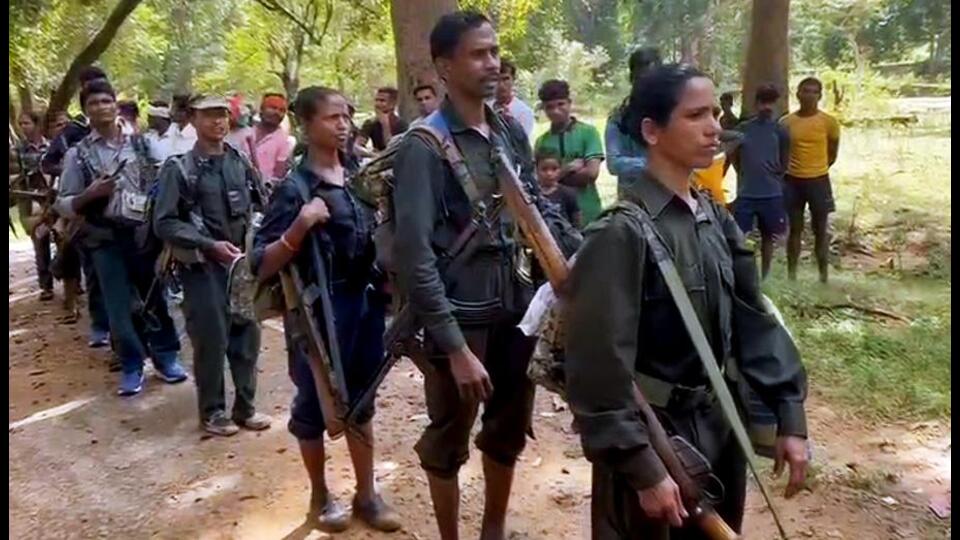
In a letter addressed to chief ministers of the three states on Thursday, the Maharashtra–Madhya Pradesh–Chhattisgarh (MMC) Special Zonal Committee spokesperson Anant expressed willingness to return to the mainstream, but underlined that previous rehabilitation efforts “remained on paper” and failed to protect surrendered Maoists and their families.
The offer has come amid heightened anti-Maoist operations as the Union government has set a March 31, 2026, deadline for ending the Left-wing insurgency. Security forces have killed over 270 Maoists over the past year in Chhattisgarh, Maharashtra, Bihar, Jharkhand, Andhra Pradesh, and Telangana. At least 1,225 have surrendered, and 680, including top leaders, have been arrested. The killing of Maoist chief Nambala Kesava Rao, alias Basavaraju, on May 20 marked the most significant success against the Left-wing insurgency in years.
The Union government has said that the number of Left-Wing insurgency-hit districts has fallen to 11, from 18 in April.
Anant urged the state governments to create an atmosphere conducive to peaceful transition and requested a temporary halt to security force operations in Maoist-affected areas until the surrender process concludes. He added that they would also cease all violent or organisational activity for the same period.
The letter referred to Chhattisgarh chief minister Vishnu Deo Sai’s comments, indicating a surrender process could be completed in 10 to 15 days. It agreed to the timeline and reiterated that neither side should initiate offensive action until January 1.
Anant sought a meeting between government representatives and Maoist interlocutors in Madhya Pradesh to discuss key proposals and build confidence. He said their cadres would be reachable via radio frequency 435.715 between 11 am and 11:15 am daily for the next month as part of the proposed coordination mechanism.
The committee appealed to journalists and opinion makers to ensure that trust in the process is maintained. It added cadres, and their families want peace and a dignified return to society.
There was no immediate response from the three state governments
The MMC committee has been active in the tri-junction forests of Gadchiroli (Maharashtra), Balaghat (Madhya Pradesh), and Rajnandgaon and Kabirdham in Chhattisgarh. The region is considered a key operational corridor for the Maoists.
The strategically significant area’s dense forests and interstate boundaries make coordinated anti-Maoist operations complicated. The region has historically been used as a logistics and recruitment base.
-kW0H-U20214218012MgB-250x250%40HT-Web.jpg)


