
 E-Paper



Mask mandate, immunity, climate helped India lower Covid-19 cases: Report
The report quoted health policy expert Genevie Fernandes who said mask mandates are one of the things that may have helped bring down India's Covid-19 caseload.

 Prefer HTon Google


From a Covid-19 hotspot nation with over 90,000 cases in a day four months ago to recording its lowest daily infection tally, India is seeing a steady decline in cases, showing a grasp over handling of the coronavirus disease outbreak.
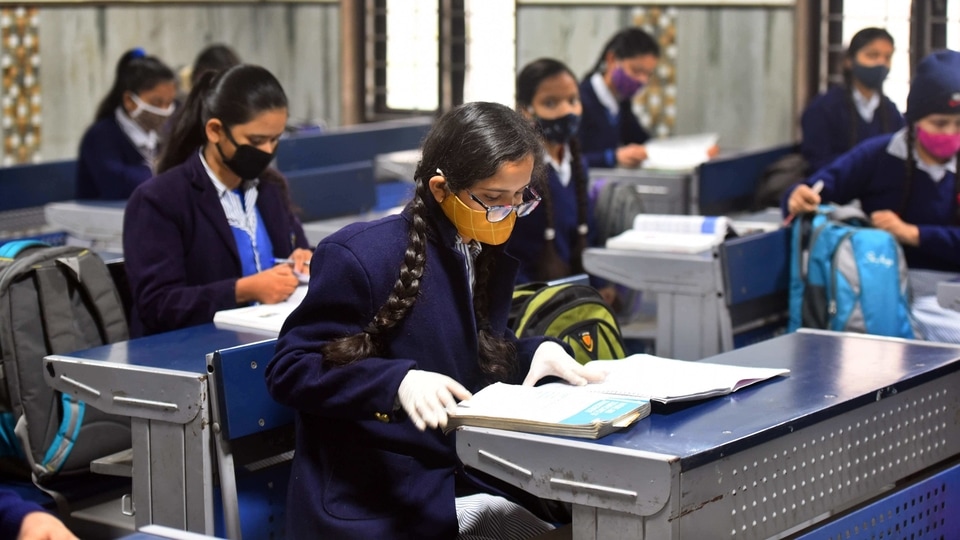
The decline in rising cases can be attributed to India's stringent mask mandate enforced by the government, the country's demography, robust inherent immunity among people who have battled diseases like Malaria, Typhoid and Dengue, and a comparatively warmer climate, according to experts as quoted by the npr.org.
Also read: Where India stands in global Covid-19 spread
The report quoted health policy expert Genevie Fernandes who said mask mandates are one of the things that may have helped bring down India's Covid-19 caseload. The worst-affected states like Maharashtra, Gujarat, Karnataka, Delhi among several displayed stringency in asking people to wear masks whenever they step outside. Non-compliance with the instruction carried a hefty fine.
"...In this particular case, the police, the monitoring, enforcement, that was ramped up. Every time they fine a person 200 rupees, they also give them a mask to wear," Fernandes told NPR.
The number of new cases India reported in August and September was more than any other country (the US, with half the number of new cases, was in the second position). In terms of deaths as well, India was the country with the highest number of reported Covid-19-related deaths in September.
Another factor that may be helping India is the widespread heat and humidity. "There is some evidence they may reduce the virus' spread," Dr Daksha Shah, a government epidemiologist, told NPR.
"The temperature, of course, is in the favor. We do not have too much cold climate over here. So many of the viruses, they are known to multiply more in the colder regions," Shah said.
Click here for complete Covid-19 coverage
Robust immunity has also been backed as a reason that may have helped India fight the global disease outbreak better.
India's population exhibits inherent immunity to so many infections, the government epidemiologist said.
She adds: "Malaria, typhoid, dengue fever are all endemic in India. People with robust immune systems are more likely to survive here in the first place, Shah says. Plus, more than half of the population is under age 25. They're less likely to die of Covid-19 and more likely to get it asymptomatically. But India's climate and demographics have not changed during the pandemic, and the drop in cases here has been recent."
Without ruling out virus' mutant behaviour, health economist Jishnu Das told NPR that akin to the deadly virus which was first found in the UK, a less infectious variant may have mutated in India.
All this remains under consideration as even scientists don't know the clear picture.
"Three options. One is it's gone because of the way people behaved. So we need to continue that behavior, right? It's gone because it's gone and it's never going to come back - great. Or it's gone - we don't know why it's gone and it may come back," NPR quoted Das as saying.
An average of nearly 22,000 new cases was recorded in India every day in the week ending December 27, according to HT’s Covid-19 dashboard. This is less than a quarter of the nearly 92,000 daily new cases reported on average in mid-September. This drop in new cases is not a reflection of a global trend.
This is in sharp contrast to countries like the US and Russia where the cases continue to grow.
India imposed a stringent lockdown to curb the spread of the viral contagion in late March while its daily new cases peaked in the middle of September.
India’s share of new confirmed infections in the world kept increasing every month in this period. Less than 1% of the new cases in March were reported from India while its share in new cases in September was an overwhelming 31%, which means nearly every third positive case in the world was reported in India.


