
 E-Paper



JeM chief Masood Azhar moved to Rawalpindi for personal safety: Intel
Days after he mocked the US as a “wolf whose tail was cut” by Taliban jihadists in Afghanistan, JeM chief Masood Azhar has been shifted by Pakistan’s deep state from his Bahawalpur headquarters to Rawalpindi for his personal safety.

 Prefer HTon Google


Days after he mocked the US as a “wolf whose tail was cut” by Taliban jihadists in Afghanistan, ailing Jaish-e-Mohammed (JeM) chief and global terrorist Masood Azhar has been shifted by Pakistan’s deep state from his Bahawalpur headquarters to Rawalpindi for his personal safety, according to people with knowledge of the matter.
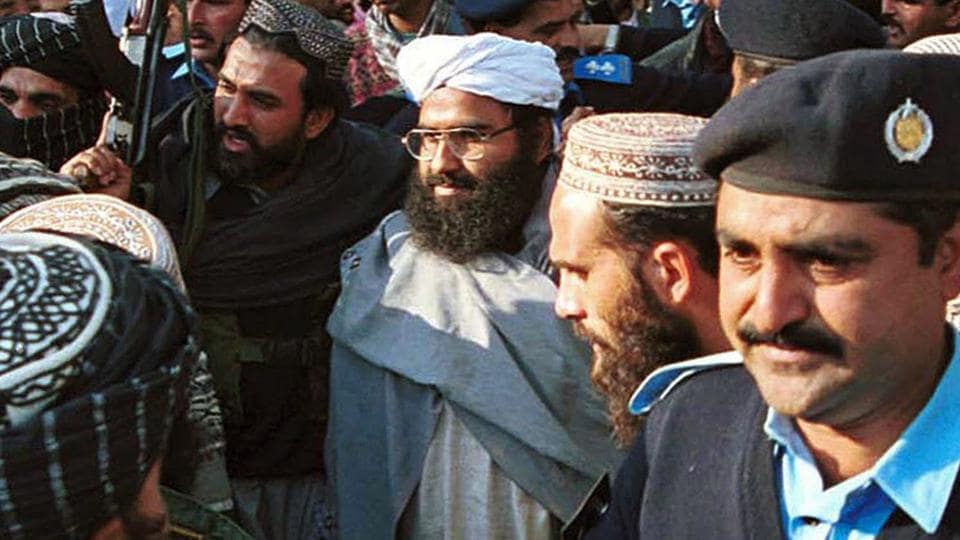
While it is not clear whether Azhar was shifted by the Rawalpindi General Headquarters under pressure from the Trump administration, counterterror operatives say the JeM chief was moved to a safe house in Rawalpindi on March 3, a day after he was summoned by Rawalpindi GHQ along with his brothers Maulana Rauf Asghar, the de facto chief of operations of JeM, and Maulana Ammar, who heads the terror group’s jihadist magazine Al Qalam.
For someone who was reported “untraceable” by the Pakistan government to the Financial Action Task Force (FATF) plenary in Paris last month, Azhar’s statement praising his ideological brothers, the Taliban, has come as an embarrassment to the Imran Khan government, according to experts.
Signed under the pen name “Khadim”(servant of the faith), Azhar’s statement congratulated the mujahideens and ghazis (Islamist warriors) as well as Taliban deputy chief and military commander Sirajuddin Haqqani for forcing the US to seek peace with the terrorist group in order to withdraw from Afghanistan.
He took potshots at the US policy in Afghanistan by saying that “there was a day when America was walking like a wolf wandering in Afghanistan, today is that day in Qatar, Doha where faith is high, jihad is high, hopes are smiling, the wolf’s tail is cut off and its teeth are shattering”.
People aware of the development said that Azhar and his two brothers were called to Rawalpindi on March 2, and the former was moved to a safe house for his personal security even though the US has not launched armed drone attacks in the Punjab province of Pakistan.
According to experts, Azhar is one of the principal promoters of the Taliban since the early 1990s, and has a personal bond with top leaders such as their founder Mullah Omar, Akhtar Mansour, current chief Hibatullah Akhundzada, and the Haqqani network headed by Jalaluddin and his son Sirajuddin.
Though India is skeptical of the US-Taliban peace deal, given the Islamist group’s links with Azhar and other terror groups in Pakistan, it will not pose hurdles to either bringing peace to Kabul or withdrawal of the US and NATO forces from Afghanistan. HT learns that, for the moment, India has adopted a graded approach and intends to closely watch the Taliban on their commitments to move away from terror.
While the Taliban are learnt to have made backchannel overtures to India, the Narendra Modi government has no intentions of engaging the group at the moment, people familiar with the matter said. At the same time, it will watch the developments closely over the group’s contribution to peace in the strife-torn country.
“We are with the Afghanistan government, which is in favour of a Republic and not an Islamic Emirate as favoured by the Taliban where Sharia laws apply. While the US is just in withdrawing from Kabul after 18 years, it has also to balance this with the force giving it access into Central Asia and keep a watch on China as it races towards the Indian Ocean through Pakistan and Myanmar… Direct talks with the Taliban are not even on the table and beyond the horizon,” a senior security establishment official said on condition of anonymity.


