E-Paper



Minor millets bring major change in lives of women in MP tribal districts
Eking out a hand to mouth existence earlier, women in MP’s tribal districts of Mandla and Dindori are now financially and socially empowered, in better health and inspiring others in the region.

 Prefer HTon Google


Minor millets have bought a major change in the lives of over 5000 women in the tribal districts of Mandla and Dindori, situated some 400 km east of Bhopal. Eking out a hand to mouth existence earlier, they are now financially and socially empowered, in better health and inspiring others in the region.
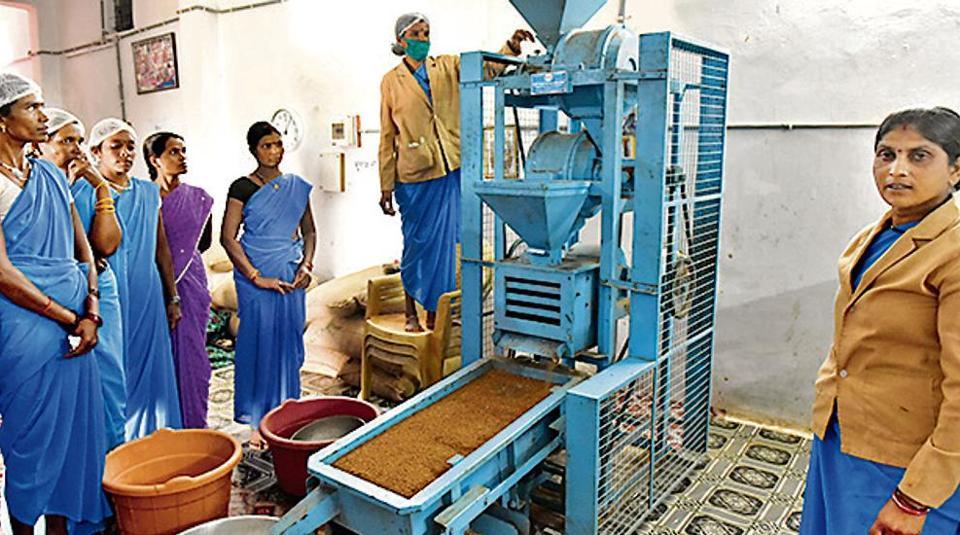
Twelve years ago, a resident of Mehandwani, Dindori district Lakshmi Uike, 34, mortgaged all her jewellery just to have two square meals for her family. The change took place after the women of the village took to cultivating their traditional crop - minor millets - like Kodo-Kutki, Ramtil and Niger oil seed, which had earlier been abandoned for the sake of more fanciful paddy and wheat.
Lakshmi said that a decade back, minor millets were not popular as people didn’t know its nutritional value. Farmers sometimes got as little as ₹500 for 1 quintal. But now that everyone is aware of its nutritional value and also because it is grown organically, the price has shot up to ₹1500- 1700 per quintal and so have their fortunes, and it cost only a fraction of what it takes to produce wheat.
The Uike family own just 2 acres of land. While earlier it was tough feeding the family, they now have sufficient food and earn around ₹9000 per month by selling minor millets and vegetables. Lakshmi has returned her Below Porverty Line (BPL) card. There are now about 3700 women of 41 villages in Dindori who are producing minor millets.
“Most of the families in Dindori and Mandla district had started cultivation of wheat and paddy in the hope of getting more money but incurred losses as these crops needed water. In the hilly terrain, water shortage was a major issue. As crops failed, indebtedness rose as did malnutrition in the region.” said Vinita Namdeo, a woman farmer.
But a few families had continued with farming minor millets like Kodo and Kutki, which was suitable for the terrain and did not require much water or fertilizer.
“These farmers were not rich but their kids were not malnourished. So we started growing millets to feed our family. Soon we realized that there was market for it too.” said Namdeo.
The women and child welfare department also chipped in to help these women formed small self-help groups. They got loans to purchase processing machines for their crops.
Former collector of Dindori, Amit Tomar said, “We decided that since minor millets have high nutritional value, why not introduce it as anganwadi food? Eight months ago, women and child development department signed an MoU with these women. Now, they are supplying breakfast of Kodu barfi for 5000 kids of 226 aganawadis,” said Tomar.
Like them, the women farmer of neighbouring district of Mandla have started producing Ramtil, an edible oil, and Niger oil seeds.
A resident of Niwas, Mandla district, Poonam Tilgam, 30 said,
“Our lives are changing with the changing in the farming. Earlier, it is not possible for us that even family members would ask for our advice. Now, we are called to give suggestions in the panchayat.”
Women and child development department principal secretary JN Kansotiya said, “We included these women under our Tejaswini Rural Women Empowerment Programme of Madhya Pradesh Mahila Vitta Evam Vikas Nigam (MPMVVN) to help them technically.”