
 E-Paper



Mission Sudarshan Chakra will require colossal amount of integration: CDS
He said India will have to look at multi-domain ISR (intelligence, surveillance, and reconnaissance) and integration of a raft of sensors

 Prefer HTon Google


India’s proposed national defence shield under Mission Sudarshan Chakra will involve a colossal amount of integration of myriad capabilities and the development of robust infrastructure and processes for the detection, acquisition, and neutralisation of the enemy’s air vectors (weapons) using soft and hard kill options including kinetic and directed energy weapons, chief of defence staff General Anil Chauhan said on Tuesday.
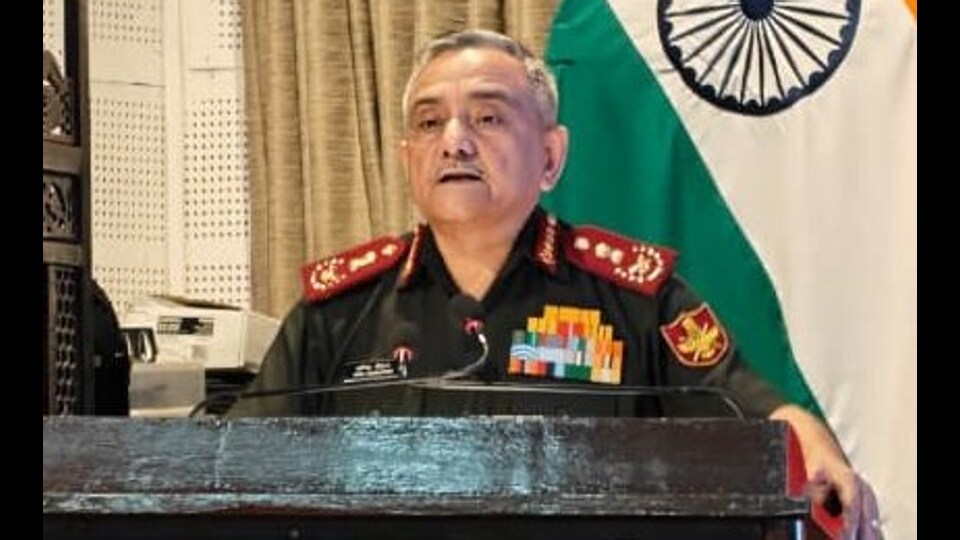
“The aim is to develop a system to protect India’s strategic, civilian, and nationally important sites. It will act both as a shield as well as a sword,” he said at Ran Samwad, a top military conclave being held at the prestigious Army War College at Mhow in Madhya Pradesh.
India will have to look at multi-domain ISR (intelligence, surveillance, and reconnaissance) and integration of a raft of sensors, including those deployed on land, air, maritime, undersea, and space, Chauhan said.
His comments came days after Prime Minister Narendra Modi announced the creation of a formidable military capability to defend India’s military and civilian installations against aerial attacks and set a 10-year deadline for developing an indigenous air defence shield integrated with offensive weapons under Mission Sudarshan Chakra.
In his keynote address at the two-day Ran Samwad, Chauhan said creating the capability will require a colossal amount of integration as multiple fields need to be networked to extract a close and clear picture. “A colossal amount of data will need to be analysed for information and real-time response,” he said, adding that the use of advanced technologies such as artificial intelligence and quantum computing will be essential.
He described it as “India’s own Iron Dome (Israel’s missile shield) or Golden Dome.” For a vast country like India, Chauhan said, a project of the magnitude of Mission Sudarshan Chakra will require a whole-of-nation approach. “I am sure we will do it at an affordable cost.”
On August 23, India successfully tested a new integrated air defence system consisting of a variety of weapons that shot down three targets at different altitudes and ranges off the coast of Odisha. The maiden test of the integrated air defence weapon system (IADWS) was significant as it will be a part of the bigger national security shield announced by Modi in his Independence Day speech.
The IADWS is a multi-layered air defence system consisting of quick reaction surface-to-air missiles (QRSAM), very short range air defence system (VSHORADS), and a laser-based directed energy weapon. During the flight tests, three different targets, including two high-speed fixed-wing unmanned aerial vehicle targets and a multi-copter drone, were simultaneously engaged and destroyed completely by the weapon systems.
In April, India tested a locally produced laser weapon and demonstrated its capability to knock out fixed-wing drones at long range, swarm drones, and surveillance equipment, entering an exclusive league of countries that possess such technology. The few countries that have mastered this technology to disable missiles, drones, and smaller projectiles include the US, Russia, China, the UK, Germany, and Israel.
On August 15, Modi announced the launch of Mission Sudarshan Chakra and said it will be a powerful weapon system that will not only neutralise the enemy’s attack but also hit back with overwhelming force.
A locally developed air defence control and reporting system, called Akashteer, emerged as the centrepiece of India’s air defence grid during Operation Sindoor, the direct military action against Pakistan following the April 22 Pahalgam terror strike in which 26 people were killed.
Akashteer punctured multiple waves of Pakistani aerial attacks by guaranteeing prompt detection and targeting of the incoming threats. The agile system, an integral part of the Indian military’s multi-layered air defence grid, played a vital role in detecting, identifying, tracking, and engaging Pakistani missiles and drones during the four-day clash that stoked fears of a full-blown shooting war. It was mated with the Indian Air Force’s Integrated Air Command and Control System (IACCS), the beating heart of the military’s resilient, four-tiered air defence shield.
Chauhan described Operation Sindoor as a modern conflict from which India had drawn several lessons. “Most of the lessons are under implementation, and some have been implemented.”
India launched the operation in the early hours of May 7 and struck terror and military installations in Pakistan and Pakistan-occupied Kashmir (PoK). Between the launch of the operation and the ceasefire on May 10 evening, Indian forces bombed nine terror camps in Pakistan and PoK, killing at least 100 terrorists, and struck targets at 13 Pakistani airbases and military installations.
Ran Samwad seeks to explore how technological advancements are continuously changing the nature of warfare and how these changes affect operational planning, tactics, and strategies.


