E-Paper



Mixing shots safe and effective: Study
While the findings could benefit the immunisation programme, there is a need for a randomised controlled trial to further corroborate the findings.

 Prefer HTon Google


After analysing the accidental mixing of Covishield and Covaxin vaccine shots in 18 people in an Uttar Pradesh village, the Indian Council of Medical Research (ICMR) has concluded in a pre-print study that the combination of the two Covid-19 vaccines elicits a better immune response than two jabs of the same vaccine.
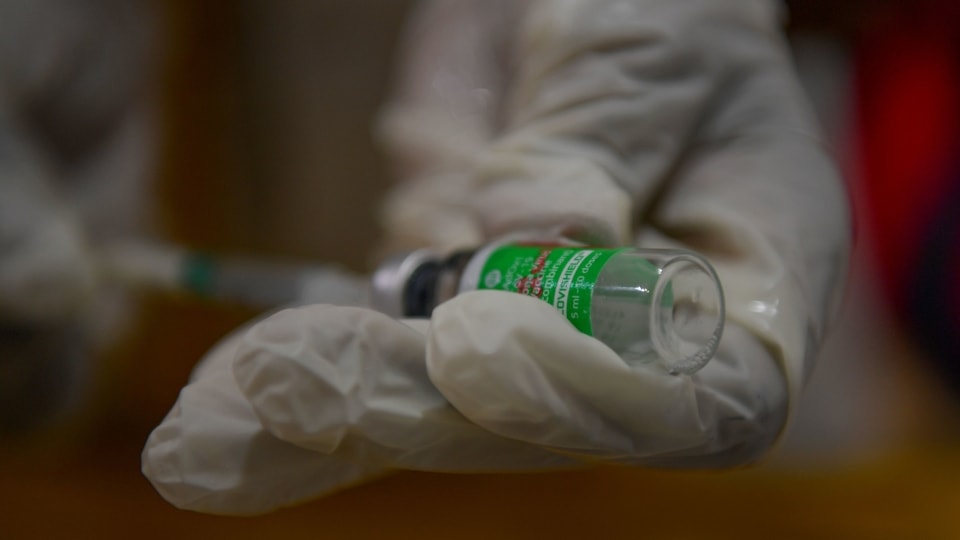
In May, 20 villagers in a government-run hospital in UP’s Siddharthnagar district were inadvertently administered the second dose of Covaxin after the first dose of Covishield after a gap of six weeks. Of the 20, 18 agreed to be part of the study. Among them, 11 were men with a median age of 62 years. A comorbid condition (hypertension) was reported in one individual.

“We compared the safety and immunogenicity profile of them against that of individuals receiving either Covishield or Covaxin… Immunogenicity profile against Alpha, Beta and Delta variants in the heterologous group was superior; IgG antibody and neutralising antibody response of the participants was also significantly higher compared to that in the homologous groups,” researchers said in the paper, which is yet to be peer-reviewed.
While the findings could benefit the immunisation programme, there is a need for a randomised controlled trial to further corroborate the findings.
“A slew of studies suggests that mixing vaccines provokes potent immune responses, but scientists still want answers on real-world efficacy and rare side effects,” according to Nature.
According to the study, none of the participants enrolled in the study had any serious adverse event following immunisation (AEFI) within 30 minutes of inoculation with the first or second dose. The most common local after-effect reported after the first and second doses was pain at the injection site.
“The findings suggest that immunisation with a combination of an adenovirus vector platform-based vaccine (Covishield) followed by an inactivated whole virus vaccine (Covaxin) was not only safe but also elicited better immunogenicity,” the paper said.
The national immunisation programme against Covid-19 began on January 16 with two vaccines: AstraZeneca’s ChAdOx1-nCov-19 (termed Covishield in India) and inactivated whole virion BBV152 (Covaxin). The regimen for both vaccines initially had a priming dose followed by a homologous booster dose at an interval of four weeks. The gap between the two Covishield doses was later increased to 6-8 weeks, and then to 8-12 weeks. There was no change in the Covaxin schedule.
India prioritised frontline workers, including health care professionals, people above the age of 60 years and adults with comorbidities for vaccination before opening it up for all adults.
“The nationwide vaccination program at this time entered into 4 months of its existence and the event of mixed dosing raised considerable anxiety in public domain with a potential to contributing to vaccine hesitancy. We conducted the current investigation against this backdrop,” said the paper published in the open access medical journal, MedRxiv.
In July, the subject expert committee of the Central Drugs Standard Control Organisation granted approval to Christian Medical College, Vellore, to conduct clinical trials of mixing of both Covishield and Covaxin vaccines.
“For this particular study, these people were closely monitored, and their parameters checked at regular intervals to find out the effect of mixing of both the Covid-19 vaccines. There are other studies going on globally and nationally as well to determine the effect of mixing two different types of vaccines as part of the inoculation regimen and we have had promising results so far. However, this is the first result to study the effects of mixing adeno vector and inactivated whole virion based Covid-19 vaccines,” said one of the authors of the ICMR study, asking not to be named.
“These findings have an important implication for the Covid-19 vaccination program wherein heterologous immunisation will pave the way for induction of improved and better protection against the variant strains of Sars-CoV-2. Such mixed regimens will also help to overcome the challenges of shortfall of particular vaccines and remove hesitancy around vaccines in people’s mind that could have genesis in programmatic “errors” especially in settings where multiple Covid-19 vaccines are being used,” said the paper.