
 E-Paper



Mulayam Singh Yadav: Stalwart who stayed in national focus, kept both his allies and rivals guessing
His following of Ram Manohar Lohia, faith in Karpoori Thakur and his position of power in the most populous Uttar Pradesh brought him in close contact with several national leaders, a spot he often leveraged to his advantage.

 Prefer HTon Google


The political career of Mulayam Singh Yadav, a staunch socialist and ardent believer of social justice and rights, particularly of minorities and the scheduled castes, spanned the coalition era in India. The turbulent times turned him into a key figure of Indian politics between 1989 and 2017.
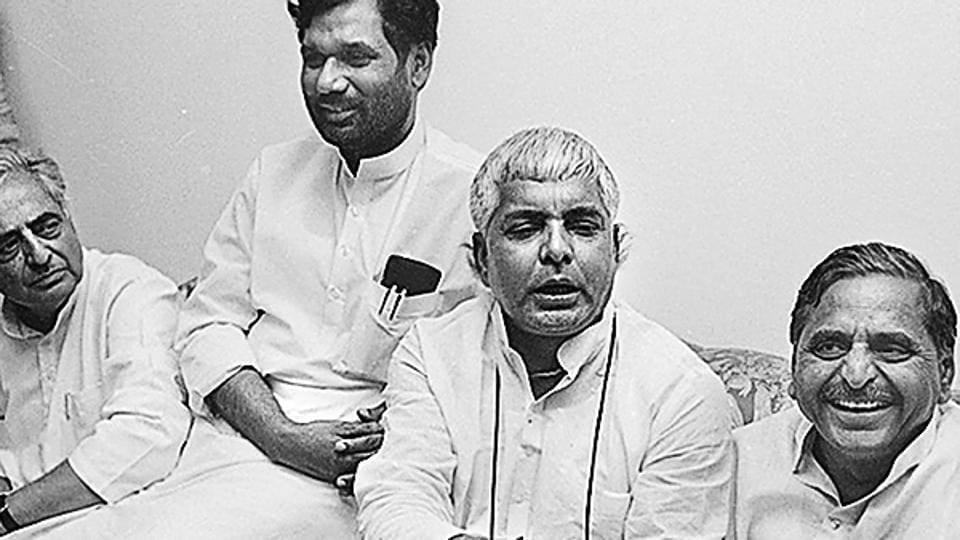
His following of Ram Manohar Lohia, faith in Karpoori Thakur and his position of power in the most populous Uttar Pradesh brought him in close contact with several national leaders, a spot he often leveraged to his advantage. The wrestler turned leader, who built his political empire from the scratch, was a seven-term Lok Sabha MP and India’s defence minister. Yet, his politics, his position on issues, always had UP in focus.
HD Deve Gowda was set to resign as Prime Minister in 1997, and the search for an alternative brought Third Front constituents to New Delhi’s Andhra Bhavan. “The discussions went on all night. Mulayam Singh Yadav was a rightful aspirant for the PM’s post. But some of the southern parties couldn’t agree to such an arrangement. Finally, early next morning, Yadav agreed to support Inder Kumar Gujral as the next PM,” said Sitaram Yechury, general secretary of the Communist Party of India (Marxist) and one of the leaders present in that meeting.
A year later, when Gujral was on his way out, Yadav was the first to propose West Bengal chief minister Jyoti Basu’s name as Prime Minister. The plan failed, and when nearly all leaders were ready to back Congress president Sonia Gandhi, Yadav was among the first to back out, leading to mid-term elections.
As defence minister of the Deve Gowda government, he often overruled Janeshwar Mishra and Beni Prasad Verma — the two other cabinet ministers from his party — to help the government perform. “Mishra, then petroleum minister, opposed a proposal to remove government control over fuel prices in 1997. But Mulayam stepped in and supported the plan in the Cabinet meeting. His colleagues hailed him as Mulayam de-licensing Yadav,” said a senior functionary of that establishment.
Some of his decisions, however, kept even his closest allies guessing. In 2002, when opposition leaders had agreed to support President K R Narayanan for another term, Yadav did a U-turn after talking to Prime Minister Atal Bihari Vajpayee. He announced APJ Abdul Kalam as Samajwadi Party’s choice as President. With a celebrated scientist as Kalam as candidate, Congress, BSP, TDP, Trinamool, and many other parties, had no other choice but to support him. The Left fielded former Indian National Army soldier Lakshmi Sehgal as the presidential candidate, and Kalam won comfortably.
In 2008, Mulayam Singh Yadav-led Samajwadi Party was credited for the survival of the Manmohan Singh government -- the first coalition regime that completed two terms.
But for the large part of it, he was against the India-US nuclear deal. A month before the trust vote on July 22, 2008, Yadav joined CPI (M) general secretary Prakash Karat and other leaders at a rally in the Constitution Club near Parliament, and slammed the United Progressive Alliance government over the nuclear agreement.
On July 5, Yadav and his colleague Amar Singh met former President Kalam and announced that the nuclear agreement is in “national interest”. Seventeen days later, Yadav, who for the longest time in his career had opposed the Congress party tooth and nail, voted in Lok Sabha to give the UPA government its much-needed lifeline.


