
 E-Paper



Mumbai-Navi Mumbai airport metro approved, to have 20 stations
The Mumbai-Navi Mumbai airport metro will be 35 km long with a 9 km underground stretch. It will have 20 stations and have intersections at 3 other routes.

 Prefer HTon Google


Maharashtra chief minister Devendra Fadnavis on Tuesday announced a new metro line connecting Mumbai and Navi Mumbai airports. The 35 km-long line received state cabinet approval the same day.
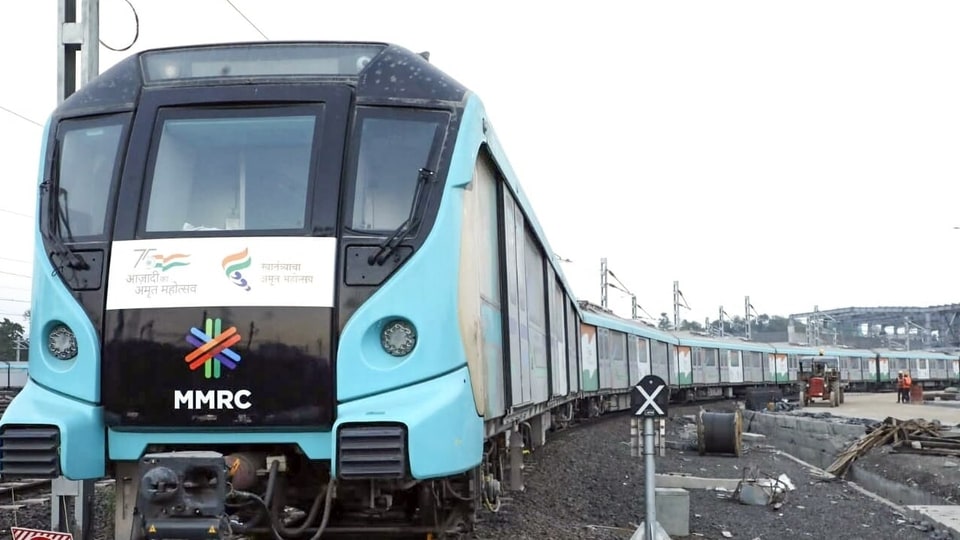
According to Fadnavis, the metro will be 35 km long with a 9 km underground stretch.
The estimated cost for the project, having 20 stations and intersections on three other metro routes, is said to be around ₹22,862 crore, according to a release issued by the Maharashtra CMO. It is slightly higher than the earlier estimate of ₹18,000 crore given by Fadnavis at the announcement after the meeting.
The story has been updated to reflect the same
The state government has given its nod to build the metro on a PPP model, with the state and the centre each contributing 20 per cent of the viability gap funding. The remaining 60 per cent is expected to be brought in by the private party building the metro
“The metro route is estimated to be built in five years, but I have insisted that it should be built in three and a half years,” Fadnavis said while announcing the approval.
The details on the Mumbai-Navi Mumbai aiport Metro project
The seamless movement between Mumbai's Chhatrapati Shivaji International Airport and the newly operational Navi Mumbai International Airport will be crucial for transit flyers, airline crew, cargo operators and outstation travellers using LTT or other rail terminals. Road travel between the airports currently takes 70–90 minutes, depending on traffic.
According to an Indian Express report, the project was earlier planned jointly by the Mumbai Metropolitan Region Development Authority (MMRDA) and City and Industrial Development Corporation of Maharashtra Limited, which will now be constructed through a public-private partnership model by CIDCO in association with a private consortium.
CIDCO had submitted the detailed project report (DPR) to the state government in November after securing clearances from both the urban development and finance departments, the IE report added.
According to the DPR, the 34.89-km corridor is proposed with a 20 per cent viability gap funding (VGF) from the Centre and the state government, with the remaining investment to come from the private build-operate-transfer (BOT) partner, similar to the model used for Mumbai Metro Line 1.
The 20 stations planned along the Metro Line Eight corridor are Chhatrapati Shivaji Maharaj International Airport Terminal 2, Phoenix Mall, SG Barve Marg, Kurla, Lokmanya Tilak Terminus LTT, Garodia Nagar, Baiganwadi, Mankhurd, Vashi, Sanpada, Juinagar, LP Junction LP, Nerul 1, Nerul 2, Seawoods, Apollo Hospital, Sagar Sangam, Targhar, Navi Mumbai International Airport West and Navi Mumbai International Airport Terminal 2.
The project includes six underground and 14 elevated stations with a daily ridership projected to touch 10.3 lakh passengers by 2031. The corridor will connect with at least six other Metro lines, suburban rail networks, bus terminals, and the Lokmanya Tilak Terminus (LTT), enabling outstation travellers to access both airports via a single Metro line directly.


