
 E-Paper



Nagaland resolution seeks repeal of AFSPA
Kohima: The Nagaland government on Tuesday decided to write to the Union government to repeal a controversial law that gives security forces sweeping powers in disturbed areas, amid outrage in the region over the killing of 14 civilians in a botched Indian Army operation

 Prefer HTon Google


The Nagaland government on Tuesday decided to write to the Union government to repeal a controversial law that gives security forces sweeping powers in disturbed areas, amid outrage in the region over the killing of 14 civilians in a botched Indian Army operation.
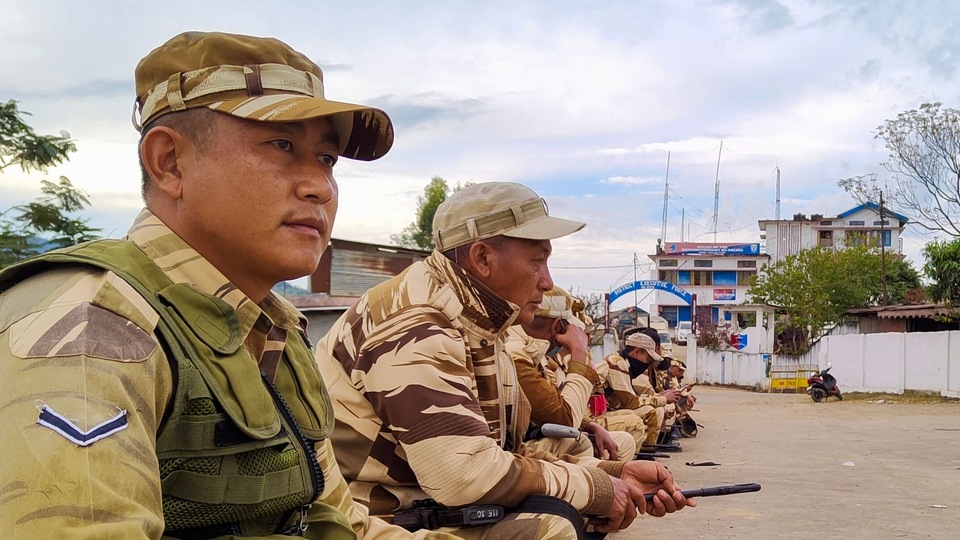
“We have decided to write to the government of India for the immediate repeal of the Armed Forces (Special Powers) Act (AFSPA), 1958, from the state,” Neiba Kronu, spokesperson of the state government, said after a state cabinet meeting.
The state cabinet also decided to call off the remaining three days of the annual Hornbill Festival – a 10-day cultural event in which different Naga tribes showcase their traditions – in solidarity with the Konyak community to which a majority of the victims belonged.
The decision came a day after chief minister Neiphiu Rio demanded the repeal of AFSPA from the state on Monday, calling it “draconian”, and stressing that the people of Nagaland had never accepted it. Its implementation had brought a bad name to the country across the world, Rio had said.
State higher education minister Temjen Imna Along said the state government will appeal to the Union home ministry to remove AFSPA from Nagaland.
“The state government can only appeal, and it is up to the central government to understand the feelings of the people of the state today,” the minister said. “As elected representatives of the people, irrespective of party lines, we have chosen to appeal to the government of India through the right process to bring reassurance to the people of the state that AFSPA should be repealed in our state.”
Along, who is also Bharatiya Janata Party (BJP)’s unit president in Nagaland, said that from a party perspective, the state BJP will put up the views and sentiments of the Naga people on AFSPA to its central leadership immediately.
An elite military commando unit shot dead six coal miners returning home in Mon district on Saturday, believing they were targeting insurgents.Another eight people were killed by troops when they were confronted by a furious crowd in two separate incidents, with a soldier also being killed and army vehicles set ablaze.
On Monday, Union home minister Amit Shah expressed regret over the killings and informed Parliament that a special investigation team (SIT) to probe the “unfortunate incident” will complete investigation within a month. He also said the firing was a consequence of “mistaken identity”.
Tension continues to run high in the northeastern state where AFSPA was first clamped in 1958 at the height of the Naga insurgency that demanded a separate homeland. That demand has since been pared down by rebels, who are also in peace talks with the government, though a final agreement is yet to be reached.
The Isak-Muivah-led National Socialist Council of Nagalim, the largest Naga rebel group that signed a ceasefire pact in 1997, and a “framework agreement” in 2015, has condemned the killings.
Asked if the recent incident in Mon could impact the ongoing peace talks, government spokesperson Kronu said that the core committee on the Naga Political Issue (NPI) is scheduled to meet on December 9 to discuss the matter.
Assam chief minister Himanta Biswa Sarma, who is convener of the North-East Democratic Alliance (NEDA) – a group of parties allied with the National Democratic Alliance in the Centre – and has had parleys with the Naga peace process negotiating parties along with Rio, is expected to attend the meeting in Kohima on Thursday.
AFSPA, which grants special powers to the forces to maintain public order in “disturbed areas”, has been a contentious issue in the state for decades, with civil society members saying it gives security personnel impunity to carry out excesses, and defence forces saying that it helps them maintain order in restive areas. On Monday, Rio was joined by his Meghalaya counterpart Conrad Sangma in demanding the withdrawal of the law in the northeast.
Kronu said the cabinet was briefed about action taken by the government after the killing of the 14 civilians, and the investigation by a SIT headed by the inspector general of police. The cabinet was also informed about the ground report submitted by the director general of police, which said army personnel tried to take away bodies of six killed people who were mistaken to be insurgents.
The cabinet asked the SIT to complete its investigation and submit a report within a month, Kronu said.
Among the injured in the December 4 incident, two were still under critical care in a hospital at Dibrugarh, six were undergoing treatment in Dimapur, and 22 were discharged from hospital, the government spokesperson said.
“Situation (in Mon district) is now under control,” Kronu said. “The state cabinet has decided that all activities of the ongoing Hornbill Festival should be ceased in view of the demand of the mourning announced for the deceased in the firing incidents in Mon district and the demand of various civil society not to hold the activities.”
The Hornbill Festival began on December 1. Six tribes from Eastern Nagaland – Konyak, Khiamniungan, Phom, Sangtam, Yimkhiung and Chang – withdrew from festival on Sunday.


