E-Paper



Nainital Lake water withdrawal limit cut to 8 million litres per day
From 18 MLD until a few years ago to 12-13 MLD this summer, the administration has been cutting down the daily withdrawal limit from the Nainital lake, considered the lifeline of the small Himalayan hill station.

 Prefer HTon Google


Amid apprehensions that water level may plummet and create a deficit in the Nainital Lake, especially during the summers, the district administration has decided to further curtail the withdrawal limit from the lake to eight million litres water per day (MLD).
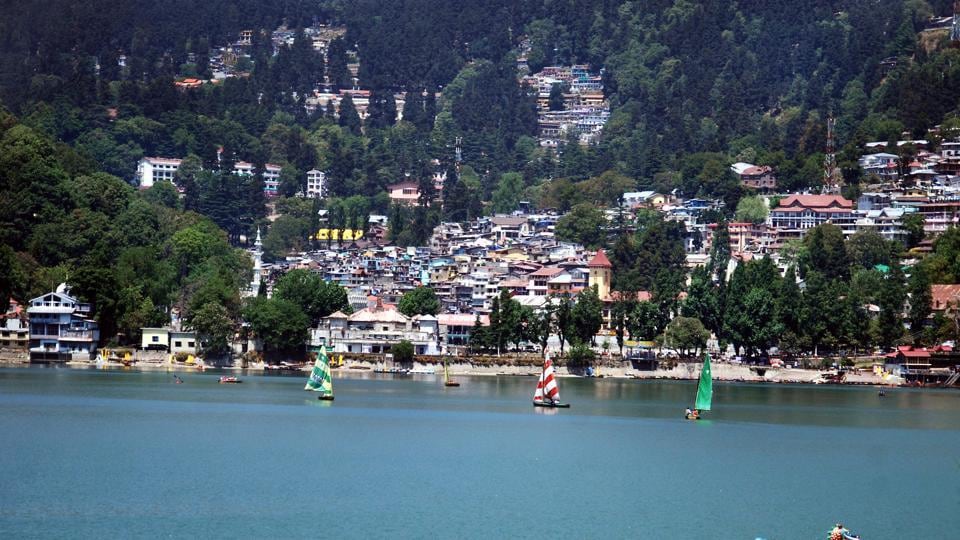
From 18 MLD until a few years ago to 12-13 MLD this summer, the administration has been cutting down the daily withdrawal limit from the lake, considered the lifeline of the small Himalayan hill station.
Uttarakhand Jal Sansthan executive engineer Sunil Tiwari said the decision was taken after assessing the water requirement in the coming months and after looking at ways to save the water level from going further down.
“In the winter months, the demand for water is comparatively less, so we decided to curtail the limit. This way we can ensure a balanced water level in the lake. There has to be a balance between water recharge and water withdrawal, otherwise there would be no lake left here,” he said.
Over the years, environmentalists, experts and locals have expressed concern over the increasing stress on Nainital Lake, which is facing a threat from the drying up of its source lake (Sukhatal), construction activities and encroachments on the slopes around it, construction debris, solid waste and other pollutants making their way into the lake waters, siltation and growing human population.
The kidney-shaped Nainital Lake, surrounded by hills, is situated at an elevation of 1,938 metres, with a width of 360 metres and a length of 1,442 metres at present. In 1839, a British sugar trader named P Barron is said to have stumbled upon this Himalayan lake while he was lost in the hills and was trying to find his way back.
Depth of Nainital Lake: Falling down, and down
As per the available records, the depth of the Nainital Lake during the British era was over 27 metres
In 1976-77, Kumaun University’s geography department conducted a study and found the maximum depth to be around 23.7 metres
A report of the Geological Survey of India recorded the depth at 25 metres in 1979
In 2016, the state irrigation department reported that the lake’s depth was around 17.25 metres
Over the last century, the lake’s depth has roughly gone down by 10.15 metres.
According to officials of the irrigation department, the average depth of the lake at present is around 9 to 10 metres although its maximum depth ranges in the 20s