E-Paper



National Oxygen Stewardship Programme: Centre to train health care workers to rationally utilise medical oxygen
As part of the National Oxygen Stewardship Programme, at least one oxygen steward will be identified and trained in each district across the country, the Union health ministry said

 Prefer HTon Google


The Union government on Wednesday launched an initiative to train health care workers in rational utilisation of medical oxygen to prevent wastage as part of its preparedness for any possible surge in Covid-19 cases.
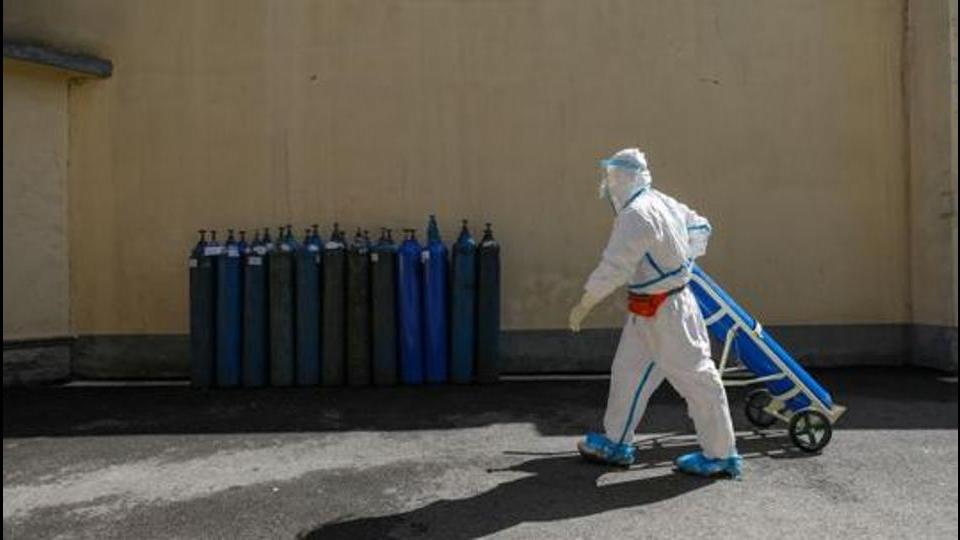
As part of the National Oxygen Stewardship Programme, at least one oxygen steward will be identified and trained in each district across the country, the Union health ministry said in a statement on Wednesday.
“These trained professionals would be responsible for leading the training on oxygen therapy and management in their respective districts and also support audit of oxygen delivery and preparedness for a surge scenario,” said the statement.
During the peak of the second Covid-19 wave, Delhi, for example, witnessed a major medical oxygen crisis. At its peak, Delhi recorded 28,300 Covid-19 cases in a day on April 20, and a positivity rate exceeding 36% on April 22. The government on July 20 informed Parliament that there was an unprecedented surge in demand for medical oxygen and it peaked at nearly 9,000 MT compared to 3,095 MT in the first wave.
“Request for data on the subject was emailed to all states and UTs including the last email sent on November 29, 2021. In response, only two states (Punjab and Arunachal Pradesh) have responded,” Union health minister Mansukh Mandaviya informed the Lok Sabha on December 3. He was responding to a question on whether the government had sought a report or data from states and Union territories regarding deaths of Covid-19 patients due to oxygen shortage in various hospitals across the country during the second wave.
“The initiative aims to empower all health care workers engaged in oxygen management and administration with the essential knowledge and skills to ensure rational utilisation and avoid any wastage of medical oxygen, especially in resource constraint settings...,” the health ministry said.
The government has sanctioned at least 1,500 Pressure Swing Adsorption (PSA) oxygen generation plants, of which 1,463 have been commissioned, including 1,225 that have been installed and commissioned under PM CARES Fund in every district of the country.
All states and Union territories have been asked to install PSA plants in public health facilities and to facilitate installation of such plants in private facilities as well.
“Oxygen is life saving and critically important in the treatment of several illnesses, not just Covid-19. The country witnessed an increased oxygen demand during the pandemic. Hence, the rational use of oxygen has become mandatory and need of the hour,” said Bharati Pravin Pawar, minister of state for health and family welfare, during the launch of National Oxygen Stewardship Programme at All India Institute of Medical Sciences (AIIMS) in New Delhi.
Health officials, meanwhile, said the government is making all efforts to ensure there is optimal utilisation of resources at hand.
“Resource constraint is faced by all countries but it is important that the available resources are used prudently; the focus of oxygen steward initiative is on ensuring efficiency in oxygen administration,” said VK Paul, member (health), Niti Aayog.
The Centre has also set up OxyCare, a dashboard that disseminates information on the available oxygen stock for its better distribution.
“The Covid-19 pandemic not only accelerated the demand for medical oxygen but also the need for its timely delivery; while the Union government has supported the states in setting up and strengthening oxygen production and delivery mechanisms, variable gaps were observed in the training of professionals involved in the administration of oxygen. This workshop aims to repurpose, re-orient and upskill the existing manpower in order to make sure that any untoward incident arising due to the pandemic gets managed professionally without any undue stress on the systems,” said Rajesh Bhushan, health secretary, Union government.