
 E-Paper



NCAP programme: Covid-19 pandemic disrupts clean air action plans
With the Covid-19 pandemic, lockdown and financial slowdown, NCAP is staring at an uphill task of ensuring that various sectors like industry, thermal power plants and transportation manage to reduce emissions by switching to cleaner processes and fuels.

 Prefer HTon Google


Prime Minister Narendra Modi announced on Independence Day that a clean air programme will be implemented on mission mode in 100 cities soon.
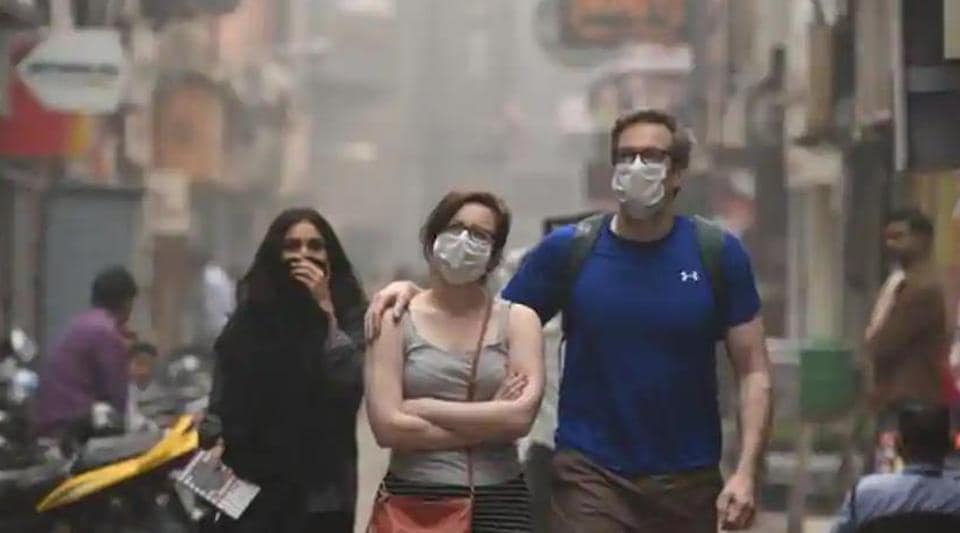
But the National Clean Air Programme (NCAP) has advanced little since last year, when it was launched.
City level action plans of around 102 cities had been approved by the Central Pollution Control Board (CPCB) to meet the NCAP target of 20% to 30% reduction in PM 2.5 (respirable pollution particles) concentrations over 2017 annual concentration.
This year, CPCB has been directing state governments in writing about implementing the action plans immediately. For example, CPCB issued a direction to West Bengal government on June 26 under section 31A of the Air (Prevention and Control of Pollution) Act 1981 (power to issue directions to any authority) to implement the city action plan and submit a financial layout of each action within 30 days and a progress report on a quarterly basis to CPCB.
With the Covid-19 pandemic, lockdown and financial slowdown, NCAP is staring at an uphill task of ensuring that various sectors like industry, thermal power plants and transportation manage to reduce emissions by switching to cleaner processes and fuels.
“We have already directed the state governments to implement the action plans. Timelines have been given to them and we have sought regular review. The 2024 deadline to achieve the NCAP target remains,” said Prashant Gargava, member secretary, CPCB.
Clean air efforts in million-plus cities got a shot in the arm with an allocation of Rs 4,400 crore for 2020-21 (union budget), up from Rs 460 crore for air pollution abatement last year.
Apart from giving a financial boost to large cities implementing the national clean air programme, finance minister Nirmala Sitharaman had said state utilities will be advised to close down old thermal power plants that do not meet the emission standards.
“The pollution levels in Delhi in the past 2 to 3 years have been coming down. Clean air is very high up on our agenda it also does not mean that clean air can be achieved by stifling development. A part of it has already been rolled out and the rest of it will be rolled out soon. There is a huge commitment in terms of funds to achieve targets,” said RP Gupta, secretary, ministry of environment.
Experts said ministry should have clear indicators of whether they are on track to achieve NCAP targets otherwise we could be left with dirtier air as industries look to bounce back from the economic impacts of covid 19.
Some of the important measures that are to be taken by the Centre under NCAP include setting up a web-based system for monitoring of compliance with NCAP targets; a comprehensive regional plan to be formulated by incorporating inputs from regional source apportionment studies, such as a regional plan for the Indo-Gangetic plain region; compliance by all thermal power plants with to the emission norms by December 2022 and as per the action plan prescribed in the direction of December 2017, issued under the EPA, 1986; switch over to gaseous fuels in industries, including small and medium enterprises by December 2022; enforcement of new and stringent sulphur dioxide (SO2)/ oxides of nitrogen (NOx) / PM2.5 standards for industries using solid fuels by 2020; strict enforcement of standards in all industries; mandatory waste segregation at source and state level air pollution action plan, among others.
“The NCAP targets have to be met by 2024. It has to be taken very seriously. Covid-19 has in fact helped in achieving the target. The 15th Finance Commission has announced Rs 4,400 crores which is mainly meant for state pollution control boards and urban local bodies. We need performance-based indicators for multiple sectors like transport, industry etc. For example, the industry sector will need strategies to scale up clean energy transition and high-level emission control systems. We need a policy for that. I don’t think it can be addressed only through city action plans,” said Anumita Roy Chowdhury, executive director, Centre for Science and Environment.
“Most sectors will deal with economic reconstruction now. So there should be alignment of sectoral budget with the NCAP goals. The government will also need a compliance and deterrence policy to ensure targets are met otherwise we will face a larger pollution problem in future,” added RoyChowdhury.


