
 E-Paper



‘Need for cooperation rather than conflict’: Rajnath Singh tells Chinese counterpart in Laos
The interaction took place weeks after both the Indian and Chinese sides completed disengagement of troops from two last face-off points in Eastern Ladakh

 Prefer HTon Google


Defence minister Rajnath Singh on Wednesday called for “drawing lessons from the unfortunate border clashes” of 2020 during talks with his Chinese counterpart Dong Jun in Vientiane.
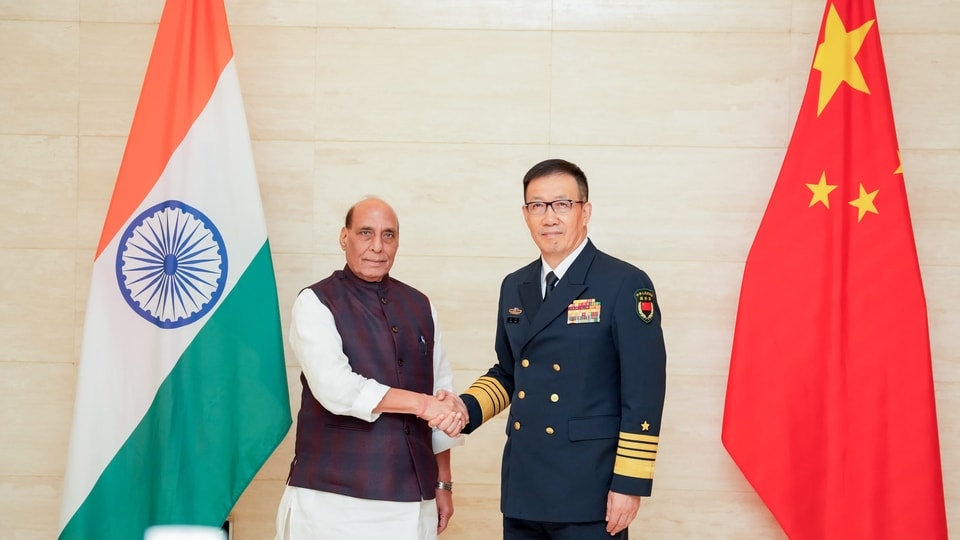
The minister's interaction took place weeks after both the Indian and Chinese forces completed disengagement of troops from two last face-off points in Eastern Ladakh.
“Amicable relations between India and China, the two largest nations in the world, would have positive implications for global peace and prosperity,” the defence ministry said in a statement.
“Considering that both countries are and will continue to remain neighbours,” Singh mentioned that “we need to focus on cooperation rather than conflict”.
The defence minister, while calling for reflecting on the "lessons learnt from the unfortunate border clashes of 2020, stressed on measures to prevent recurrence of such events and safeguard peace and tranquility along the India-China border.
He emphasised and looked forward to greater trust and confidence building between the two sides through de-escalation. Both sides agreed to work together towards a roadmap for rebuilding mutual trust and understanding, the ministry added.
Jaishankar meets Chinese counterpart
On Monday, external affairs minister Subrahmanyam Jaishankar met his Chinese counterpart Wang Yi on the sidelines of the G20 Summit in Rio de Janeiro, Brazil.
“During the meeting, the ministers recognised that the disengagement in the border areas had contributed to the maintenance of peace and tranquillity. The discussions focused on the next steps in India-China relations and it was agreed that a meeting of the Special Representatives and of the Foreign Secretary-Vice Minister mechanism will take place soon,” the ministry of external affairs said in a statement.
ALSO READ: Disengagement on LAC is not a reset, says Jaishankar at HTLS
India-China disengagement
Both the Indian and Chinese forces completed the disengagement exercise in Demchok and Depsang late last month after the two sides reached an agreement on October 21 following a series of negotiations to resolve the festering border row.
They also resumed patrolling activities in the two areas after a gap of almost four-and-a-half years.


