E-Paper



New data bill to be tabled in monsoon session, SC told
Recording his statement regarding the introduction of the new bill in the monsoon session, the constitution bench fixed the hearing of a clutch of petitions challenging the 2016 and 2021 privacy policy of WhatsApp in the first week of August.

 Prefer HTon Google


The new data protection legislation will be tabled in the monsoon session of the Parliament, the Union government told the Supreme Court on Tuesday, stressing that extensive consultations were required to make it a good law.
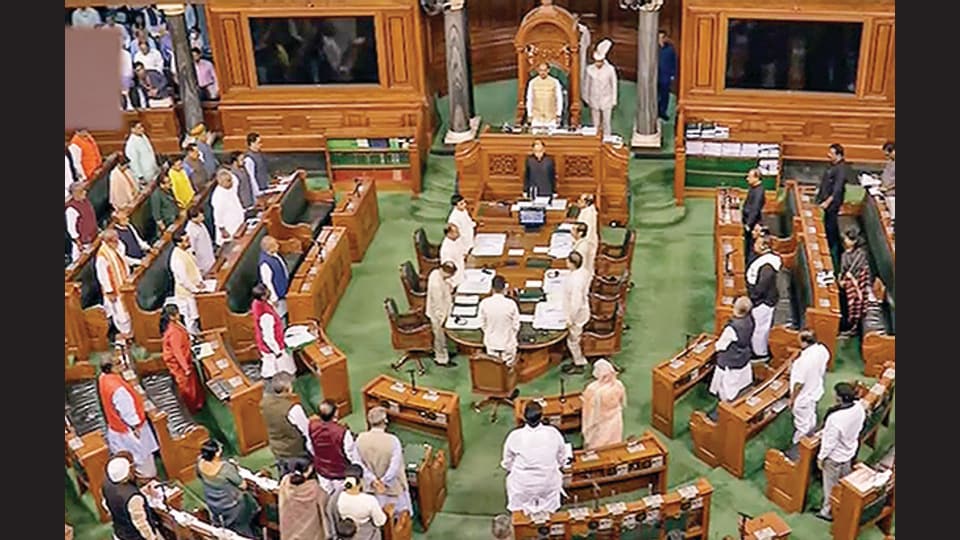
Appearing before a constitution bench led by justice KM Joseph, attorney general R Venkataramani said the new draft legislation on personal data protection is ready and will be introduced in Parliament in the monsoon session, which starts in July.
“The bill is ready and it will be introduced in the monsoon session... in July,” the law officer informed the five-judge bench, which also comprised justices Ajay Rastogi, Aniruddha Bose, Hrishikesh Roy and CT Ravikumar.
The consultation process has taken a long time since the law is important and seeks to address all concerns surrounding privacy of users and their data, Venkataramani added. “The consultation process is a long process and it is going to take some time. You want a good law to come after all,” he emphasised.
Recording his statement regarding the introduction of the new bill in the monsoon session, the constitution bench fixed the hearing of a clutch of petitions challenging the 2016 and 2021 privacy policy of WhatsApp in the first week of August. The bench further requested the Chief Justice of India to constitute a new five-judge bench to take up the matter in August. The new bench has been necessitated as justices Joseph and Rastogi retire in June.
The top court is examining a batch of petitions challenging the WhatsApp privacy policies on the ground of breaching data privacy and being discriminatory against Indian users.
Senior advocate Shyam Divan, appearing for the lead petitioner and law students Karmanya Singh Sareen and Shreya Sethi who challenged the 2016 privacy policy, opposed the request for deferment of proceedings based on Venkataramani’s submissions.
Divan argued that the judicial process should not be linked to the uncertainty around a new bill that may have to go to standing committees, etc. He highlighted that the first such request of deferment by the Centre on the ground of a possible law came in 2017, but the legislation is yet to see the light of the day. The lawyer said the case should be listed in July to consider an interim order to ensure WhatsApp does not transfer any user data to other entities.
On the other hand, lawyers Kapil Sibal, Mukul Rohatgi, Sidharth Luthra and Arvind Datar, representing WhatsApp and its holding company Meta (earlier Facebook), urged the court to wait for the new data protection law.
Following their brief submissions and in the wake of Venkataramani’s statement, the constitution bench deferred the proceedings to wait for the new data protection law to take a final shape and be introduced in the Parliament.
The case was last heard on February 1, when the bench directed WhatsApp to give wide publicity in the media about its undertaking to the Union government in 2021 that Indian users are not bound to accept the company’s new contentious privacy policy and that the functionality of the messaging platform will not be affected till a personal data protection regime is in place.
The interim directive on the publication was issued after noting that many users in India may not be aware of WhatsApp’s letter in which the company conceded that it will not limit the functionality of WhatsApp for users who were yet to accept the new privacy policy. The 2021 policy entails sharing of WhatsApp user data with Facebook (now Meta), which has been legally challenged as being violative of privacy rights. In its February order, the top court took on record the statement made by WhatsApp in its May 2021 letter and said the company will abide by the terms of the letter till the court hears the matter next in April.
During the hearing on February 1, WhatsApp and Meta agreed to issue advertisements in newspapers but maintained that “there is no such thing as a free lunch in this world,” and, thus, users who want to use both WhatsApp and Facebook cannot shake off advertisements. Users should stop using Facebook if they do not want ads because there is a limited sharing of information between the two platforms, they said.
On that day, the constitution bench refrained from issuing any directive on providing a way out to existing WhatsApp users, who have already chosen to share some data, saying that the issue will require extensive deliberation. Since the bench cannot consider the entire gamut of issues immediately, it noted on February 1 that it will not be justified to pass an order on a plea made by the petitioners for a directive to WhatsApp to treat Indian users on a par with their European counterparts.
The Union government in November made public a draft data Digital Data Protection Bill, the fourth iteration of a planned law that is meant to give the legal framework to the 2017 Supreme Court ruling on the right to privacy.
The new draft has attracted both praise and criticism, the first for its light touch and technology agnostic approach to regulating a dynamic space, and the second for the significant exemptions it grants to governments and state agencies on using data of individuals.
Speaking at a Google India 2022 event on December 19, Union information and technology minister Ashwini Vaishnaw said the new bill include laying down certain conditions for how personal data — defined as “any data about an individual who is identifiable by or in relation to such data” — of Indian citizens will be handled, the obligations of those that collect it and the powers of the government in accessing such information.