E-Paper



India, Brazil and South Africa slam 'persistent attacks' on multilateralism, violations of UN charter
The three ministers emphasised the need to protect civilians and civilian infrastructure in line with international law and the UN Charter

 Prefer HTon Google


India, Brazil and South Africa have expressed concern at “persistent attacks on multilateralism” and the continued escalation of tensions in West Asia and called for protecting civilians and civil infrastructure in line with international law and the UN Charter.
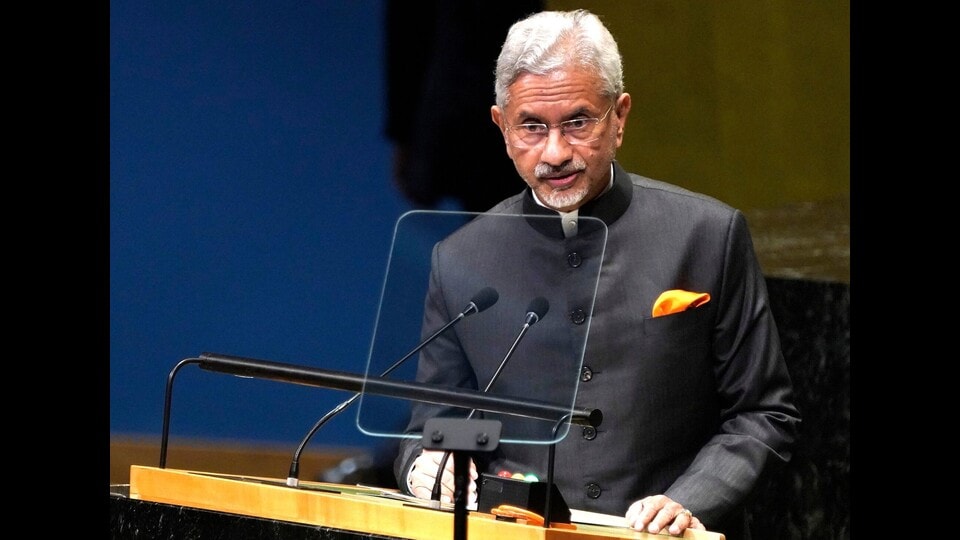
The need to reform global governance institutions, the situation in West Asia and the priorities of developing countries figured in a meeting of the foreign ministers of the three countries on the margins of the UN General Assembly in New York. The meeting came close on the heels of India and Brazil joining hands with other key players such as Australia and the European Union (EU) to launch the Partners for Multilateralism (P4M) initiative in New York.
A joint statement issued after the meeting of external affairs minister S Jaishankar, Brazil’s foreign minister Mauro Vieira and South African foreign minister Ronald Lamola said the three sides expressed growing concern over the “persistent attacks on multilateralism and grave violations” of the UN Charter and rejected the use of force against the territorial integrity or the political independence of any state.
The three countries also expressed concern at the continued escalation of tensions in West Asia and emphasised that actions outside the established frameworks of dialogue, diplomacy and international law “risk further undermining of regional peace, security and stability.
The three ministers emphasised the need to protect civilians and civilian infrastructure in line with international law and the UN Charter, including respect for the sovereignty and territorial integrity of states in the region. They also encouraged increasing efforts, through dialogue and diplomacy, to restore peace and expressed concern at renewed threats of military action that will “only serve to jeopardise ongoing dialogue, mediation and confidence-building efforts”.
The ministers further called on all parties to exercise restraint and refrain from actions that may contribute to further escalation, and to create conditions conducive to dialogue and diplomacy towards a long-term understanding. The conflicts in West Asia have a negative spill-over effect on the Global South, especially for energy and food security, and cause further inflationary and fiscal pressures. The ministers also sought the unimpeded flow of global trade, supply chains and energy, safety and security of seafarers and merchant vessels, and the freedom of navigation.
The three countries reiterated that a just and lasting solution to the Israeli-Palestinian conflict “can only be achieved by peaceful means and depends on the fulfilment of the legitimate rights of the Palestinian people”. They backed a two-state solution with an independent and viable State of Palestine side by side with Israel, with East Jerusalem as its capital.
The three countries emphasised the need for developing countries to strengthen efforts to promote dialogue and consultations for more just and equitable global governance amid contemporary realities of the multipolar world. Multipolarity can expand opportunities for developing countries to enhance inclusive, sustainable and equitable economic globalisation and cooperation, the joint statement said.
The Global South should act as a driver for positive change amid deepening geopolitical tensions, rapid economic downturns and technological changes, protectionist measures, migratory challenges and climate change, the three countries said.
The ministers also called for an urgent and comprehensive reform of global governance institutions to increase the meaningful participation of developing and least developed countries in decision-making processes and structures. This will help build a more legitimate and effective multilateral system with the UN at its centre.
These efforts should include comprehensive reform of the UN Security Council to adapt it to geopolitical realities and address challenges such as climate change, socio-economic inequality, digitalisation and other emerging issues.
The three countries strongly condemned the killing of civilians in the terrorist attack at Pahalgam in April 2025 and reiterated the unconditional rejection of all forms of terror. They also rejected double standards in countering terrorism and called for countering the financing of terrorism. The ministers also called for concerted actions against all UN-listed terrorists and terror entities, including al-Qaeda, Daesh, Lashkar-e-Taiba (LeT), Jaish-e-Mohammad (JeM), other proxy groups and their facilitators.