
 E-Paper



After Poonch attack, security forces tweak movement SOP
The troops have been told to keep their movements secret and ensure more effective intelligence sharing between local police and central forces.

 Prefer HTon Google


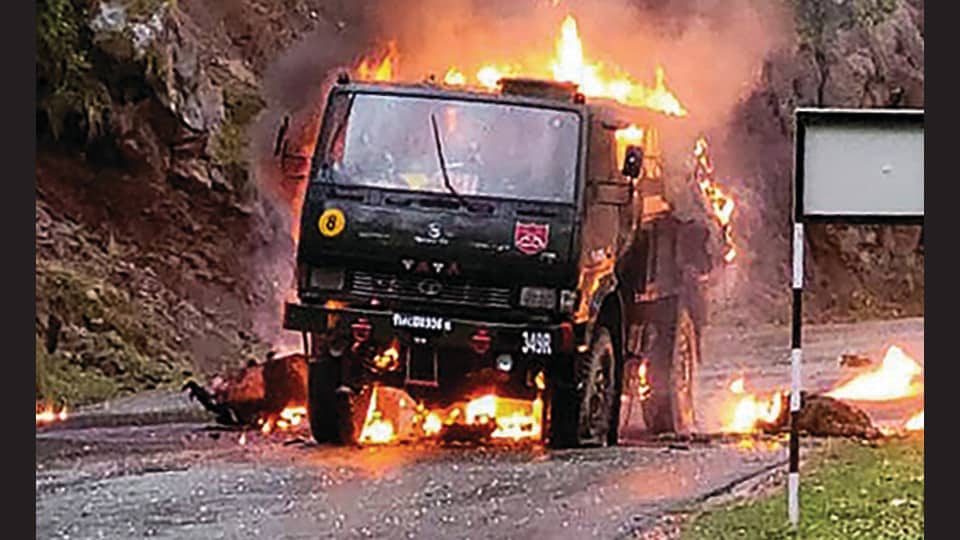
New Delhi: Security forces have changed their standard operating procedure (SOP) on troop movement on highways in Jammu and Kashmir to avoid being ambushed by terrorists -- a direct fallout of the Poonch terror attack on April 20, in which five soldiers were killed.
Also Read | 5 killed in terror attack on Indian Army truck in Poonch
People familiar with the matter said necessary instructions have been given to local commanders that the troops should not take the same route repeatedly and that movement of non-operational personnel (administration or provisioning teams) should be infrequent.
“We keep on reviewing our procedures after an incident or depending on intelligence inputs. The troops have been asked to keep changing the route – for travel to or from their respective camps. The administration or provisioning teams’ movements should be done only when necessary,” said an officer in one of the central paramilitary forces, asking not to be named.
Routes, turns and other spots on state or national highways which are most vulnerable have been identified and forces including the Central Reserve Police Force (CRPF), Border Security Force (BSF), and the army have been told to coordinate with each other regarding deployment of Quick Action Teams (QATs) and road opening parties (ROPs) before convoy movements.
Also Read | Poonch terror attack: 6 locals held for providing logistics to attackers
Besides, the troops have been told to keep their movements secret and ensure more effective intelligence sharing between local police and central forces.
Following the Poonch attack, it emerged that there were intelligence inputs about presence of terrorists in the area around the time when five to seven terrorists fired with automatic rifles and rocket propelled grenades from three sides on a military truck travelling between Bhimber Gali and Poonch in Rajouri sector ,
The people cited in the first instance said the ministry of home affairs’ (MHA) top brass held a series of meetings with central paramilitary and intelligence agencies on the issue of troop movements as well as security arrangements in J&K during the G20 tourism working group meeting (it started Monday), during which forces were asked to be careful.
Also Read | PAFF releases edited video of Poonch ambush, promises full footage ‘soon’
Troop movement in J&K has been a major concern since the February 14, 2019 Pulwama attack, in which a suicide bomber rammed a vehicle borne Improvised Explosive Device (VBIED) in a CRPF bus, killing 40 personnel.
Now, there are smaller convoys on the highways in the Valley, CCTVs have been installed at many points, drones are used during troops’ movement and operational teams now usually travel in vehicles which can withstand bullets and low intensity bombs. There is also regular audit of vehicles parked in and around security forces’ camps.
In March, MHA directed the security forces to use “codes and cipher” instead of “plain language” while sharing messages over radio wireless sets regarding movement of VVIPs or security forces’ convoys.


