New in the Northeast | When a suicide assumes communal political subtext
When Vineet Bagaria died by suicide in Assam, netizens took to social media to highlight police inaction. Later, a communal angle was brought in after the CM visited the family
Last week, Dibrugarh, one of Assam’s biggest towns in the tea-rich belt, was shaken by the news of death of one of its popular residents. A 32-year-old businessmen and animal activist died by suicide after recording a video in which he named people responsible for his extreme step.
News of the death soon started airing on local news channels. The reactions forced the police to take steps and arrest two of the accused. (Getty Images/iStockphoto)
In the video, Vineet Bagaria, who allegedly hanged himself at his home, named three persons and accused them of constant threats that forced him to end his life. Two of them were later arrested by the police for abetting Bagaria to commit suicide and search is on for two more.
The Bagaria family had given a shop on rent at their premises to one of the two arrested accused, who in turn sub-let it to the second accused. But when the family asked the tenants to vacate the property, the tenants stopped paying rent and started threatening Vineet and his family of dire consequences.
Incidentally, the family had filed complaints against the accused with the local police, but no action was taken. On Thursday evening, hours prior to Vineet’s suicide, his father, a local businessman associated with Aam Aadmi Party had filed a FIR at the Dibrugarh police station against the accused.
Vineet’s death sparked outrage on social media with netizens accusing the police of inaction and insensitivity, which forced him to commit suicide. News of the death soon started airing on local news channels. The reactions forced the police to take steps and arrest two of the accused.
With anger against the police spreading, Chief Minister Himanta Biswa Sarma, who heads the home department, reached the Bagaria family’s home in Dibrugarh two days after the death and apologised to the family. But soon, the CM’s reactions took a different tinge.
“I can’t even imagine how Baidullah Khan reached this town. I am very ashamed. Has our government become so weak? I have never been so ashamed in my life,” Sarma said pulling up the deputy commissioner and superintendent of police in front of the family and cameras of journalists.
The four persons accused of abetting Bagaria’s suicide are Baidullah Khan, Sanjay Sharma, Nishant Sharma and Ezaz Khan. While Sanjay Sharma and Baidullah Khan have been nabbed, the other two are absconding. Till the CM reached Bagaria’s home, the suicide had not taken communal colour.
But with Sarma repeatedly expressing shock at Baidullah Khan being able to issue threats to the Bagarias while keeping silent on Sanjay Sharma, the other arrested accused, it appeared that the CM wanted to portray Vineet’s suicide as an act perpetrated by a Muslim against a non-Muslim.
“This incident happened in the middle of the town, if Baidullah Khan can reach here what’s the point of you taking your salary of wearing the khaki uniform? The person’s death is secondary, but my first question is how Baidullah Khan was able to reach here?” the CM told the district officials.
“Is this Dhubri or Goalpara?” Sarma questioned referring to two districts in lower Assam where Muslims are in majority. “My mind isn’t able to comprehend whether I am hearing of an incident in Assam or in Jammu and Kashmir. This is just one incident. There may be many Baidullahs roaming around here,” he added.
Sarma’s comments have now given rise to questions on whether crimes and criminals should be judged by their religious affiliations and area of operation (where a particular community is dominant or in minority) or they should be seen as equals in eyes of the police and courts as is the norm and practice.
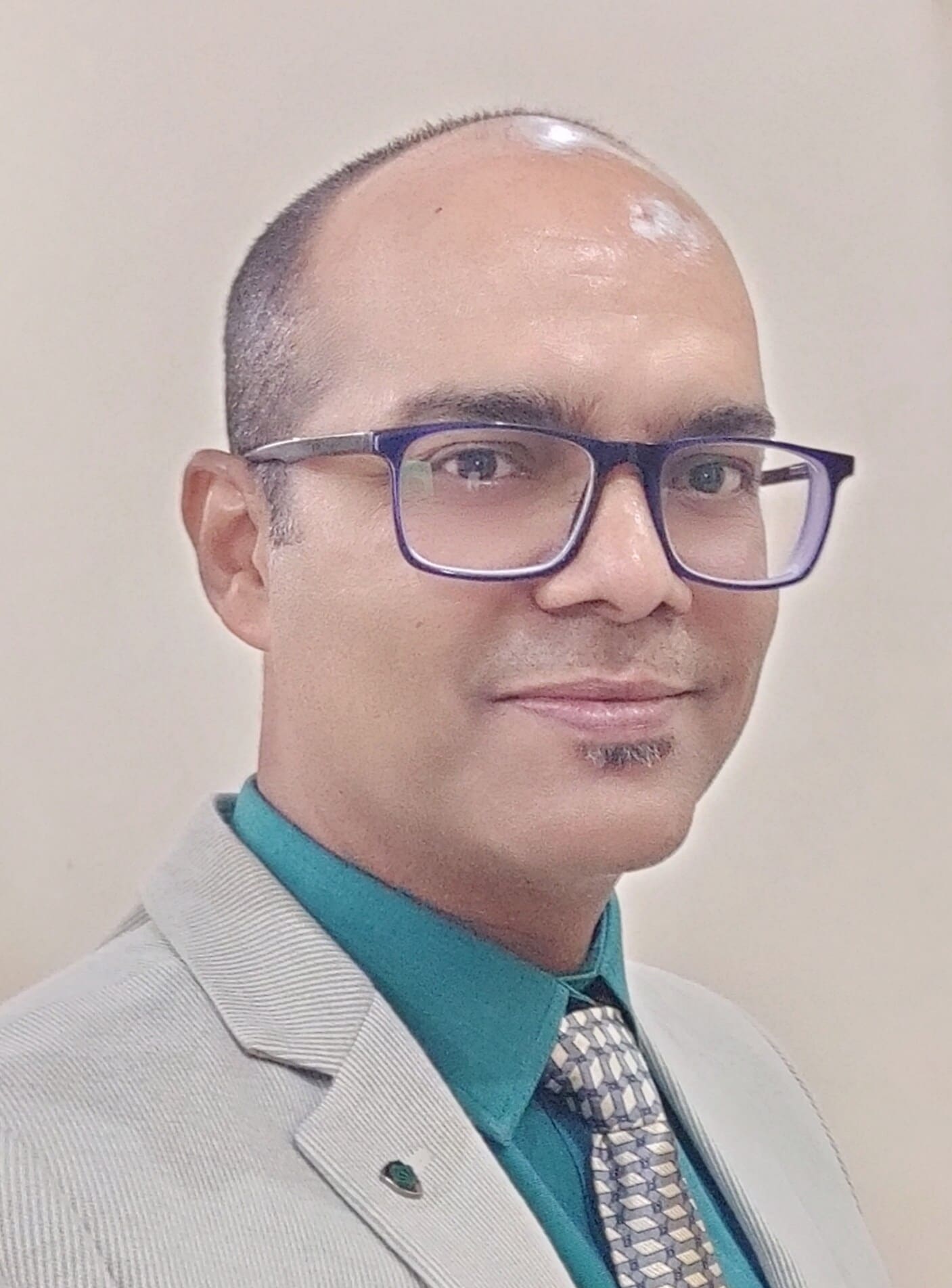
A seasoned senior journalist, I have nearly three decades of experience across print, digital, and online platforms, covering political transitions, insurgencies, environmental issues, and development stories in India and Nepal. I am skilled in breaking news, leading editorial teams and launch of newspaper editions. I am adept at leveraging digital trends and social media to expand global reach, with a strong ethical foundation and a reputation for impactful journalism.
An alumnus of Asian College of Journalism, I joined Hindustan Times in New Delhi as a trainee reporter in May 1997. Over the years, I have been posted in Dehradun, Kathmandu (Nepal) and Guwahati. Currently, as Senior Assistant Editor at Hindustan Times, I lead a team reporting on India’s northeastern states. My work involves in-depth analysis, and engaging multimedia storytelling across formats, including text, photo, video, and interactive content. I am skilled in producing timely, shareable content, leveraging digital platforms and social media to engage global audiences.
Throughout my career with the Hindustan Times, I have led diverse editorial teams, designed capacity-building activities, and supported reporters in developing strong story ideas, ethical reporting practices, digital skills, and fact-checking techniques. As Senior Assistant Editor for Northeast India, I have been responsible for guiding correspondents through complex political, humanitarian, and community-level stories using multimedia formats. Earlier, as Foreign Correspondent in Nepal, I produced extensive reporting during Nepal’s democratic transition and the 2015 earthquake and its aftermath.Read More
Follow India news real-time updates and the latest news covered on Hindustan Times, featuring today's critical updates on Sonam Wangchuk LIVE and more across India.
Home/India News/New In The Northeast | When A Suicide Assumes Communal Political Subtext

 E-Paper