E-Paper



No good ground to interfere in Great Nicobar Holistic Development Project: NGT
The project involves an international container transshipment terminal, an international airport, a power plant, and a township

 Prefer HTon Google


Adequate safeguards have been provided in the conditions for the environmental clearance (EC) to the Great Nicobar Holistic Development Project, the National Green Tribunal (NGT) ruled on Monday, underlining that there is no good ground for it to interfere.
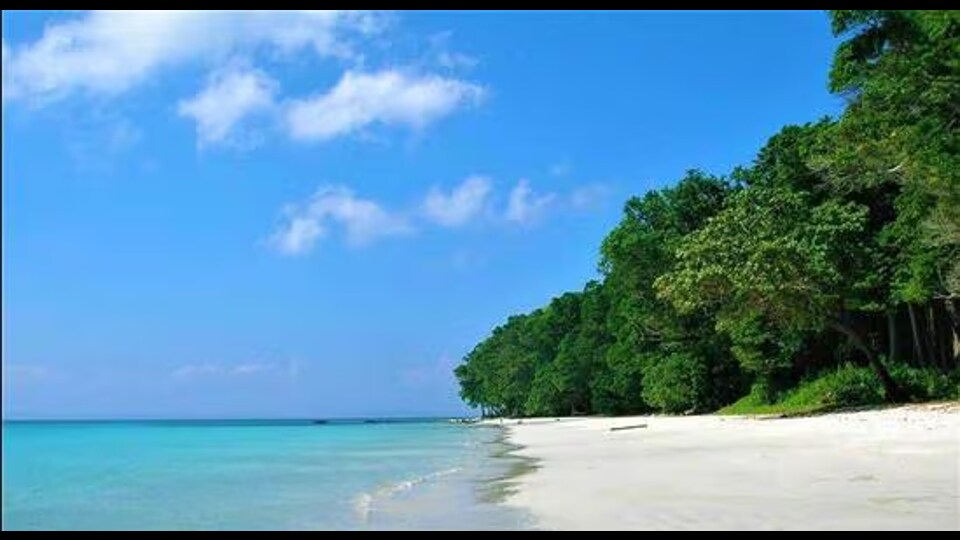
The project involves an international container transshipment terminal, an international airport, a power plant, and a township over an area of 166.10 sq km, of which 130.75 sq km is forest and 84.10 sq km tribal land.
“We find that adequate safeguards have been provided in the EC conditions and in the first round of litigation the Tribunal had refused to interfere in the EC and remaining issues noted by the Tribunal in the first round of litigation have been dealt with by the High-Powered Committee and considering the strategic importance of the Project and taking into account the other relevant considerations, we do not find any good ground to interfere,” said NGT’s eastern bench.
In 2022, Debi Goenka of Conservation Action Trust challenged the forest, environmental, and Coastal Regulation Zone (CRZ) clearances to the project in the first round of litigation. Environmentalist Ashish Kothari followed suit in a separate application. The tribunal in 2023 held that it did not find any ground to interfere with the forest clearance.
The NGT said that the deficiencies the appellants raised earlier have been addressed. It added that further work on EC will not progress until the committee’s findings are submitted, except “for the work which may not be of an irreversible nature.”
The NGT constituted the committee under the Union environment ministry secretary to revisit the EC. Experts questioned how the secretary could revisit the EC granted by their own ministry.
Kothari filed another application, pointing to an error in limiting the terms of the committee’s reference to the three issues. He said the issues of protection of corals, basing the decision on one season of data, and the presence of the project in CRZ-1A have not been properly examined. Kothari cited the severe impact the project would have on rainforests and the region’s unique biodiversity.
The 2023 NGT order said appellants pointed out that of 20,668 coral colonies, 16150 are proposed to be translocated without any mention of the threat to the remaining 4,518. They cited CRZ regulations prohibiting the destruction of corals. The appellants argued that the data collected for impact assessment was only of one season, as opposed to the requirement of three.
On the first issue, NGT referred to the Union government’s stand that there is no coral in Galathea Bay, where the port is to be set up. “...in this regard, the additional solicitor general, Aishwarya Bhati, has relied upon the entry depicting the absence of a coral reef in Galathea Bay by the Zoological Survey of India (ZSI).”
The ZSI said that 309 species of scleractinian corals under 66 genera and 19 families are recorded from Great Nicobar based on comprehensive studies for the last 14 years across all the coastal areas of the island.
“...it has been noted that no major coral reef exists within the work area of the project. Only scattered coral reefs are available at the peninsular part of Galathea Bay…the size of the colonies reported from Galathea Bay is relatively small, and most of the species are found scattered with small growth forms, which may be due to the presence of an extremely high cover of algae (51.75%).”
The ZSI said coral reefs were recorded in the adjoining areas of the proposed project site. “...as a precautionary measure, to avoid damage to the corals by any means, it is a prerequisite to translocate the corals from the Galathea Bay, up to the depth limit of 15 m. Any coral colonies...presumed to be...impacted by the proposed construction...[have] been recommended by ZSI to be translocated to a suitable place where [a] similar environment as well as topographic features... [prevail] in the Great Nicobar.”
The Union government submitted that the National Centre for Sustainable Coastal Management (NCSCM) visited the site and found that no part of the project is in the CRZ-1 area.