E-Paper



No need to seal office if employee tests positive: Govt
The advisory is significant as more business activity starts and as companies and factories contemplate a return to some sort of normalcy after May 3 when the current phase of the lockdown ends.

 Prefer HTon Google


There is no need to seal an entire building if a person living or working there tests positive for coronavirus disease (Covid-19) because disinfection of the affected floor and common areas is enough to stop the spread of infection, according to the Union health ministry.
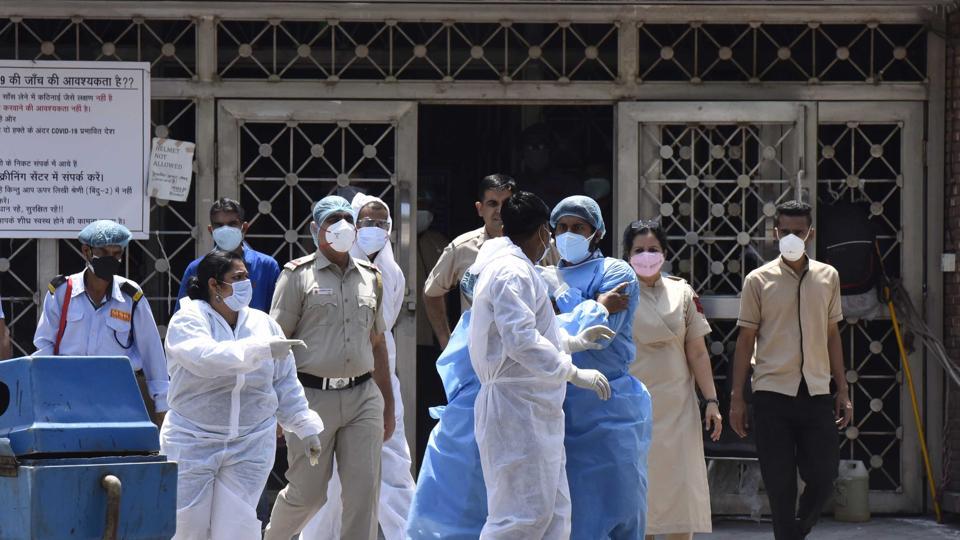
“The health ministry has issued a detailed advisory on do’s and don’ts if a non-Covid hospital reports a Covid-19 positive case. The same rules apply for office premises or any other building from where a positive case is reported. There is no need to shut the entire premises, rather one can just do proper disinfection of the main area, and other common areas,” said Lav Agarwal, joint secretary, health ministry.
The advisory is significant as more business activity starts and as companies and factories contemplate a return to some sort of normalcy after May 3 when the current phase of the lockdown ends.
According to the health ministry guidelines for non-Covid hospitals where a positive Covid-19 patient is identified, local health authorities need to be immediately informed, followed by disinfection procedures at the affected areas.
All contacts of the patient should be home quarantined and monitored for 14 days. Their details must also be shared with local health authorities.
If the local health authorities are reasonably satisfied that the source case(s) have been identified and isolated, all contacts have been traced and quarantined and adequate disinfection has been achieved, the building will continue to function. But if the building still continues to report new cases in the following days, it would be advisable to temporarily close the defined section of the building from where the maximum number of cases are being reported. After thorough cleaning and disinfection it can be put to use again.
Experts say much depends on the design of the building.
“If the structure is where there are multiple flats or different floors, then there is no need to seal the entire building as per the infection control guidelines. However, all the flats or floors have to remain under observation, and people should watch out for symptoms,” said Dr T Jacob John, senior virologist, and formerly head of department, CMC, Vellore.
Despite taking the above measures, if the primary source of infection cannot be established and or the building is still reporting large number of cases then a decision needs to be taken on whether the building needs to be shut down under intimation to the local health department.
BOX
Follow up actions
When a Covid-19 cases is reported at a workplace
*Active screening of all staff is done daily (by means of thermal screening especially at the start of shift)
• All staff members should monitor their own health at all the time for appearance of symptoms, and report them at the earliest
*Close contacts should be home quarantined for 14 days, monitored
...