E-Paper



No political appointments in NCLT, NCLAT: SC
The judgment also pointed out structural challenges, including a shortage of members, inadequate infrastructure, and scheduling inefficiencies.

 Prefer HTon Google


The Supreme Court on Thursday emphasised that appointments to the National Company Law Tribunal (NCLT) and the National Company Law Appellate Tribunal (NCLAT) must not be “political”, even as it voiced serious concerns over delays and inefficiencies affecting India’s insolvency process.
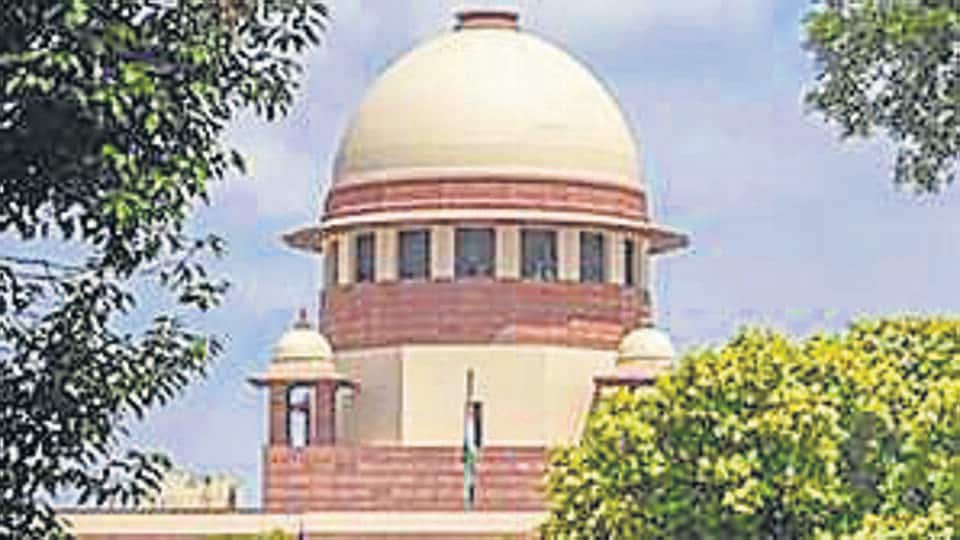
“The appointment of new members must be done in a manner such that it coincides with the date of retirement of the sitting members in a seamless manner to avoid such operational inefficiencies. Persons with high ideals & impeccable integrity should be appointed as Members in the NCLT as well as NCLAT. There should not be any political appointment,” stated a bench comprising Chief Justice of India Dhananjaya Y Chandrachud and justices JB Pardiwala and Manoj Misra.
In its judgment that ordered the liquidation of debt-ridden Jet Airways, the top court addressed a raft of issues regarding the functioning of NCLT and NCLAT, criticising the tribunals for “lack of timely admission and disposal” of applications under the Insolvency and Bankruptcy Code (IBC).
Noting that prolonged delays harm stakeholders and undermine the very purpose of the Code, the bench underscored the need for “time-bound” adjudication as it highlighted that timely resolutions help prevent the erosion of corporate value and protect investor confidence, both essential for India’s corporate restructuring efforts.
The judgment also pointed out structural challenges, including a shortage of members, inadequate infrastructure, and scheduling inefficiencies. According to the court, tribunals must adopt efficient practices to manage their rising caseload, particularly in high-stakes insolvency matters. The bench berated the inconsistent working hours of the tribunals and highlighted that “urgent listings” are often overlooked, affecting the resolution process’s effectiveness.
“As a consequence, the strict timelines provided in IBC are not complied with. Filling such vacancies with experts having adequate domain knowledge in the field must be prioritized along with addressing the infrastructure needs of the tribunals to prevent any adverse effect on the resolution process. There must be strict mandates regarding the functioning of the tribunals within its normal working hours,” it held.
The top court further put NCLT and NCLAT “on notice,” stating that any disregard for Supreme Court orders or judicial propriety would not be tolerated, urging a shift away from “mere rubberstamping” toward a more robust, accountable approach.
“The NCLT(s) and the NCLAT must seriously rethink their approach towards admission and disposal of insolvency matters. They should not act as a mere rubberstamping authority and must take their roles seriously in ensuring time-bound hearings and resolutions. Proper and effective hearings both virtually and in-court must be given to insolvency matters of public importance, and the NCLT(s) and NCLAT(s) must earnestly work towards ensuring that the IBC, 2016 achieves its avowed object,” it said.