
 E-Paper


Follow the latest breaking news, major developments and agenda-setting stories from India and around the world with the newsdesk at Hindustan Times. Operating round the clock, the desk brings together experienced editors, reporters and correspondents to deliver fast, accurate and contextual reporting across subjects that influence public policy, governance, business, society and international affairs. The HT News Desk covers politics, elections, government policies, the economy, business and markets, science and technology, the environment, law and order, infrastructure, education, climate issues and geopolitics, while closely tracking developments across states, institutions and global capitals. The team also leads coverage of major breaking news events, policy announcements, court proceedings, natural disasters, public emergencies and significant international developments. Reports published by the newsdesk are based on information gathered from reporters on the ground, official statements, government agencies, court records, regulatory filings, recognised institutions and other authoritative sources. Stories undergo editorial scrutiny and verification processes to ensure accuracy, fairness and relevance, and are updated as events evolve and additional information becomes available. Whether covering a key political decision in New Delhi, an economic policy shift affecting millions, a landmark court ruling or a major global event, the HT News Desk aims to provide readers with reliable, fact-based journalism that delivers not only the latest developments but also the context and analysis needed to understand their wider implications.
No tolerance policy towards militancy in Jammu and Kashmir to continue
The Centre has decided to persist with its muscular “no tolerance” policy towards militancy in Jammu and Kashmir even as violence in the Valley increases, a senior government official said on Saturday, a day the security forces shot dead four militants in Pulwama district.


The Centre has decided to persist with its muscular “no tolerance” policy towards militancy in Jammu and Kashmir even as violence in the Valley increases, a senior government official said on Saturday, a day the security forces shot dead four militants in Pulwama district.
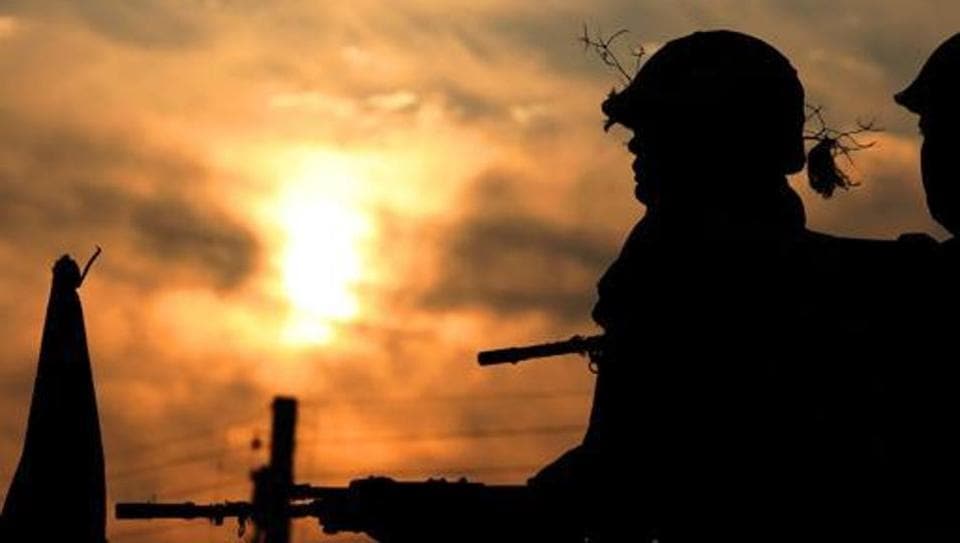
“Through the winter, counter-terror operations by the Srinagar-based Chinar Corps of the Indian Army along with Central Reserve Police Force and Jammu and Kashmir Police will continue unabated if not scaled up,” a senior ministry of home affairs (MHA) official said on condition of anonymity. The decision to continue with the no tolerance policy was taken after a review in New Delhi. “We believe results will be visible soon...,” a second MHA official, who is not authorised to speak to the media, said.
This year, at least 180 young men from the Valley have joined terror groups like the Lashkar-e-Taiba (LeT) and Jaish-e- Mohammed (JeM), among others, and around 240 suspected terrorists killed, the most since 2010. The slain militants include 12 top commanders of various militant groups. Gun battles have sometimes been followed by civilian protests.
“The balance, however, is tipping in our favour after sustained counter-terror operations from June 2018. Terror groups in the valley are leaderless, the groups are directionless and most in their ranks lack training. With winter coming in, it will be impossible for those (terrorists) in the Valley to hide in the forests or head into mountains....,” a senior officer at Army Headquarters said, explaining the Centre decision. “By March, the security situation could change.”
And after a sudden spike, of late, a smaller number of local men are joining terror groups. “Only five local boys joined local terror groups last month after a sudden peak in June, July and August”, a senior ministry of defence official said.
Earlier this year, the government suspended anti-terror operations during Ramazan in a move described as “non-initiation of combat operations” in Kashmir . After journalist Shujaat Bukhari, editor of Rising Kashmir, and Indian army soldier Aurangzeb were killed by militants, the initiative was called off.
In addition, what has encouraged decision-makers to continue with the policy is the intelligence from the locals. “Local population sharing information with security agencies is a clear indication that the tide is turning in favour of the state,” a senior officer in the security establishment said, requesting anonymity.


