E-Paper



‘Not a fluke’: FM says Goldilocks moment due to careful planning
Union finance minister Nirmala Sitharaman highlighted India's unique economic balance of high GDP growth and low inflation, attributing it to planning.

 Prefer HTon Google


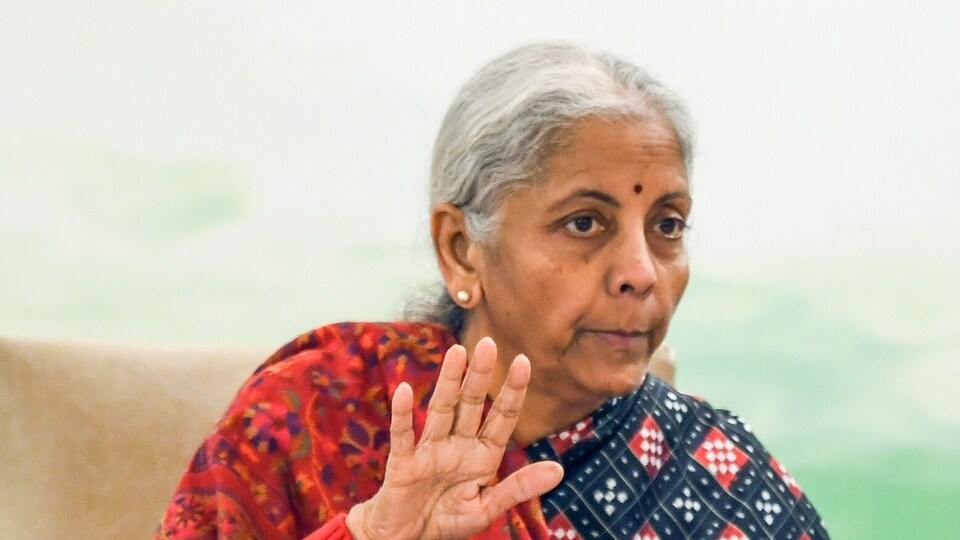
Indian economy is witnessing a “rare balance” of sustained high gross domestic product (GDP) growth with low inflation and inclusive development, which is not a “fluke” but an outcome of government’s careful planning and calibrated policy interventions, Union finance minister Nirmala Sitharaman told the Rajya Sabha on Thursday while replying to the debate on the Union Budget 2026-27.
ALSO READ | Congress ‘surrendered’ India's PDS before World Trade Organisation in 2013, says FM Sitharaman
“This budget is being presented at the moment when there is a very rare balance for India. And this kind of moment doesn’t come too many times in history,” she said. According to the National Statistical Office’s (NSO) first advance estimates of GDP released on January 7, the Indian economy is expected to grow at 7.4% in FY26.
While India remains the fastest growing major economy of the world, its retail inflation is at 2.75% in January, according to a revised data series released on Thursday. Commenting on the macroeconomic fundamentals of the economy, Reserve Bank of India (RBI) governor Sanjay Malhotra on December 5 had termed it a “rare Goldilocks period”.
ALSO READ | Budget 2026-27: Statement of pragmatism and farsightedness
Sitharaman told the House on Thursday that the Budget 2026-27 should be appreciated in relation to “our macroeconomic balance, which is unique to achieve”. She dedicated this achievement to the entire country. “It is the achievement of our people to have a wonderful balance, that is, you’re having a good high rate of growth of the GDP, and there is a low inflation, which is being held at that kind of a level continuously [for] sometime,” the finance minister said. There is no inflation crisis in India today as it has been tamed and firmly anchored due to stability and the steps taken by the government, she added.
Sitharaman said India is on a robust growth trajectory with low unemployment and allayed concerns over “jobless growth”, which she said was a relic of the erstwhile UPA regime. She said the middle class in India is expanding and higher taxes paid by individuals as compared to corporate assessments do not mean that they are being burdened. “Suppression of the middle class cannot happen when the tax base is widening and the net itself is expanding. This is not suppression –– people are coming on board voluntarily to pay taxes,” she said.
“The economy is not only for the elite; the middle-class basket is also widening,” she said. Between 2013-14 and 2024-25, the number of taxpayers rose from 52.6 million to 121.3 million, she said. “Thus, within the last 11 years, the number of income-tax payers has more than doubled. This represents the largest structural expansion of the middle class in the country,” she added.
ALSO READ | Budget 2026 to benefit common man, US deal a ‘big relief’ to Indian exporters, says Sitharaman | Exclusive
Replying to comments made by the Opposition during the debate on the budget, Sitharaman said: “An observation was made during the discussion that farmers are happy in Texas, but not in Tamil Nadu; they are happy in Kentucky, but not in Karnataka; they are happy in Wisconsin, but not in West Bengal. By saying this, I am sorry to say, they are admitting that farmers in Tamil Nadu, Karnataka and West Bengal –– the INDI Alliance-ruled states –– are not happy. The state governments in these states need to take care of them.”
The finance minister said the Budget 2026-27 announced 16 new schemes “with allocation”, and four existing schemes received a top-up. “Earlier, during UPA times, schemes were announced without allocation. Budget speeches are more than just announcements about schemes and allocations; they also set the direction,” she said.