E-Paper



Congress ‘surrendered’ India's PDS before World Trade Organisation in 2013, says FM Sitharaman
Finance minister Nirmala Sitharaman also said that the Congress regime sold the poor and farmers during its regime when it signed the Bali agreement in 2013.

 Prefer HTon Google


Prime Minister Narendra Modi “will always act in India’s interest”, whereas it was the Congress that “surrendered” the country’s public distribution system before the World Trade Organisation (WTO) in 2013, finance minister Nirmala Sitharaman said in her reply to Lok Sabha Leader of Opposition Rahul Gandhi’s accusation that the India-US trade deal has mortgaged the future of 1.4 billion Indians.
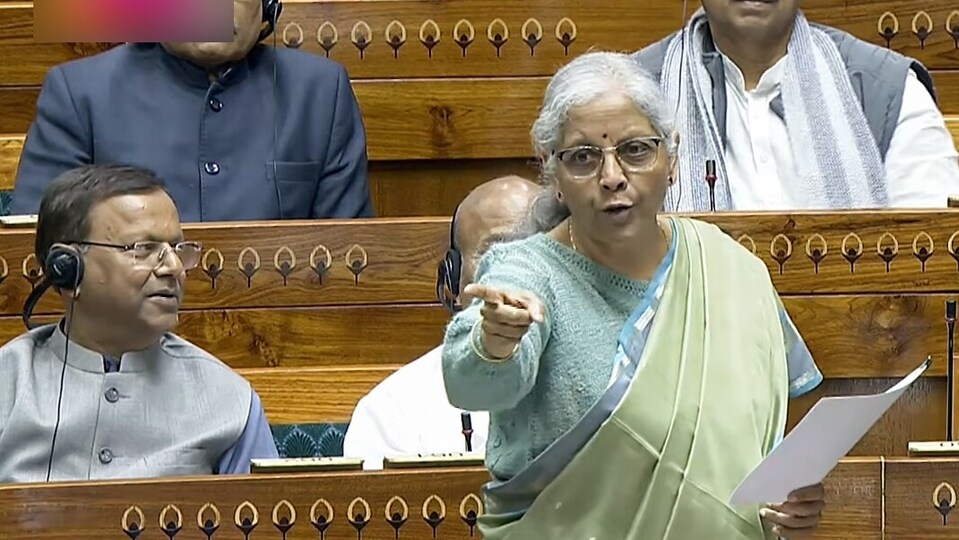
While responding to the debate on the Union Budget 2026-27 in the Lok Sabha on Wednesday, the finance minister said: “Hon’ble Prime Minister Shri Narendra Modi will always act in India’s interest whereas it was the Congress which surrendered before WTO, sold the poor and farmers during its regime when it signed the Bali agreement in 2013.”
It was the Modi government which intervened in 2014 and “restored India’s sovereign policy space, saved our farmers and gave our poor free food grains”, else “from 2017, we could not be in a position to provide ration to our poor under public distribution”, she added.
ALSO READ | Rahul attacks govt over India-US trade deal; triggers protests in Lok Sabha
At the Ninth Ministerial Conference (MC9) in Bali in December 2013, WTO members agreed that the “peace clause” is an interim solution to public stockholding (PSH) for food security purposes and a permanent solution would be found by 2017 (at MC11). Members agreed that the “peace clause” –– vital for India’s minimum support price (MSP) programme –– would remain in force until MC11 or 2017. India was represented by the then commerce minister Anand Sharma at MC9. As all decisions of WTO are based on consensus, India, at MC9 in Bali, agreed to lose the legal protection of the “peace clause” available to it to run its MSP programme.
It was the then commerce minister (and current finance minister) Sitharaman in 2014, who did not allow the shield of the “peace clause” to expire in 2017. At the time, she convinced key members to support India’s demand to continue this “peace clause” beyond 2017 by perpetuating it till the time a permanent solution is arrived at. This helped the country to continue its MSP programme and food security schemes.
On Wednesday, she said the government has allocated ₹2.27 lakh crore for food subsidy, ensuring basic food security remains a priority for 800 million people.
ALSO READ | ‘Most degrading behaviour’: Union minister Kiren Rijiju slams Opposition, shares videos of Lok Sabha ruckus
Reiterating her colleague and Union parliamentary affairs minister Kiren Rijiju’s statement, she said in Hindi, “Not a single person has been born till date who can sell India.” Referring to the Sharm-el-Sheikh Joint Statement, the finance minister slammed the previous government, saying, “Those who want to negotiate with Pakistan at Sharm-el-Sheikh are now giving us suggestions on negotiations.”
“It is the Congress which sold the government, farmers, the poor and the nation. It was you who hyphenated India with Pakistan,” she said. The 2009 joint statement issued by the then Prime Minister Manmohan Singh and Pakistani PM Yousaf Raza Gillani had decoupled dialogue from Pakistan’s action on terror. “Hon’ble Prime Minister Shri Narendra Modi will never do such a thing,” she said.
Rejecting Gandhi’s concerns over artificial intelligence (AI) and data storage, Sitharaman said, “I want to say that we are incentivising setting up of cloud and data centres in India, so that the data is stored here and our youth get employment opportunities.” The India AI Mission has an allocation of ₹1,000 crore in FY27, she added. Allaying his concerns over weaponisation of energy and finance, she said the government has already allocated appropriate funds in the Budget, which the LoP and his party did not see before raising apprehensions.
She referred to various budget provisions such as a ₹50,000 crore Economic Stabilization Fund created to meet unanticipated expenditure arising from volatile global situations. Similarly, to counter the weaponisation of technology and finance, ₹9,800 crore has been budgeted, she added. The finance minister enumerated various government’s efforts to counter energy weaponization. The Budget has provided incentives and customs duty exemption to build domestic capabilities in critical minerals, nuclear power, and green hydrogen, she said.
The FM said the total expenditure for 2026-27 in the Budget is ₹53.47 lakh crore, and the capital expenditure is ₹12.22 lakh crore, which is 3.1% of GDP and 11.5% higher than the Revised Estimates (RE) for 2025–26. “On the recommendation of state finance ministers, capital expenditure loans for 50 years are increased to ₹2 lakh crore for SASCI [Special Assistance to States for Capital Investment],” she said. “With this, the effective capital expenditure rises to ₹17.1 lakh crore, which is 4.4% of the GDP.”