
 E-Paper



‘Not a shred of evidence’: SC frees UP man sentenced to death for girl’s rape, murder
In its 47-page verdict that ordered the release of the UP man after spending 10 years in jail, the Supreme Court noted that Chotkau was so poor that he could not afford a lawyer for the trial and was provided services of a lawyer to assist the court as amicus curiae only after repeated requests


NEW DELHI: A man ordered to be hanged by two courts for the 2012 rape and murder of a six-year-old girl in Uttar Pradesh was acquitted by a three-judge bench of the Supreme Court on Wednesday after spending 10 years in jail. The bench also came down hard on the police for the shoddy probe and on the two courts - the sessions court which sentenced him to death and the Allahabad high court which confirmed the capital punishment - for ignoring gaping holes and contradictions in the prosecution’s case.
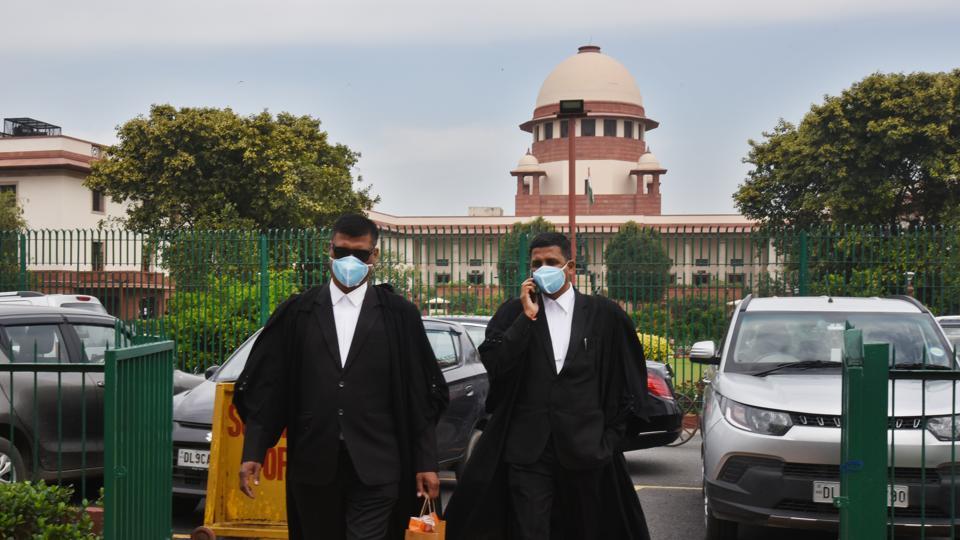
“Court cannot make someone a victim of injustice, to compensate for the injustice to the victim of a crime,” the bench of justices S Abdul Nazeer, AS Bopanna and V Ramasubramanian said in its 47-page verdict that tore into the police, prosecution and the courts.
The bench said the rape and murder of the six-year-old girl was undoubtedly “ghastly” but the prosecution had gone great injustice to the appellant by fixing culpability on him “without any shred of evidence which will stand scrutiny”.
“By not conducting the investigation properly, the prosecution has done injustice to the family of the victim.”
Chotkau, a poor man from UP’s Shravasti district, told the top court that he was innocent and was framed for the murder on March 8, 2012, by the village head’s husband, who was his relative and was trying to usurp his mother’s property.
The top court also noted that Chotkau was so poor that he could not afford a lawyer for the trial. It was only after repeated requests that the trial judge agreed to provide him services of a lawyer to assist the court as amicus curiae (friend of court).
“In cases of such nature, the responsibility of the court becomes onerous,” the bench said.
The trial court eventually sentenced him to death in March 2014, a verdict that was confirmed by the Allahabad high court in April 2016.
Chotkau’s case, however, came to the notice of retired high court judge S Nagamuthu who argued for him in the top court and exposed the contradictions in the prosecution case. The bench outlined several discrepancies in the prosecution case.
It was argued by the prosecution that the Chotkau, who was last seen with the little girl, took her for a dance and song performance on the occasion of Holi festival following which the girl went missing. Her body was later recovered from the fields.
The top court noted that the prosecution did not even bother to subject the accused to a medical examination. This was considered “fatal” to the prosecution story as the top court held that in cases of circumstantial evidence, medical evidence becomes the clincher.
“When the offence is heinous, the court is required to put the material evidence under a higher scrutiny,” said the bench. “This erroneous approach on part of the sessions court and the high court has led the appellant being ordained to be dispatched to the gallows.”
The three-judge bench underlined that the failure of the prosecution to produce such evidence “will certainly create a gaping hole in the case of the prosecution and give rise to a serious doubt on the case of the prosecution”.
“Further, the conspiracy theory by the accused that he was sought to be framed assumed significance as the FIR was sent to the trial court after a delay of five days. Even the forensic report of the victim’s body and clothes were sent to the trial court after a five-day delay along with FIR.
The top court even found contradictions in the statements given by the witnesses presented by the police. The witnesses contradicted their initial version during their cross examination and differed on material aspects of the case regarding lodging of FIR, location of the dead body, place of the inquest, and description of clothes worn by the victim.
The court concluded the statements of the witnesses were “untrustworthy”.
“Unfortunately, the sessions court, as well as the high court, have trivialized these major contradictions to hold that the chain of circumstances has been established unbroken,” the bench said as it set aside the conviction and the sentence.
“When we analyze the evidence with such a sense of responsibility, we are not convinced that the guilt of the appellant stood established beyond a reasonable doubt.” Chotkau was ordered to be immediately released.


