
 E-Paper



‘Something's gone wrong with Punjabi culture’: NRI tycoon Sahsi, killed in Canada, spoke candidly against drugs
The problem of illicit drugs, particularly the issue of addiction among youth in Punjab, was a crucial focus in his life, and a standout moment came in 2016


Punjabi NRI businessman Darshan Singh Sahsi, 68, who was shot dead in Canada in a targeted attack reportedly by the Lawrence Bishnoi-Goldy Brar gang, was best known for his massive business of recycled clothing. But the problem of illicit drugs — particularly the issue of addiction among youth in Punjab — was a crucial focus in his life.
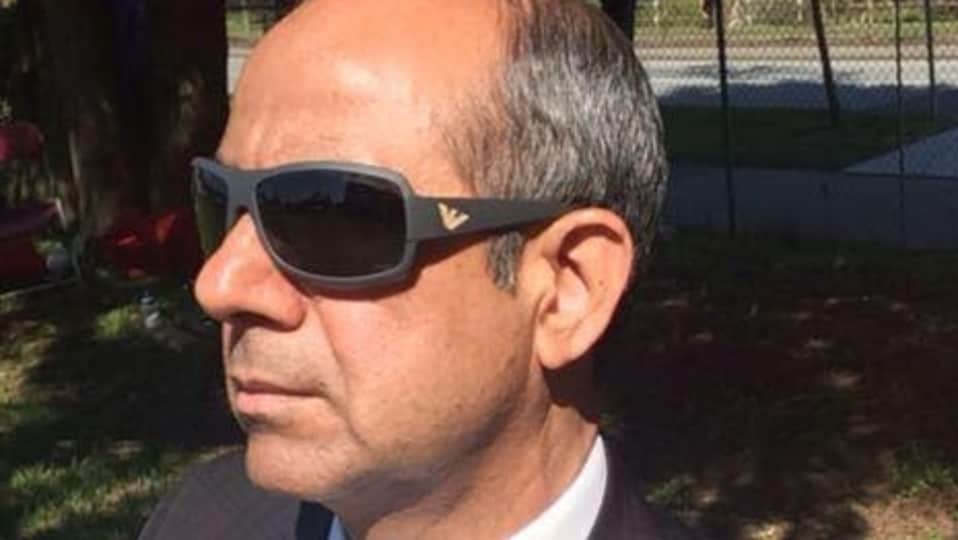
And a standout moment came in 2016, when he delivered a speech at the memorium of his nephew.
“I don’t want to hide the truth. My nephew has died of drug addiction,” Sahsi had said in a poignant speech at the gurdwara in his native place Rajgarh near Doraha, 20 km from Ludhiana.
At the ‘bhog ardas’ (concluding prayers) for 36-year-old Jagjit Singh Sahsi, who left behind his wife and a daughter barely six years old, Sahsi addressed the grief of a village but also the community’s grave denial.
Before Sahsi spoke, politicians had delivered condolence messages without mentioning drugs. Jagjit was reportedly found dead with a packet of ‘chitta’ (smack/heroin) in his hand.
Decried ‘moral degradation’ in Punjabi culture
Sahsi had then told HT: “I have flourished on foreign shores, lived the dream! But I am a failure. I could not save my child."
“Something has gone wrong with Punjabi culture... Moral degradation and collapse of the education system have birthed a generation that does not know how to live with ‘sanjam’ (patience), as was prescribed in Gurbani (words of the Sikh gurus),” he'd added.
About the drug problem, he'd said it was present among Punjabis in Canada too. “We carry this with us,” he'd told HT.
“Only parents and family can curb this menace. Don’t run after money! Save your kids. Educate them,” he had beseeched in his 45-minute address at the gurdwara.
Bishnoi gang claims, family denies
Nine years later, Sahsi was shot dead on October 28, 2025, outside his house in Canada’s British Columbia.
Some reports a day later said that Canada-based gangster Goldy Dhillon, linked to the Lawrence Bishnoi gang, claimed responsibility for Darshan Singh Sahsi's murder. Goldy Dhillon reportedly posted on Facebook that Sahsi was “involved in major drug trade”, and had ignored the gang's demands for money. HT could not independently verify these charges.
Sahsi’s family has contested the claims. “We completely deny all such talks which are going on. My father or anyone from our family never received any threat, extortion, or ransom call from any gangster, etc. No one, absolutely no one, benefits from killing my father. He was a man who just always gave back to society. People who know him really know who he was,” his son told The Indian Express.
While Lawrence remains in jail in Gujarat, the Bishnoi Gang has been listed as terror entity in Canada recently after it was named in a number of crimes targeting prominent Punjabis in Canada. In 2024, the gang claimed responsibility for firing outside the homes of Punjabi singers AP Dhillon and Gippy Grewal in Canada. Recently, it also claimed it was behind the repeated incidents of gunfire at comedian Kapil Sharma's cafe in BC, Canada.
Moved to Canada in 1991, how Sahsi flourished
Before moving to Canada in 1991, Darshan Sahsi was a brick kiln owner in Rajgarh village near Doraha in Ludhiana. He owned a recycling plant in Gujarat's Kandla and a facility in Haryana's Panipat before he moved to Vancouver.
He went on to establish Canam International, considered among the world’s leading recyclers of clothing. He was also a well-known philanthropist and NRI, Punjabi, Sikh community member.
Always connected to his home in Punjab, he served as a patron of Ludhiana's Punjabi Sahit Akademi and was known for his contribution to promoting the language and heritage.
Investigators have so far said unidentified assailants opened fire at him when he was near his SUV parked in the driveway of his residence.
He died on the spot. Abbotsford Police Patrol officers said they responded to reports of a shooting just after 9.20 am local time.


