E-Paper



Number Theory: 4 charts that capture 2024’s biggest political questions
The BJP’s first full-term government at the Centre was formed after the 1999 elections. That victory came on the back of a broad-based alliance.
Published on: Jan 1, 2024, 10:25:21 IST


Share via


Copy link

The only number which will define politics through 2024 will be the composition of the Lok Sabha after the 2024 general elections. With victories in the three Hindi belt states of Madhya Pradesh, Chhattisgarh and Rajasthan, the Bharatiya Janata Party (BJP) is definitely in pole position for the elections. To be sure, there is no point trying to predict the results as of now. Having said this, here are four charts which capture big political questions for Indian politics in 2024.

4 charts that capture 2024’s biggest political questions
 Will BJP contest more seats in 2024 than it did in 2019 and 2014?The BJP’s first full-term government at the Centre was formed after the 1999 elections. That victory came on the back of a broad-based alliance, and the BJP contested only 339 out of the 543 seats in the Lok Sabha. The number of seats contested by the BJP was falling consistently since the 1991 elections when the party had contested 477 seats. But since the 1999 elections, the number of seats contested by the BJP has increased consistently, and this figure reached a peak in 2019 when the party contested 436 seats. The only difference is, the BJP’s strike rate – seats won as a share of those contested – is significantly higher in 2014 and 2019 than what it has been in the earlier period. With key National Democratic Alliance (NDA) partners such as the Janata Dal (United), All India Anna Dravida Munnetra Kazhagam and the Shiromani Akali Dal walking out of the alliance, and some others such as the Shiv Sena undergoing a split, it appears quite likely that the BJP will contest an even larger number of seats in 2024. To be sure, the BJP has also found some new allies such as the Janata Dal (Secular) in Karnataka. While this may lead to a fall in strike rate for the BJP, theoretically speaking, it still leaves a chance of the BJP increasing its seat count despite a fall in strike rate.
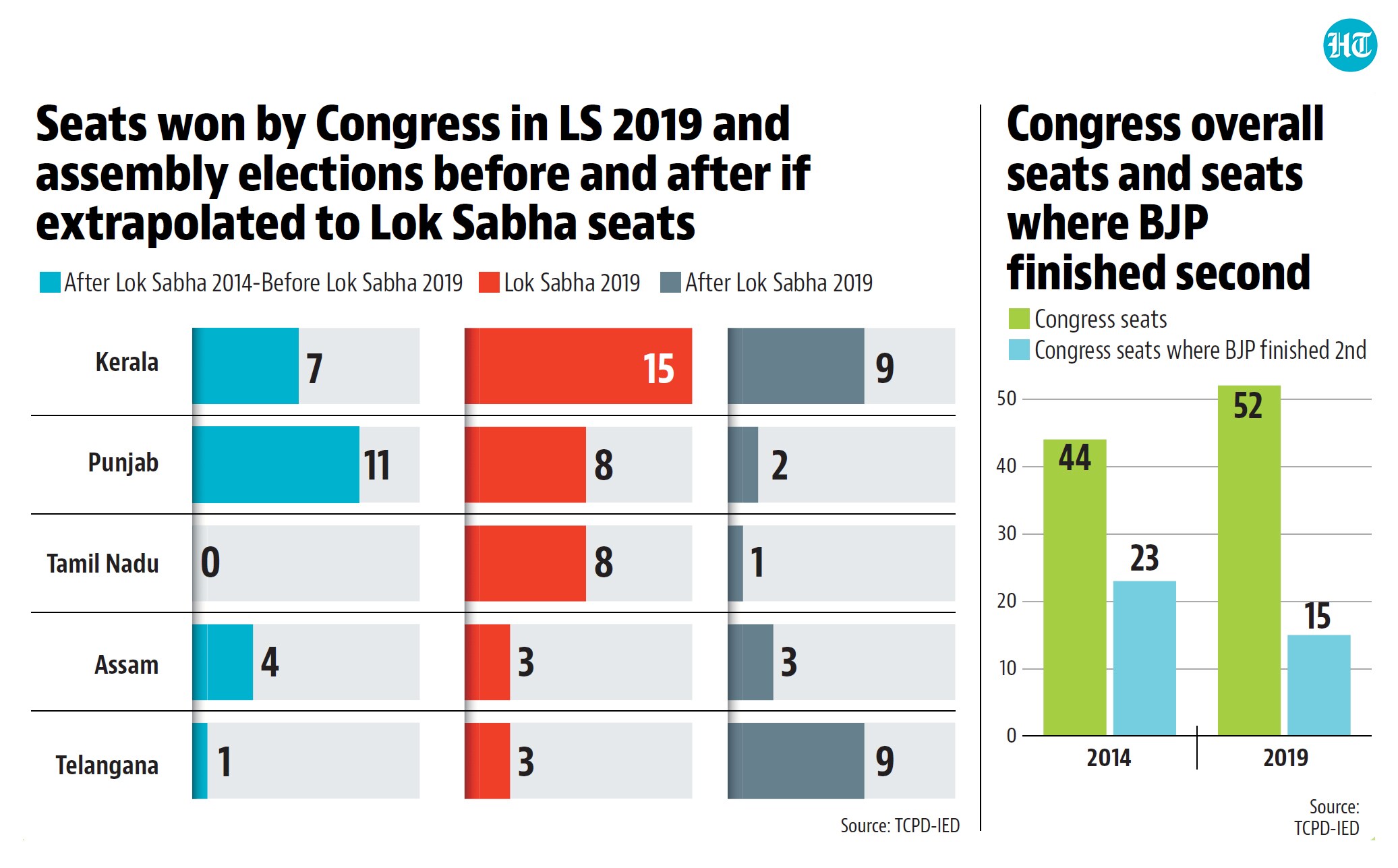
- Will the Congress overcome its assembly debacles to retain its strongholds?Congress’s 2019 performance was as disappointing as its debacle in 2014 with its seat tally in the Lok Sabha increasing to just 52 in 2019 from 44 in 2014. 23 out of the Congress’s 52 Lok Sabha MPs came from just two states; namely Kerala (15) and Punjab (8). In both these states, the Congress has actually lost the assembly elections held after 2019. A poor performance in these two states could inflict significant damage on the Congress’s 2024 Lok Sabha tally. To be sure, the Congress has improved its performance in a big way in the states of Karnataka and Telangana in the assembly elections held after 2019, and this may present the party with an opportunity to improve on its 2019 Lok Sabha performance (when it won just one and three seats in these states respectively). However, what data shows clearly is the fact that for the Congress to improve on its Lok Sabha strength, it will have to win in contests against the BJP rather than regional parties. This is because 28.8% and 52.3% of the Congress’s 52 and 44 Lok Sabha victories in 2019 and 2014 were in constituencies where the BJP finished second.
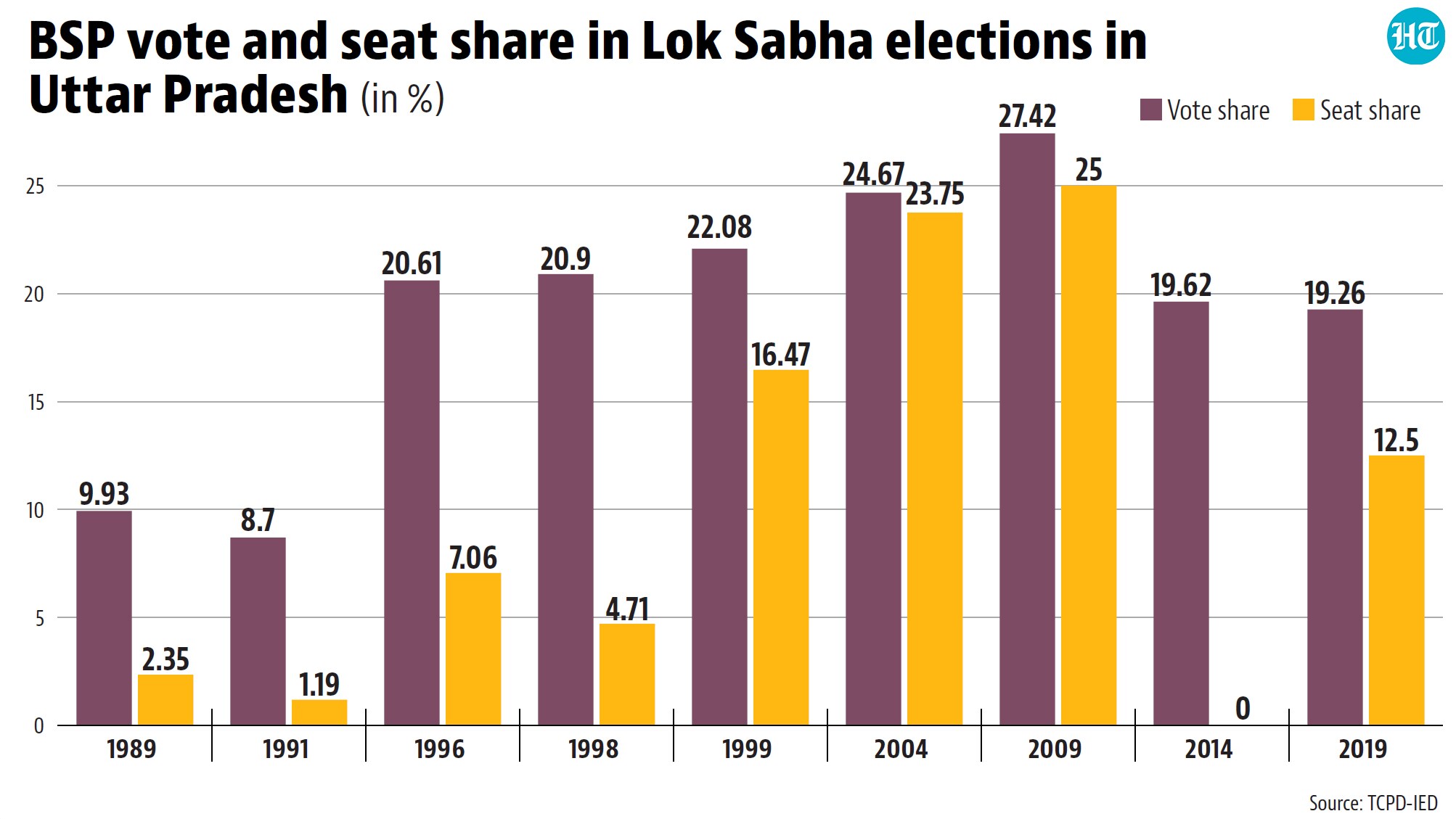
- Will 2024 bring an end to the BSP as a political party to be reckoned with?The Bahujan Samaj Party (BSP) has pretty much disappeared from the political discourse since its debacle in the 2022 assembly elections in Uttar Pradesh when it won just one MLA and finished with its lowest ever vote share since 1993. While the BSP had drawn a blank even in the 2014 Lok Sabha elections, it bounced back with 10 MPs from UP riding on an alliance with the Samajwadi Party. With the BSP not being a part of the INDIA alliance, at least until now, it remains to be seen whether the party can hold on to its 2019 performance or whether it sinks to levels similar to its 2022 disaster. Back-to-back collapse in two elections in the only state where it matters might be the beginning of the end of the BSP as a serious political party in India. Given the fact that it is the only Dalit party to have formed a government with a full-term for a Dalit chief minister, this has huge implications for not just Ambedkarite politics but India’s overall democratic transformation story.