E-Paper



Number Theory: A look at the complexity of India's politics, in 3 charts
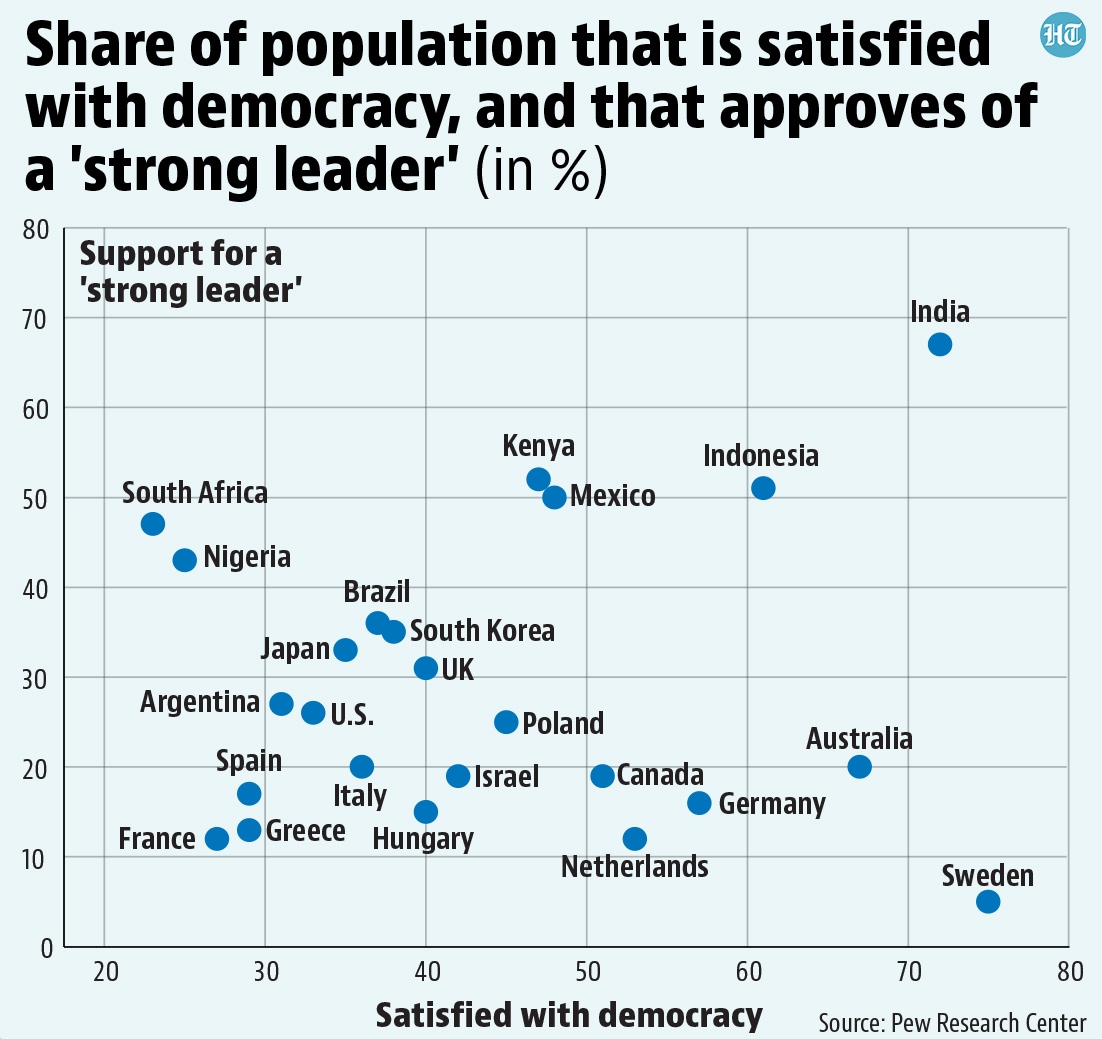
India is ranked second (only after Sweden) among 24 countries in terms of satisfaction “with the way democracy is working” in the survey.


Two back to back victories of the Bhartiya Janata Party (BJP) in the 2014 and 2019 Lok Sabha elections, have generated a lot of debate on the state of politics, even democracy in India. While some commentators, who are critical of the BJP and its politics, claim that democracy has suffered an erosion under the Modi government, the BJP has countered such claims by saying that democracy is robust in India and the people have no trust in the opposition. Findings of a survey conducted by the Pew Research Centre on representative democracy in 24 countries -- its findings were released on February 28 -- show that the reality could be slightly different from what both sides claim. In fact, the results suggest that India is an outlier when it comes to political views on various questions related to representative democracy.

 Satisfaction with democracy, endorsement for a “strong leader” are both high in IndiaIndia is ranked second (only after Sweden) among 24 countries in terms of satisfaction “with the way democracy is working” in the survey. The share of Indians who are satisfied with democracy is 72%, which is 32 percentage points higher than the 24 country median. In fact, the survey data also shows that satisfaction is a bipartisan phenomenon in India unlike most countries. India is ranked second in the survey in terms of satisfaction with democracy among not just ruling party supporters but also people who do not support the ruling party. Similarly, both Narendra Modi and Rahul Gandhi enjoy high approval ratings among ruling party and opposition party leaders in India compared to other countries. However, another statistic in the survey suggests that caution should be observed while taking these conclusions at face value. This is the extraordinary high degree of support Indians express for the opinion that “a strong leader can make decisions without interference from parliament or the courts... would be a good way of governing their country”. Now, this is hardly a sentiment one would expect from a cohort which is satisfied with democracy in their country. When the two data points about satisfaction with democracy and endorsement for a strong leader free of control from the legislative or judiciary are read together, India appears to be a clear outlier.
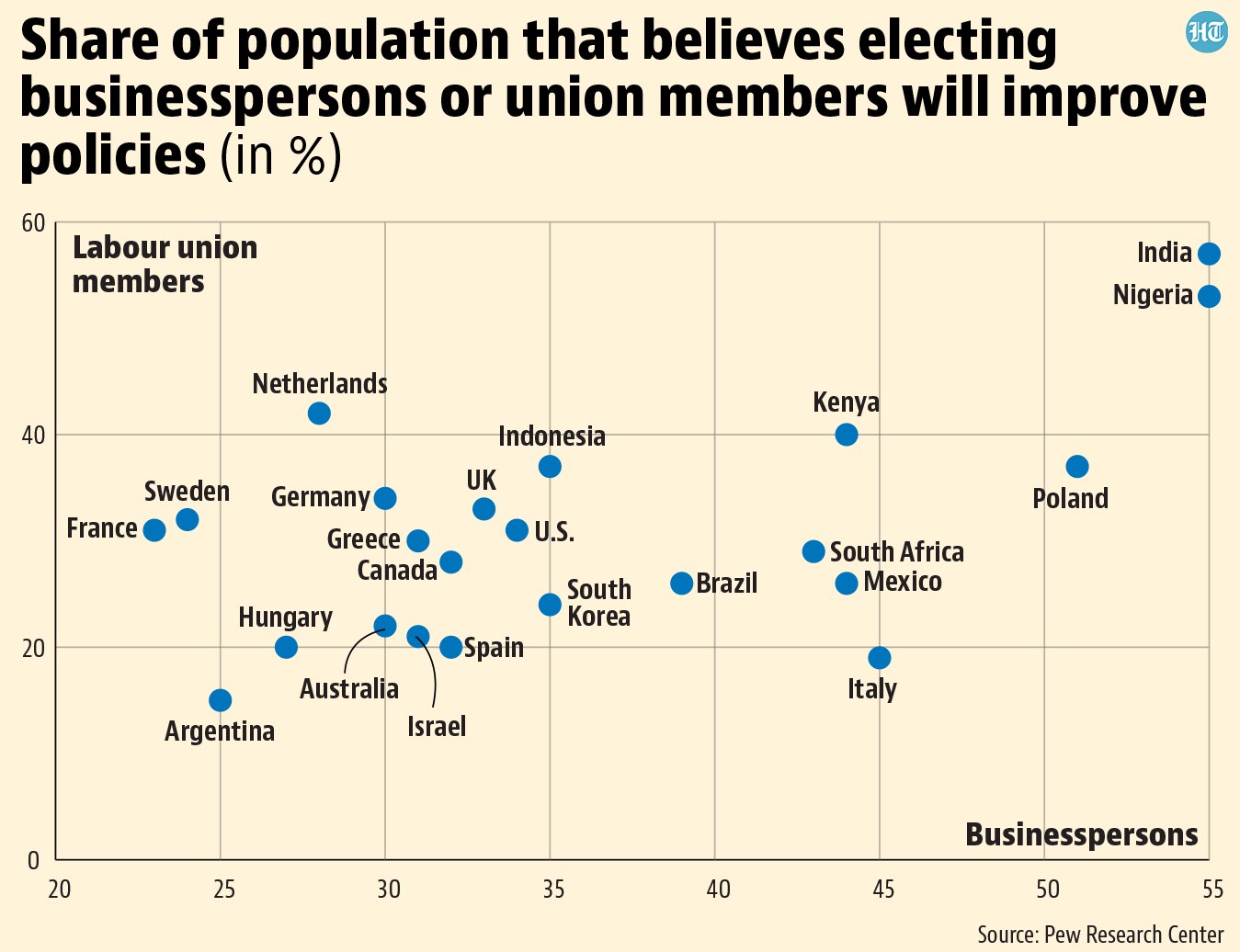
- There is a similar mismatch when it comes to class-preferences in political representationAnother interesting contradiction in Indian politics in the post-2014 phase has been the BJP’s growing economic fortunes – it receives far more donations than other political parties – and its support among poor voters. Because an overwhelming part of political funding comes from the super-rich in India, the BJP’s ability to maintain this balance has been remarkable, and muted class-tensions in politics. Data from the survey shows that the BJP has only reaped into a sentiment which is already widespread in the country. The survey asked respondents about their views on improvement in policies if more business-people and union members were holding elected offices. Indians, once again, show off-the-charts endorsement for rising representation of both union members and business people and very little concern about rising representation of either of these.
- To be sure, these could be normative views and very far from how realpolitik operates in IndiaWhat do these seemingly counterintuitive points mean for democracy in India? There could be multiple explanations beginning from the fact that people tend to underreport regressive views in such surveys, which is what could be driving support for electing people from marginalised backgrounds into elected offices. However, what is more likely is the fact that the normative views of voters in India, as captured in the survey, are not taken into account by established political parties, who pretty much decide who gets to be an elected representative and policy-maker in India. A two-part series on political finance in these pages had shown how competitive parties tend to field richer candidates. Similarly most established political parties do not give adequate representation to women while fielding candidates. Or it could just be the case that Indians do not necessarily hold consistent views about political representation. For example, India is again way off the charts when it comes to supporting “a democratic system where citizens, not elected officials, vote directly on major national issues to decide what becomes law” and “a system in which experts, not elected officials, make decisions according to what they think is best for the country would be a good way of governing their country”.