E-Paper



Number Theory: Behind fiscal federalism debate in India – Part II
The increase in transfers from the Centre to states, especially under the current government, are not exactly motivated by an urge to promote fiscal federalism.
Updated on: Feb 9, 2024, 08:29:55 IST

 Prefer HTon Google
Share via


Copy link

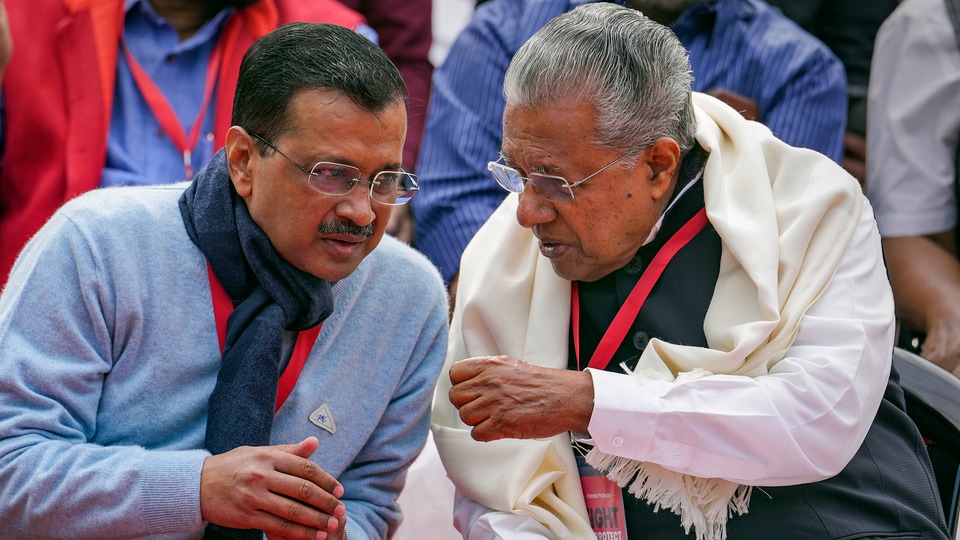
The first part of this data journalism series looked at the factors behind the grievances of Karnataka, Kerala and Tamil Nadu, the three southern states which have organized protests in Delhi over fiscal federalism related issues. The concluding part will take a look at larger issues concerning India’s fiscal federalism debate which goes beyond the concerns of southern states but have played a role in muddying India’s fiscal federalism waters in the recent past.
Behind fiscal federalism debate in India - Part II
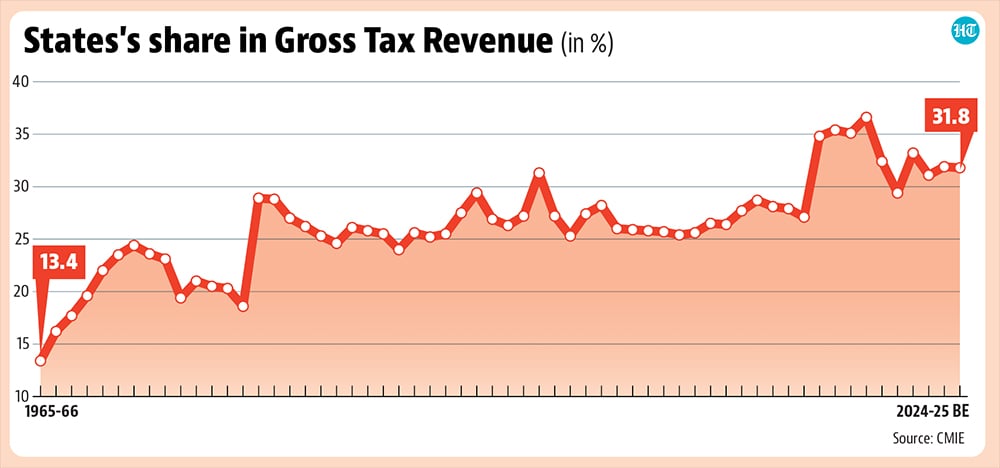
 States’ share in Gross Tax Revenues is much lower than what the Finance Commission has recommendedThe 14th and 15th Finance Commission (FC) recommended that the Centre should share 42% and 41% of its total Gross Tax Revenue with states. The one percentage point reduction in the 15th FC award was on account of Jammu and Kashmir being converted into two union territories of Jammu and Kashmir and Ladakh in 2019. Because the Centre has moved a significant part of its taxes to cess and duties (they are not a part of the divisible pool) states’ share in gross tax revenues has never reached the 41% share recommended by the 15th Finance Commission.
- But devolution of taxes is not the only route through which the Centre transfers money to statesThis is the most important fact which is often lost sight of while discussing the state of fiscal federalism in India. A more holistic look in fiscal transfers from the Centre to the states shows that states have seen an increase in the resources they receive from the Centre over time. A Carnegie Endowment for International Peace and Center for Policy Research working paper by Suyash Rai and Milan Vaishnav which was published in June 2023, shows this trend clearly. The share of total transfers from the Centre to states (this excludes GST compensation cess) in Centre’a gross tax revenues increased from 32.4% during the 3rd Finance Commission (1962-66) to 58.7% by the 14th Finance Commission (2015-20) and stayed in the same range during the period of 15th Finance Commission. To be sure, the increase in transfers from the Centre to the states, especially under the current government, are not exactly motivated by an urge to promote fiscal federalism. Rai and Vaishnav have explained the possible rationale behind the rise in non-Finance commission grants to the states. “Such schemes are politically consequential for the Union government. Reducing the amount of non–Finance Commission grants to States means risking the continuity of these important schemes,” the paper stated, citing schemes such as the PM Awaas Yojna. To be sure, the paper notes that the Centre has cleverly tilted the scales in its favour by taking more credit for these schemes by adding ‘Pradhan Mantri’ as a prefix for most of them and also increasing funding requirements of the states, which has, in a way, nullified the higher finance commission transfers, which could have given more autonomy to the states in matters of spending.
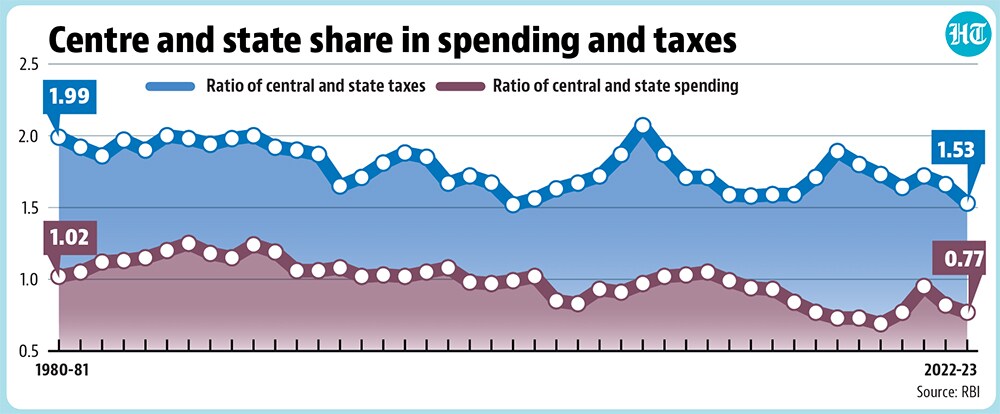
- And this is where politics comes inThe rise in non-formula driven (read discretion based) transfers from the Centre to the states, when read along with the overall vertical imbalance between Centre-state revenue collection abilities and spending obligations, is a recipe for political conflict when political adversaries are in power in the Centre and states. This is because, the Centre is well within its rights to deny or provide such funding to specific states, most of which are always struggling to meet their resource-spending gap. Because the southern states (along with other well-off states) are anyway foregoing a share of revenues generated in their states to the not-so-rich ones, they are not exactly wrong in feeling angry about not being given their desired share of non-tax transfer from the states. Unless the Centre or the 16th Finance Commission finds a way to bridge this trust deficit or sense of injustice, political incentives to question to the equity principle of income distance in tax devolutions will only increase going forward.
- This is the concluding part of a 2-part data journalism series on fiscal federalism fights in India. The first part looked at why southern states are angry about the current state of center-state fiscal relations.